The Álvarez Collection
PVR · Technical Research File

Self-Portrait Leaning on a Stone Sill B. 21-Rembrandt van Rijn

Early impression on seventeenth-century Dutch laid paper bearing the PvL (Van der Ley) countermark.

This study presents a comprehensive analysis of the print based on: direct physical evidence (burr, relief, line morphology), advanced microscopy to exclude nineteenth-century photomechanical processes, structural comparison against the institutional State I, paper and countermark analysis, and a strict, replicable methodology.

“This impression of the Self-Portrait (1639) is examined using the same technical protocols as the Jan Six study, incorporating advanced microphotography to exclude nineteenth-century photomechanical processes and to evaluate the impression against the institutional State I.”

The results show that this impression preserves characteristics that precede the visible wear documented in State I, placing it at an early stage within the printing life of the plate.

Technical Data · Work ID

File ID
AC-RM-236-REV-2025
Artist
Rembrandt Harmenszoon van Rijn (1606–1669)
Title
Self-Portrait Leaning on a Stone Sill B. 21
Date
c. 1639
Technique
Etching and drypoint on laid paper
Dimensions
Height 206 mm x Width 164 mm
Sheet Dimensions
Height 316 mm x Width 245 mm
Sheet Weight
9 grams
Collection
The Álvarez Collection (Miami)
Provenance
Private family collection, preserved over generations

Research Objective

Technical certification of the integrity of the original copper matrix and chronological validation of the paper support through digital metrology, comparative overlay analysis, and observation of organic degradation phenomena

Diagnostic overview

The investigation focuses on three diagnostic axes:

  1. Plate condition and line behavior
  2. Microscopic exclusion of photomechanical reproduction
  3. Structural comparison with the institutional State I

1. Plate condition and line behavior

The impression preserves active burr and measurable micro-relief in multiple zones where the institutional State I reference already exhibits visible wear. Line edges remain sharp, with intact drypoint feathering and uninterrupted fine strokes, indicating an early phase in the plate’s use.

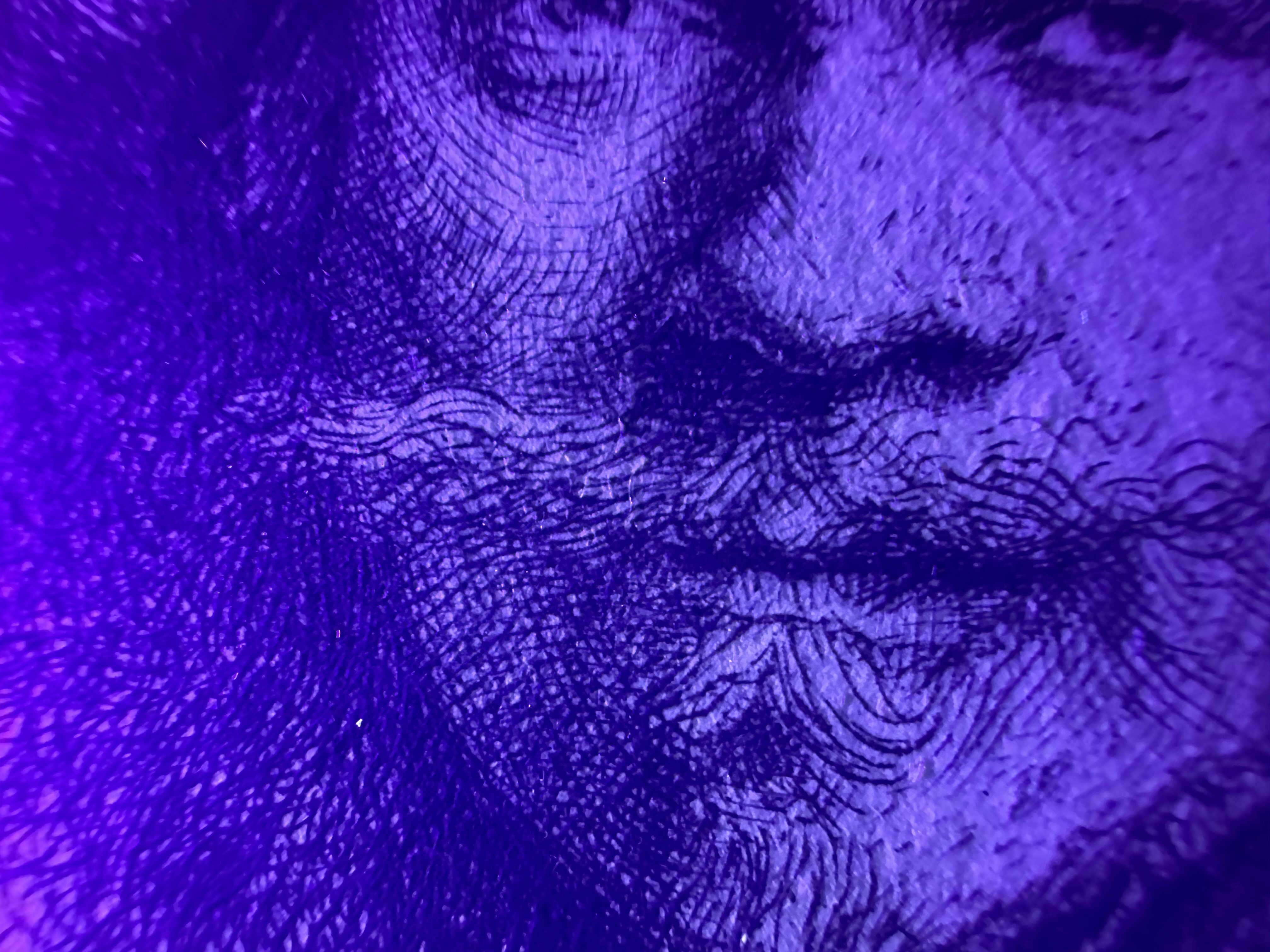
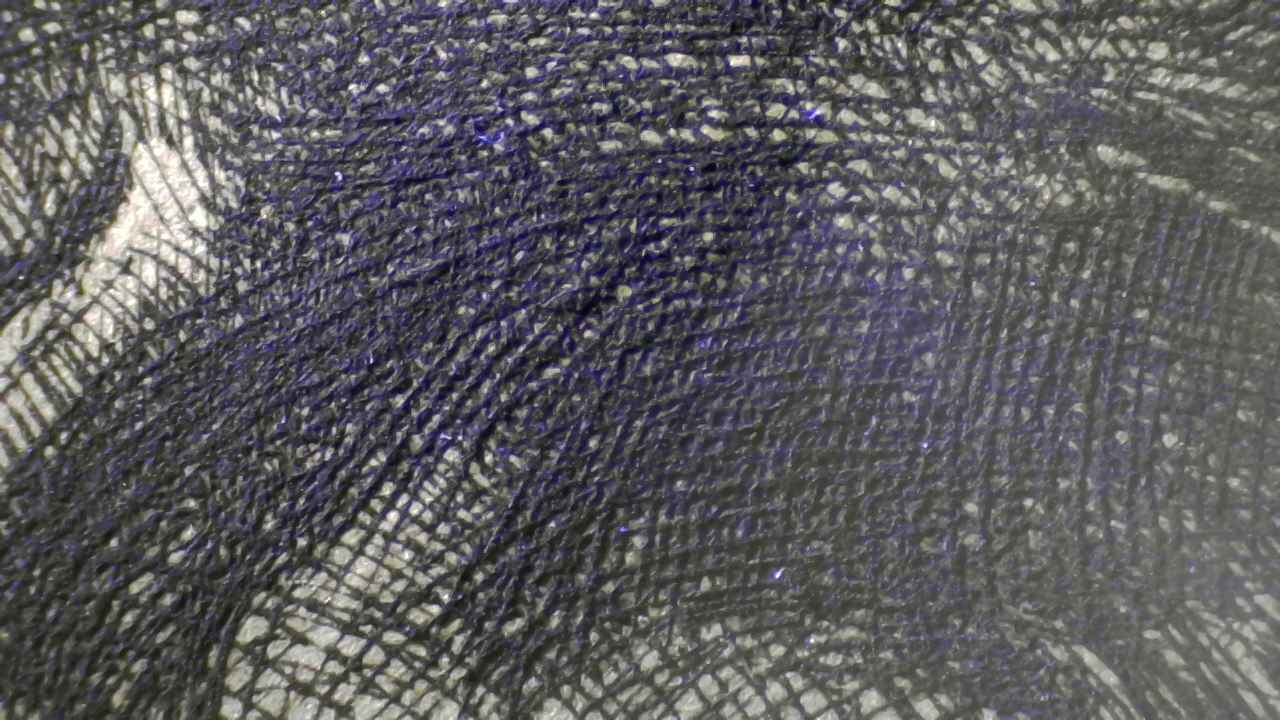
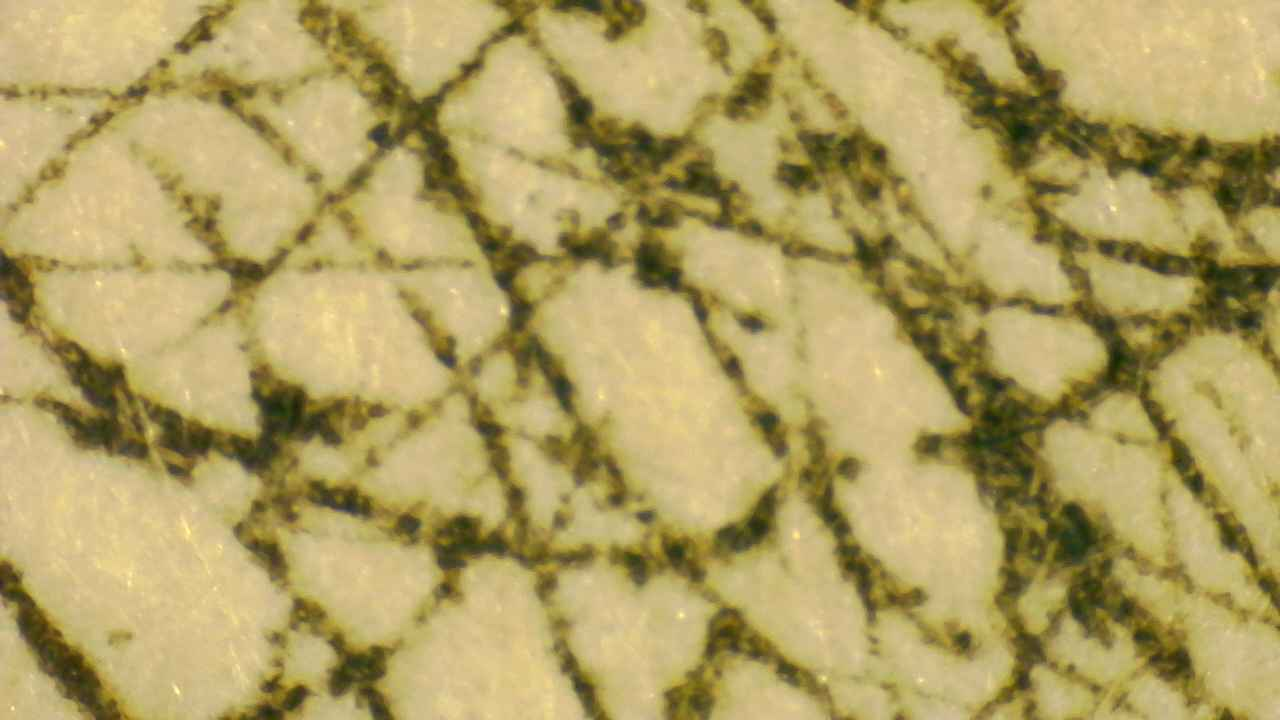
Microscopic exclusion of photomechanical reproduction High-magnification photomicrographs (250×–500×) reveal genuine intaglio characteristics: V-shaped incised grooves, organic line vibration, ink accumulation within recessed channels, and direct ink–fiber interaction. No reticulated screens, dot patterns, chemical textures, or surface films associated with 19th-century photomechanical processes are observed.

Structural comparison with the institutional State I Precision overlays confirm full matrix correspondence while revealing qualitative differences in freshness and line completeness. These variations are consistent with plate evolution rather than printing variables, situating the present impression before the degree of wear documented in State I. Taken together, these convergent indicators support the interpretation of an early printing phase, grounded exclusively in observable and reproducible technical evidence.

Plate State · Comparative analysis

Plate state identification is grounded in direct analysis of the stroke, line depth, the presence of burr, and comparison with institutional images of State I.

Key observations

  1. The Álvarez Collection impression preserves fresher details than the institutional State I. Complete fine lines, residual micro-burr and greater continuity appear in zones where State I shows perceptible wear.
  2. Absence of breaks or weakening present in State I, particularly in the hatchings near the eyelid, cheek, and the shadow zone of the brow.
  3. Greater ink density in deeper strokes. The cap and facial contour show natural ink accumulation typical of a plate that remains only lightly worn.

State conclusion

The impression documented here belongs to a phase preceding the visible wear documented in State I, indicating an exceptionally early pull.

Paper and PvL Countermark

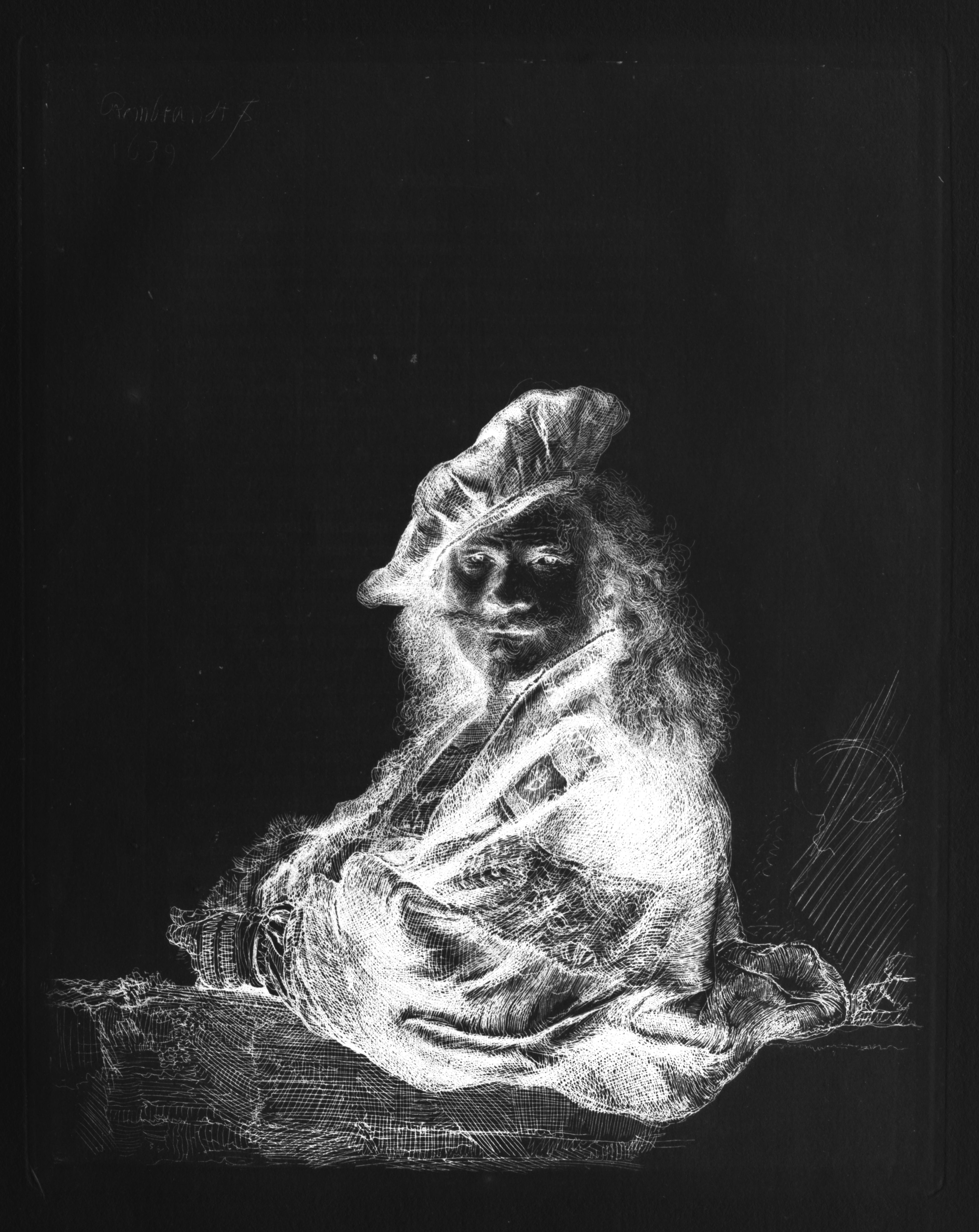
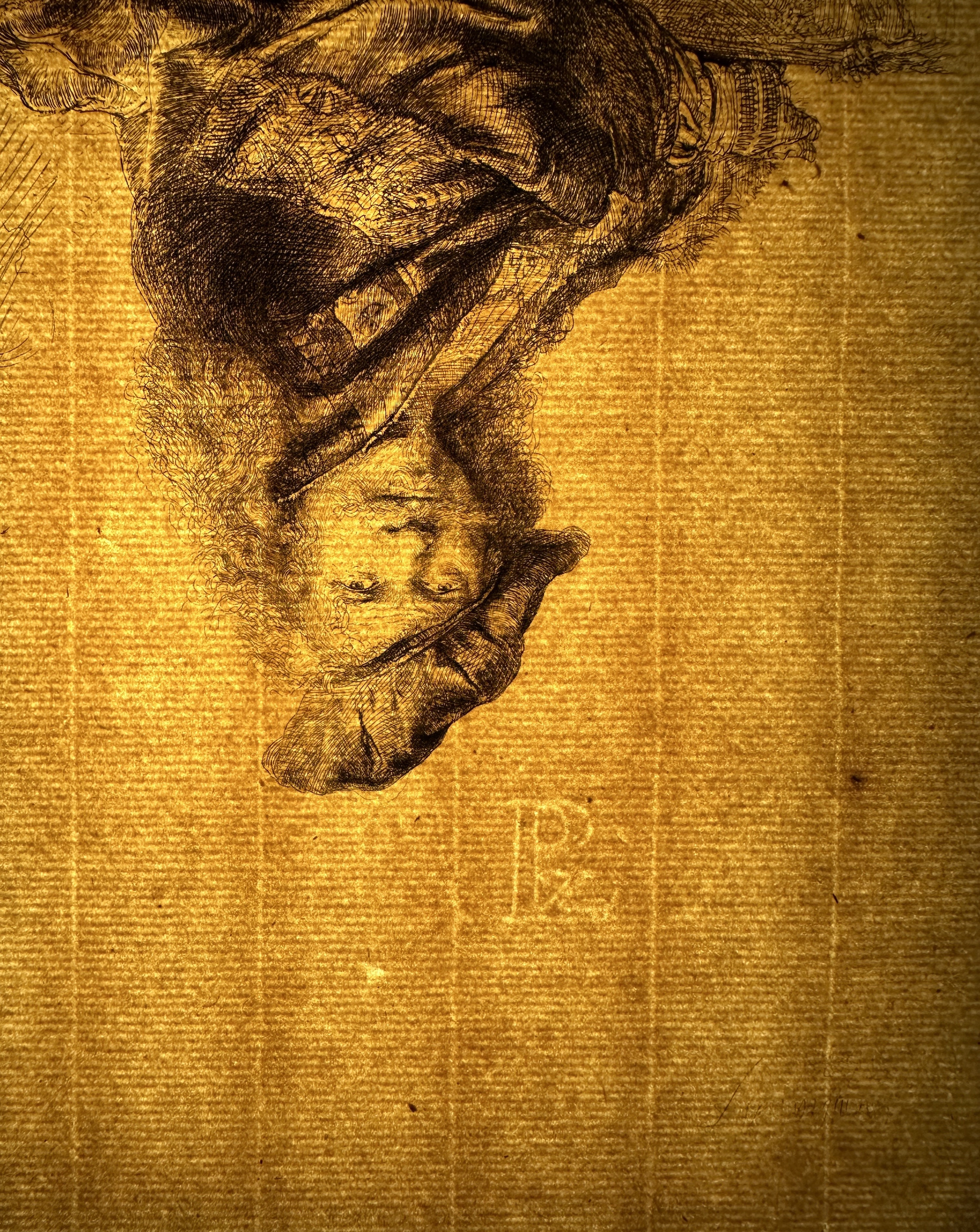
The paper bears the PvL (Van der Ley) countermark. The WIRE Project documents PvL as a seventeenth-century Dutch papermaking mark; this PVR adopts that dataset framework for comparative analysis.

Observed characteristics:

Technical relevance:

The support excludes late photomechanical processes and is consistent with early Rembrandt printings.


Full sheet under transmitted light
Full sheet (transmitted light).
Full-sheet transmitted-light documentation used to assess paper structure and internal density.
PvL countermark under transmitted light
PvL countermark (transmitted light).
Countermark integrated within the fiber matrix of the sheet.
pvr-strongChain lines (transmitted light)">
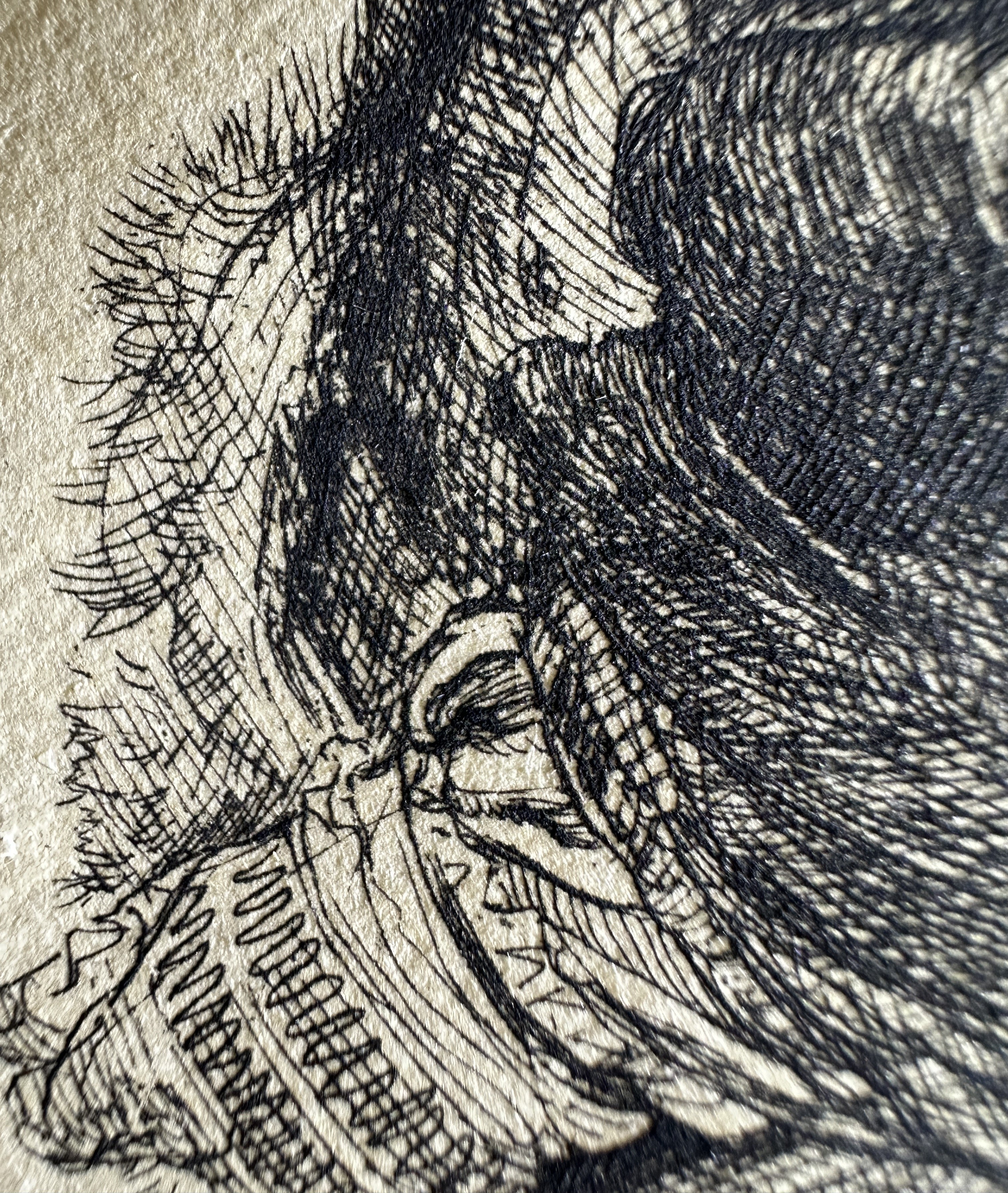
Chain lines (transmitted light).
Chain-line structure recorded for comparative study of laid paper fabrication.
Paper fibers under transmitted light
Paper fibers (transmitted light).
Fiber distribution and density consistent with handmade seventeenth-century Dutch production.
Light Absorption Spectrum Test: Verification of Inert Carbon Ink.
Carbon black/Carbon (100% light absorption).

Burr and Line Morphology

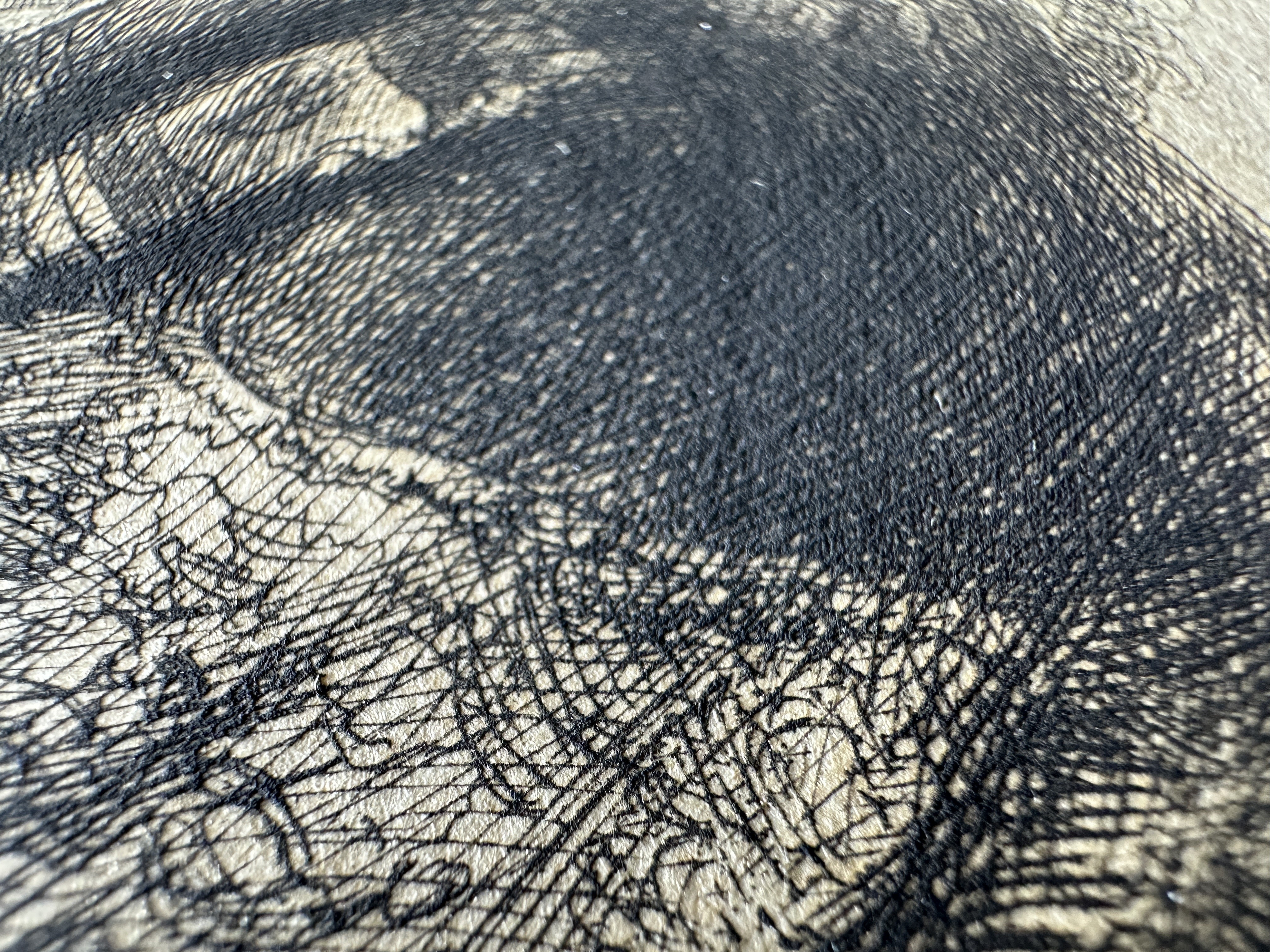
Macro photographs reveal authentic burr in multiple sections:

Active burr zones macro close-up
Active burr zones (macro close-up).
Macro image documenting burr activity along key incised strokes.
Active burr zones macro close-up
Active burr zones (macro close-up).
Additional macro zone showing preserved relief and ink retention.
Specular reflection burr (grazing light)
Specular reflection burr (grazing light).
Grazing illumination capturing metallic highlights and shadow asymmetry typical of intact burr.
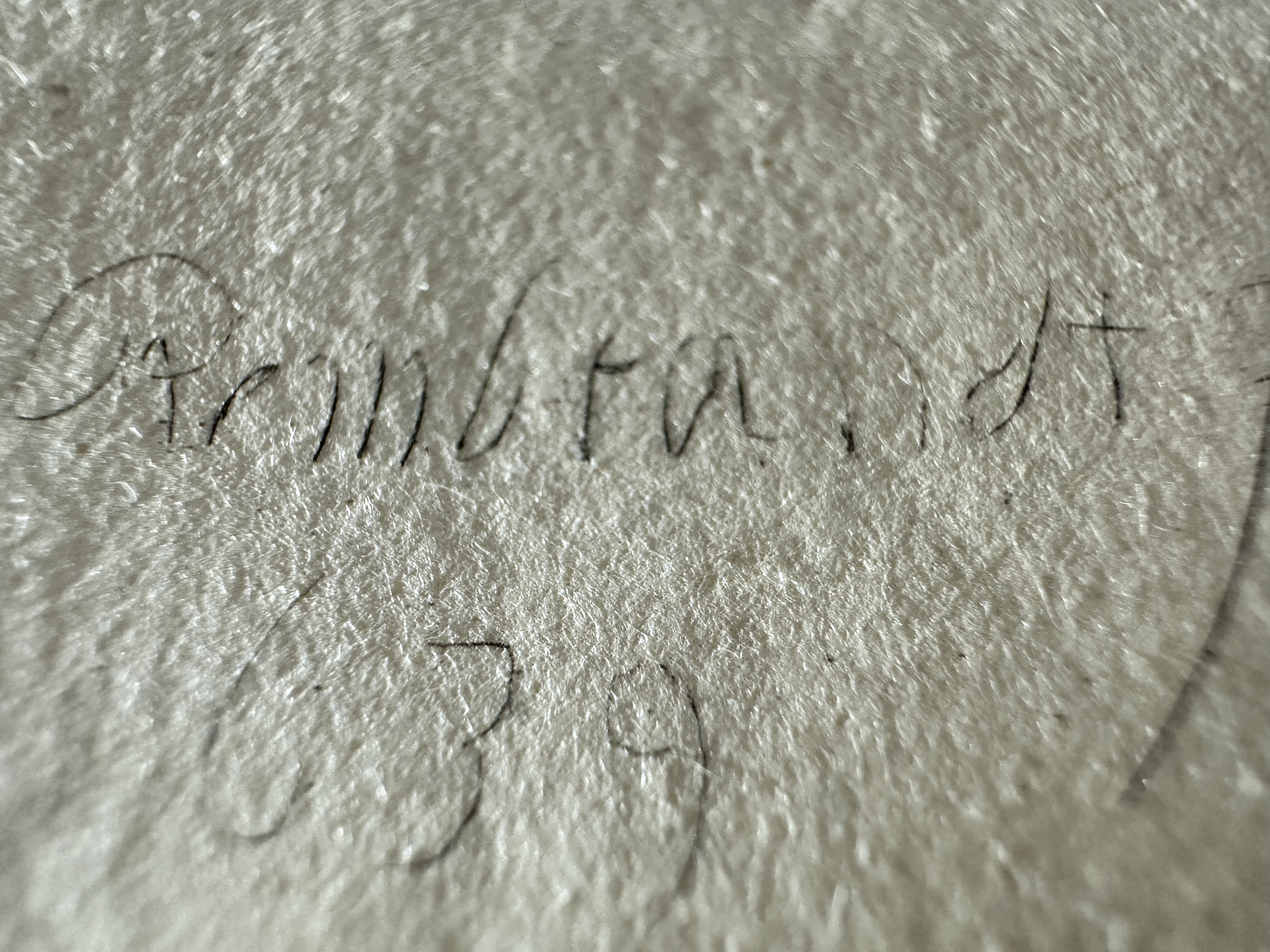
Active burr in signature lines (0.02 mm)
Active burr in signature lines (0.02 mm).
Burr preserved in the finest drypoint signature strokes at micro scale.
Burr Analysis (Drypoint).
Ink saturation due to original mechanical burr. The velvety effect confirms the depth of the groove and the use of a hand-engraved matrix, incompatible with the flatness of photogravure.

Observed evidence:

Macro detail showing the signature executed with an extremely fine drypoint needle, preserving exceptionally high burr rising above the paper surface. The incomplete rendering of numerals and the pronounced relief are exclusive to this impression and not evident in the institutional comparative material consulted to date.

Microscopic documentation

Key reference (Ad Stijnman, Engraving and Etching 1400–2000, 2012)

“Burr survives only approximately between 15 and 20 impressions from the time the groove is created. After this point, the metallic relief is flattened under press pressure and becomes progressively undetectable.”

Interpretation for this print:

In this impression, burr remains intact and measurably raised (c. 0.05–0.07 mm), as documented by calibrated microphotography with scale reference (see technical gallery). This indicates that the print was pulled very soon after the original incision, when the copper edge still raised burr. The visible burr constitutes strong physical evidence of early printing and authentic intaglio technique.

Technical Microscopy · No indicators consistent with heliogravure

The images show no evidence of heliogravure, photogravure, collotype, or other nineteenth-century reproductive processes.

Hair detail (500×)
Hair detail (500×).
Fine drypoint/etched hair lines showing real groove structure and ink deposition.
Signature “Rembrandt f. 1639” fine lines
Signature “Rembrandt f. 1639” — fine lines.
Ultra-fine signature strokes with physical groove behaviour and relief.
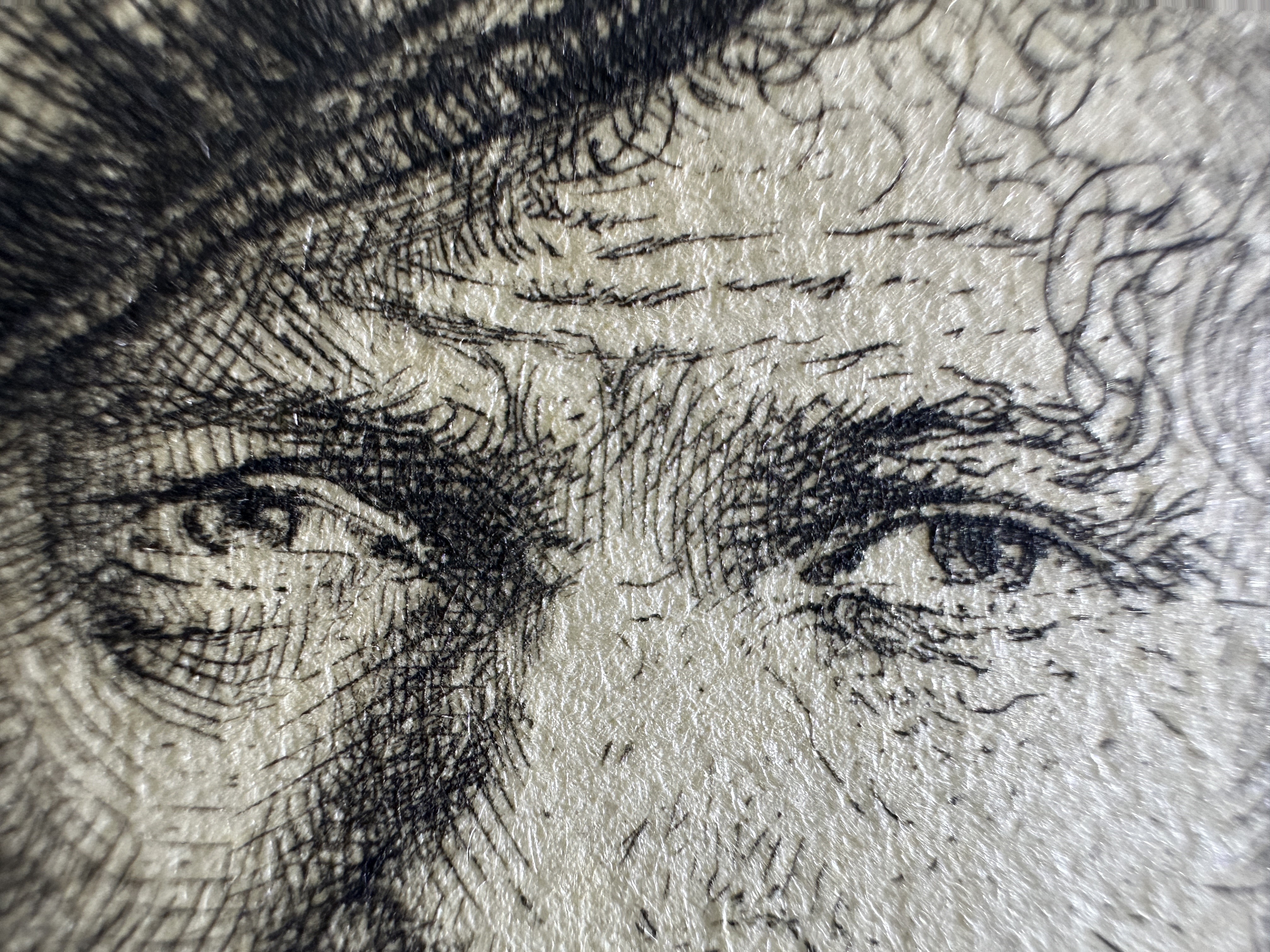
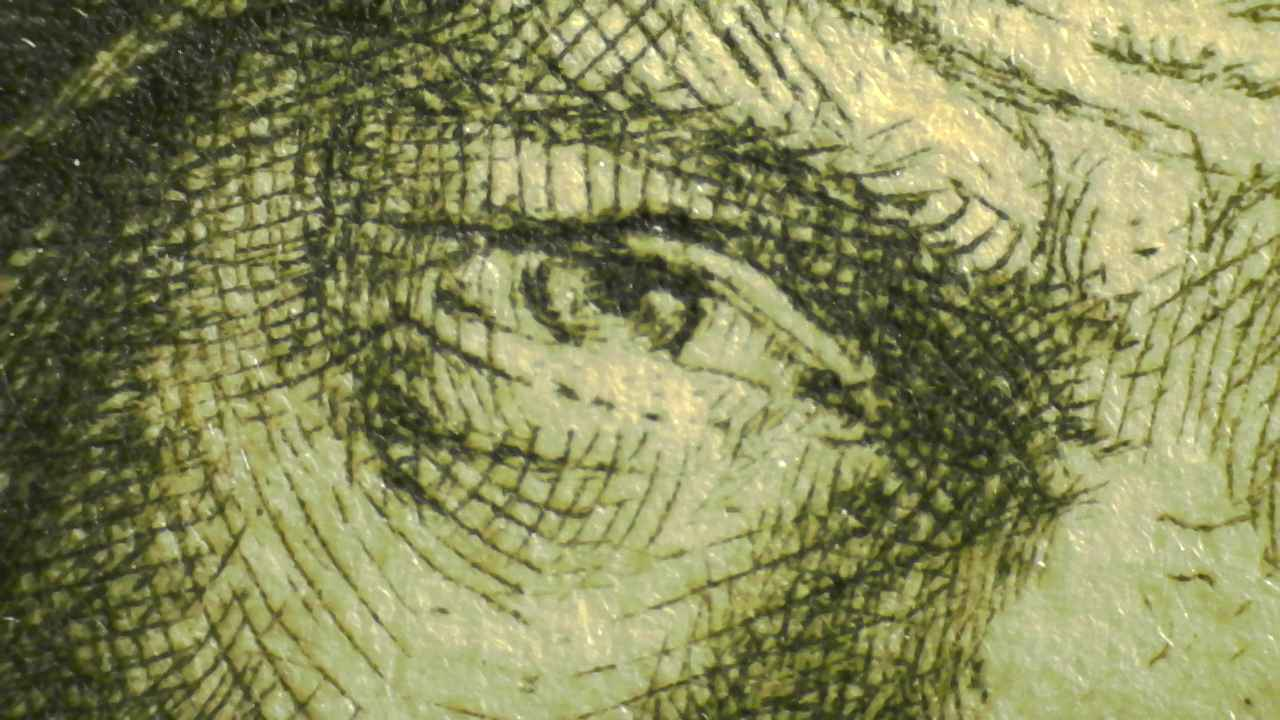
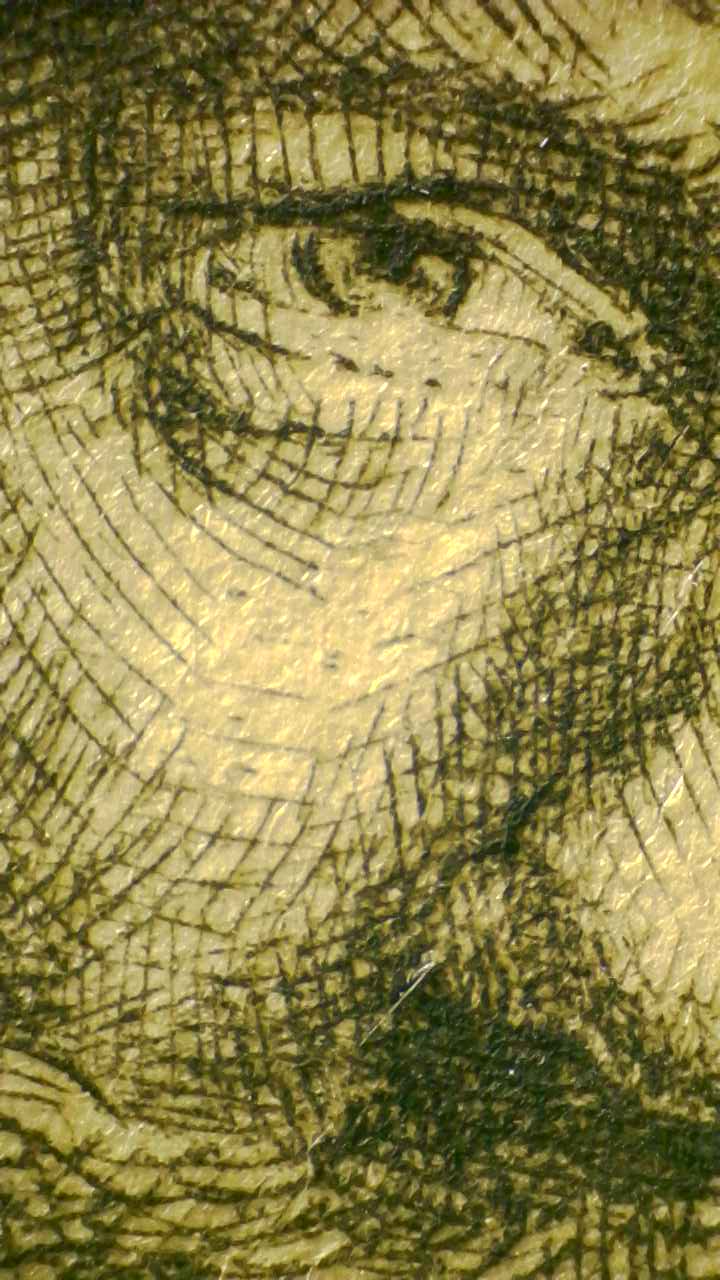
Left eye detail
Left eye detail.
Eyelid and surrounding hatchings with pressure-driven ink accumulation.
Cap detail
Cap detail.
Dark strokes showing real V-shaped grooves and organic line variation.
Hair fine lines
Hair — fine lines.
Fine linear behaviour inconsistent with photomechanical screening.
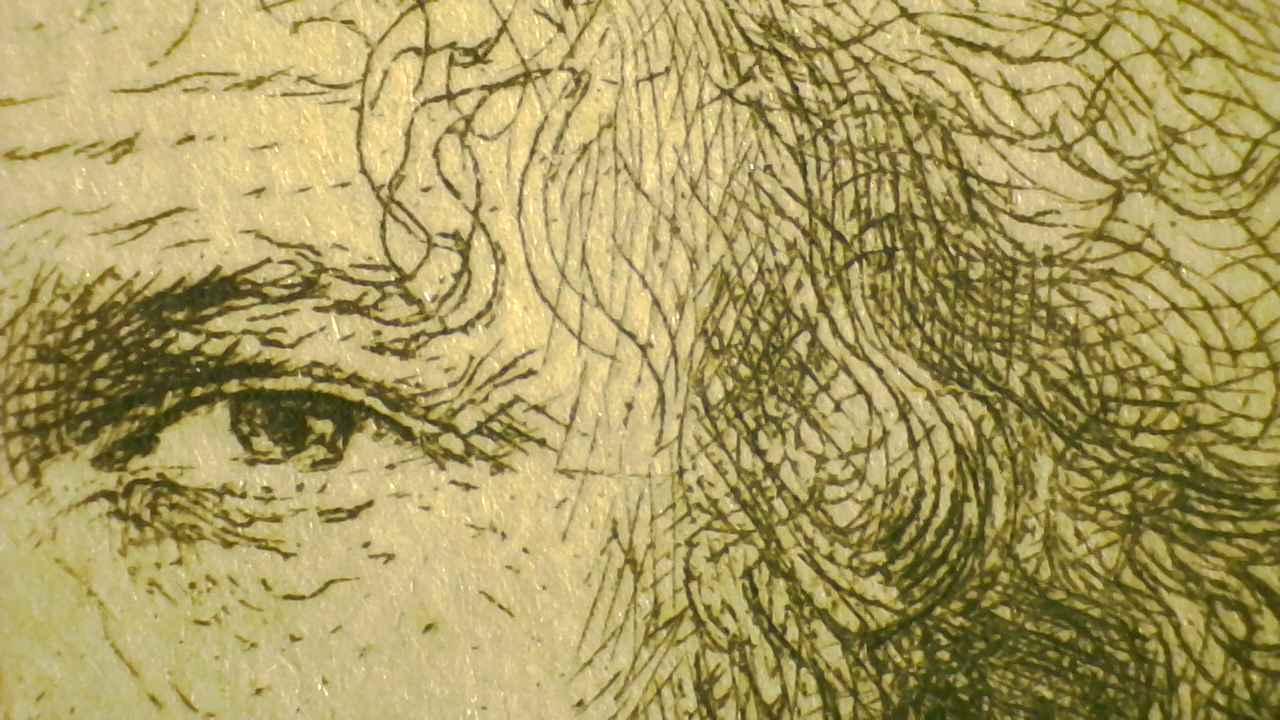
Left eye and nose detail
Left eye and nose detail.
Line crossings with differential ink pooling typical of incised copper grooves.

All images were obtained at 250× to 500× using transmitted and raking illumination. No photomechanical screening or chemical pitting is observed—only manually raised drypoint burr and V-shaped copper grooves characteristic of Rembrandt’s original copperplate in its earliest phase.

Features incompatible with heliogravure

  1. Complete absence of photomechanical grain or reticulation. No dots, cells, or repetitive patterns appear.
  2. Real grooves with physical depth. Irregular cuts and micro-valleys where ink deposits organically.
  3. Authentic ink–fiber interaction. Ink penetrates the fibers; it does not sit as a superficial film.
  4. Gestural variation impossible for automatic processes. Natural thickening, thinning, and vibration of the stroke.
  5. Line crossings with differential ink accumulation. This occurs only with real incision in copper.

Microscopic conclusion

The images fully exclude:

The microscopic morphology is consistent with genuine intaglio printing.

Comparative Overlays · Structural coincidence with the original matrix

High-precision digital overlays were produced comparing:

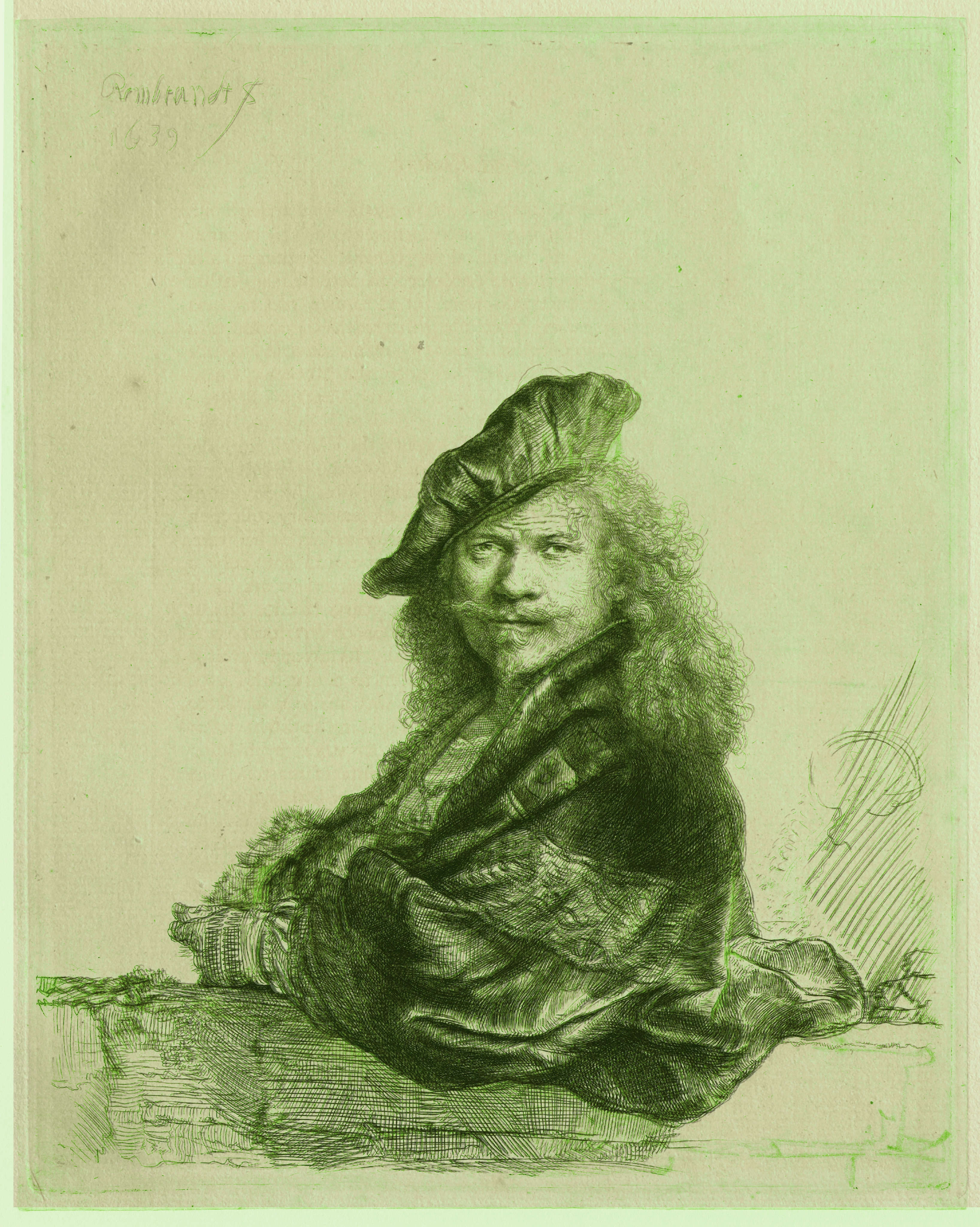
Comparative overlay and plate impression alignment
Comparative overlay and plate impression alignment.
Comparative overlay showing the institutional reference image fully inscribed within the plate impression boundaries of the present sheet. The coincidence of image placement and engraved field dimensions indicates derivation from the same engraved plate, consistent with normal plate use and wear progression.
Overlay Facial Morphology Overlay (Structural Correspondence)
This overlay is presented to demonstrate proportional and morphological correspondence only. Technical evidence (burr, relief, ink behavior) is documented separately through microscopic imaging.
Balastro unfinished
Balastro unfinished.
Detail overlay of the lower engraved field and base elements (baluster and support), showing consistent plate geometry and line placement beyond the principal figure. Minor variations in line strength and continuity are consistent with normal plate wear and printing conditions.

Results

Comparative: Private Collection, Miami vs. Rijksmuseum, Amsterdam (inv. RP-P-OB-37, State I)

The following A/B comparison isolates two diagnostic zones against the institutional State I reference. The goal is to document (1) full matrix correspondence and (2) consistent differences in plate development.

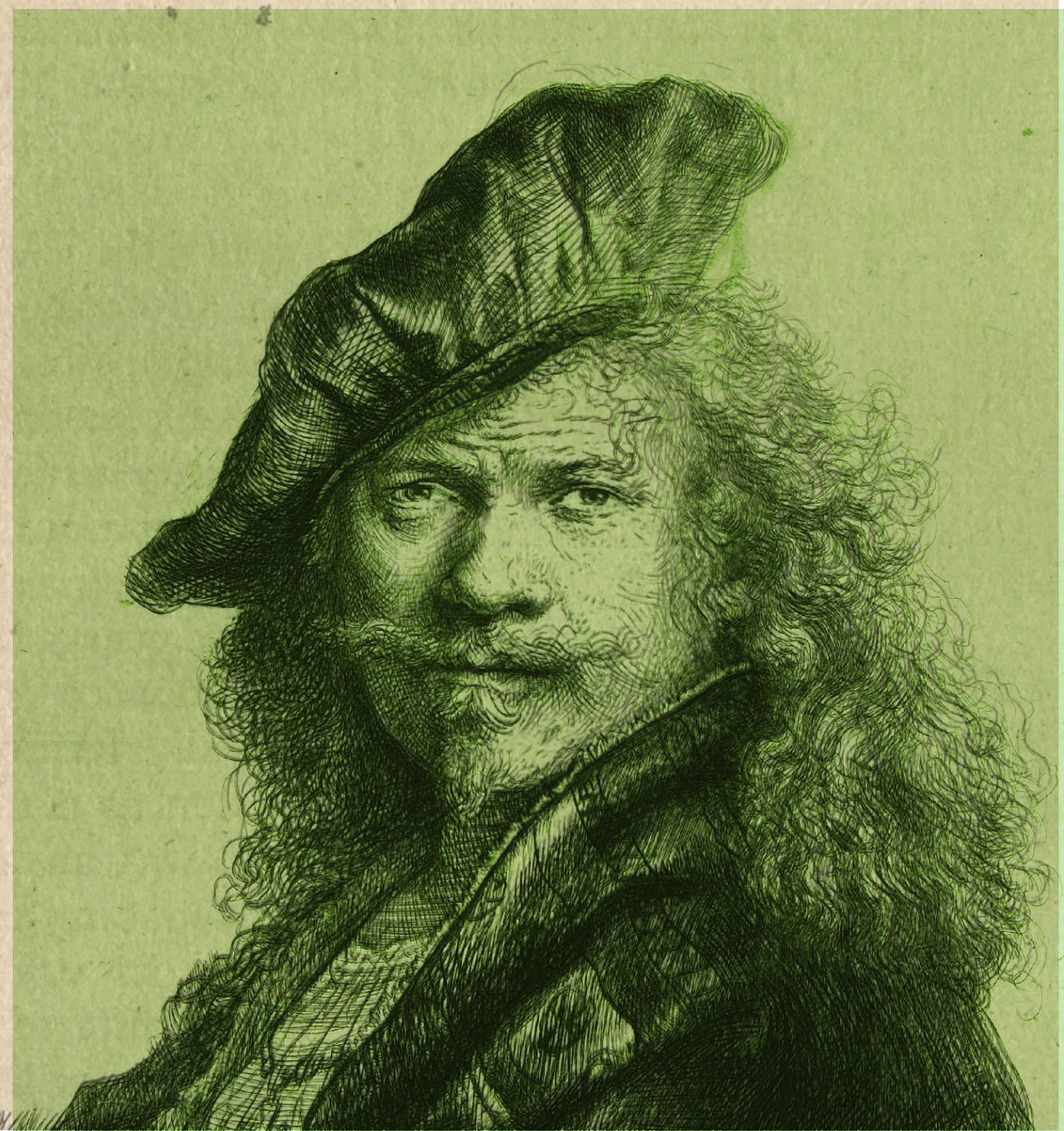
Zone A

Upper body and facial modelling
https://cdn.prod.website-files.com/692e3c27d1e4c87882e66826/693c70596874528e92a2563e_Overlay.1_pages-to-jpg-0003.jpg

The Zone A comparison demonstrates that the Miami impression preserves an earlier working phase of the copperplate than the Rijksmuseum’s State I. In the Miami sheet, facial modelling, hair, and hat shading remain lighter and more open, with finer, less consolidated cross-hatching.

By contrast, the Rijksmuseum State I exhibits reinforced shadow structures and denser cross-hatching in the hair and face. The overlay alignment confirms matrix identity; the differences therefore reflect plate development rather than compositional change.

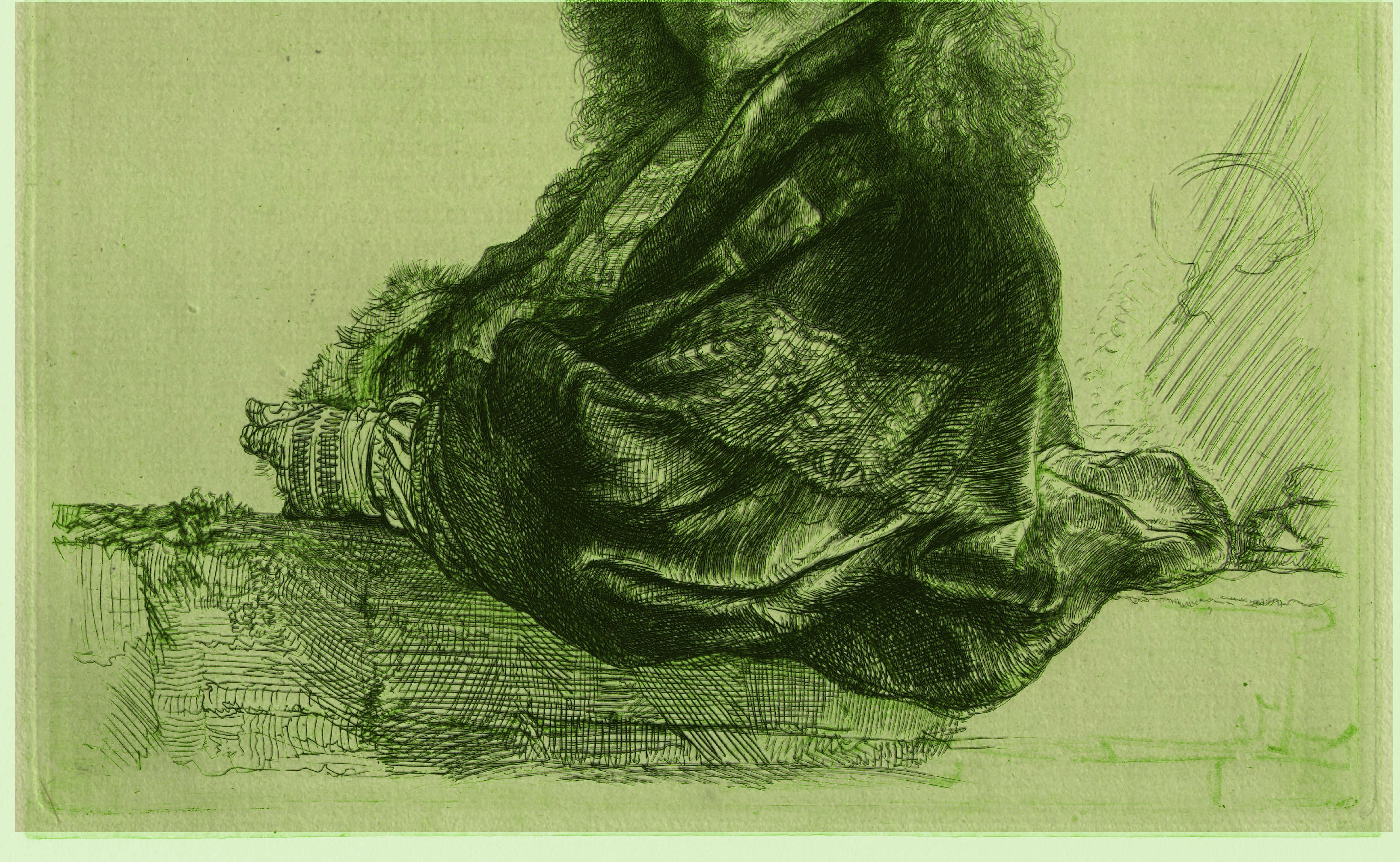
Zone B

Lower drapery, stone sill, and right margin
https://cdn.prod.website-files.com/692e3c27d1e4c87882e66826/693c705964f99f3810515336_Overlay.1_pages-to-jpg-0004.jpg

Zone B provides clear evidence of progression: the Miami impression shows lighter, preliminary hatching and an open highlight structure across the drapery and stone sill, with fewer reinforced strokes.

The Rijksmuseum State I shows strengthened contouring and deeper cross-hatching along the stone ledge, plus visible pencil/black-chalk retouching in the lower-right margin. The absence of this retouching in the Miami impression supports an earlier, uncorrected plate phase.

Interpretive note: In this PVR, “earlier” is used strictly in the technical sense of plate development as observed in line reinforcement and retouching. It does not claim a different composition—only a different stage of work on the same matrix.

Results

  1. Complete structural coincidence in line geometry, ruling out free interpretation or manual copying.
  2. Greater freshness in key zones relative to State I; the private impression preserves fine lines already attenuated in the reference.
  3. Photomechanical reproductions typically introduce measurable deviations in scale, tonal screening, or surface structure. No such indicators are observed here.

Conclusion

The overlays confirm that the impression is consistent with derivation from the same copper matrix, as supported by structural overlays.

General Technical Conclusion

The convergent evidence derived from:

indicates that this impression of Self-Portrait Leaning on a Stone Sill comes from an exceptionally early printing, executed while the copper still retained its sharp edge and before the wear visible in the institutional State I.

Technical conclusion: authentic intaglio, early state, first-phase printing.

Provenance & Conservation

Provenance:

Private family collection, preserved for more than a century, never sold or transferred. The excellent conservation of the paper, margins and surface is due to careful storage within the family environment.

Conservation:

General conclusion · Interpretation and research contribution

The body of evidence (material, technical, comparative and historical) indicates that this impression represents an early proof-type impression consistent with seventeenth-century intaglio practice, contributing new comparative observations.

This discovery expands our understanding of Rembrandt’s creative process and contributes to the re-evaluation of the earliest paper stocks used in his workshop.

Primary references and datasets

Rijksmuseum, Amsterdam — RP-P-OB-37. Early impression of Jan Six. Used as the primary institutional reference for line morphology, plate geometry, ink-edge comparison and 1:1 overlay alignment.

Erik Hinterding, Rembrandt as an Etcher — The Practice of Production and Distribution, 2006. Vol. I, pp. 63–67; Vol. II, catalogue of watermarks (Van der Ley subsection).

Rembrandt WIRE Project, Cornell University — PvL countermark (HMP 234985.b). Digital X-radiograph and morphological dataset used for chain spacing, countermark structure and watermark analysis.

Ad Stijnman, Engraving and Etching 1400–2000: A History of the Development of Manual Intaglio Printmaking Processes. London: Archetype / HES & De Graaf, 2012.

Access and research collaboration

High-resolution files, complete macro sets and the internal technical report are available to qualified researchers upon request. Comparative video-microscopy sessions can also be arranged for institutions interested in examining the early-phase characteristics in detail.

All observations presented on this page are based on direct examination of the private impression and on published images from institutional collections. Attribution, dating and official terminology remain open to scholarly debate and are offered here as a contribution to ongoing research on Rembrandt’s prints.

For enquiries, image permissions or collaborative projects, please use the contact form on the main site or write to:

susana123.sd@gmail.com
fineartoldmasters9919@gmail.com
susana@alvarezart.info

Phone: +1 786 554 2925 / +1 305 690 2148
Álvarez Collection Verification Record #AC-RM-236-2025