Technical Gallery
Self-Portrait (1639) · Full Image Set
Technical Data

Full view of the printed sheet for overall condition, margin integrity, and global reading of the image field.

Full view of the verso for paper tone, structure, and any visible handling or storage traces.
Paper and PvL Countermark
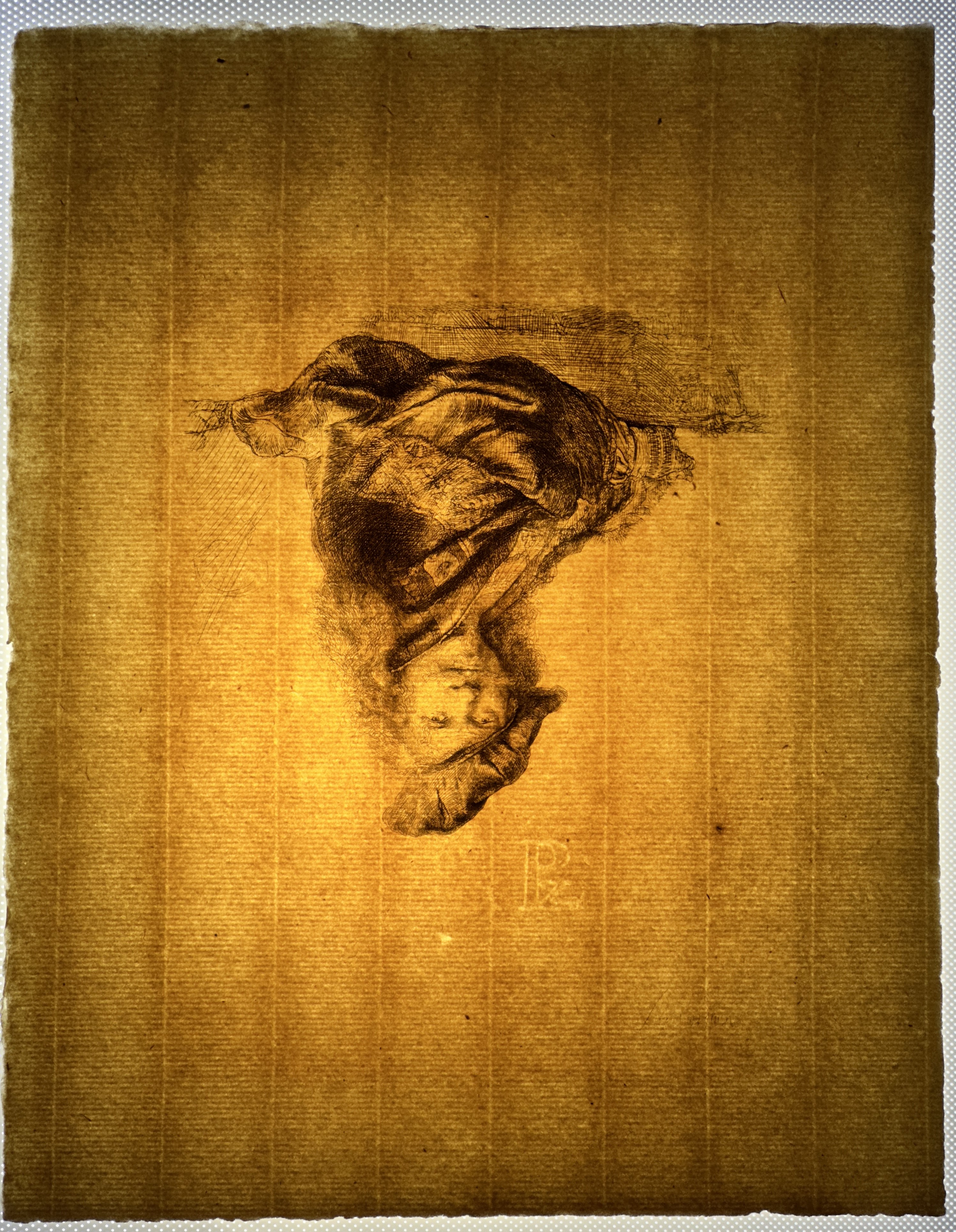
Transmitted-light documentation to read internal paper structure and density across the entire sheet.
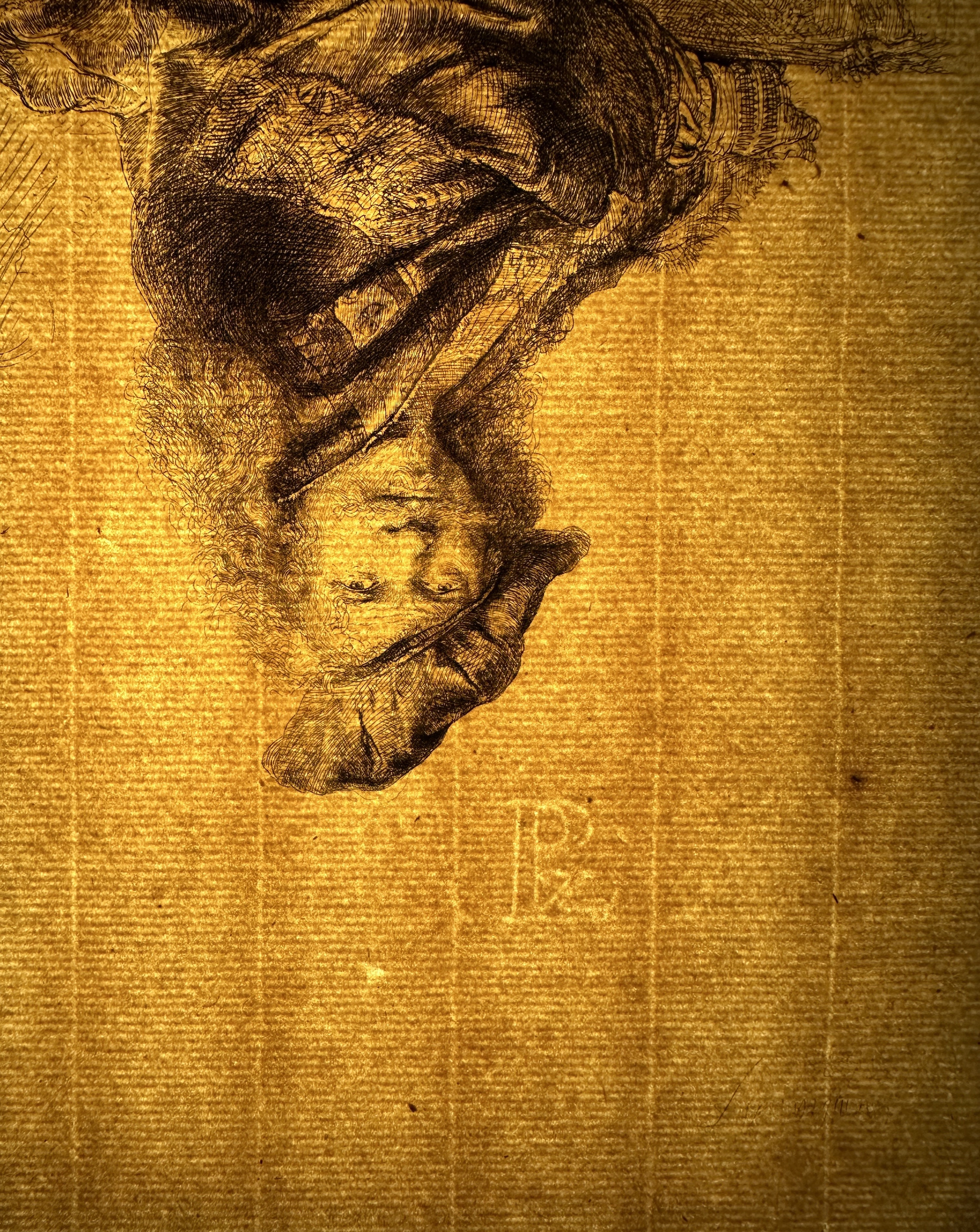
Localized transmitted-light view of the PvL countermark integrated within the fiber matrix of the sheet.

Transmitted-light capture of laid structure for comparative study of paper manufacture.

Fiber distribution and internal texture recorded under transmitted illumination for material characterization.
Platemark
Corner documentation of the impressed plate edge to confirm physical intaglio printing and boundary geometry.
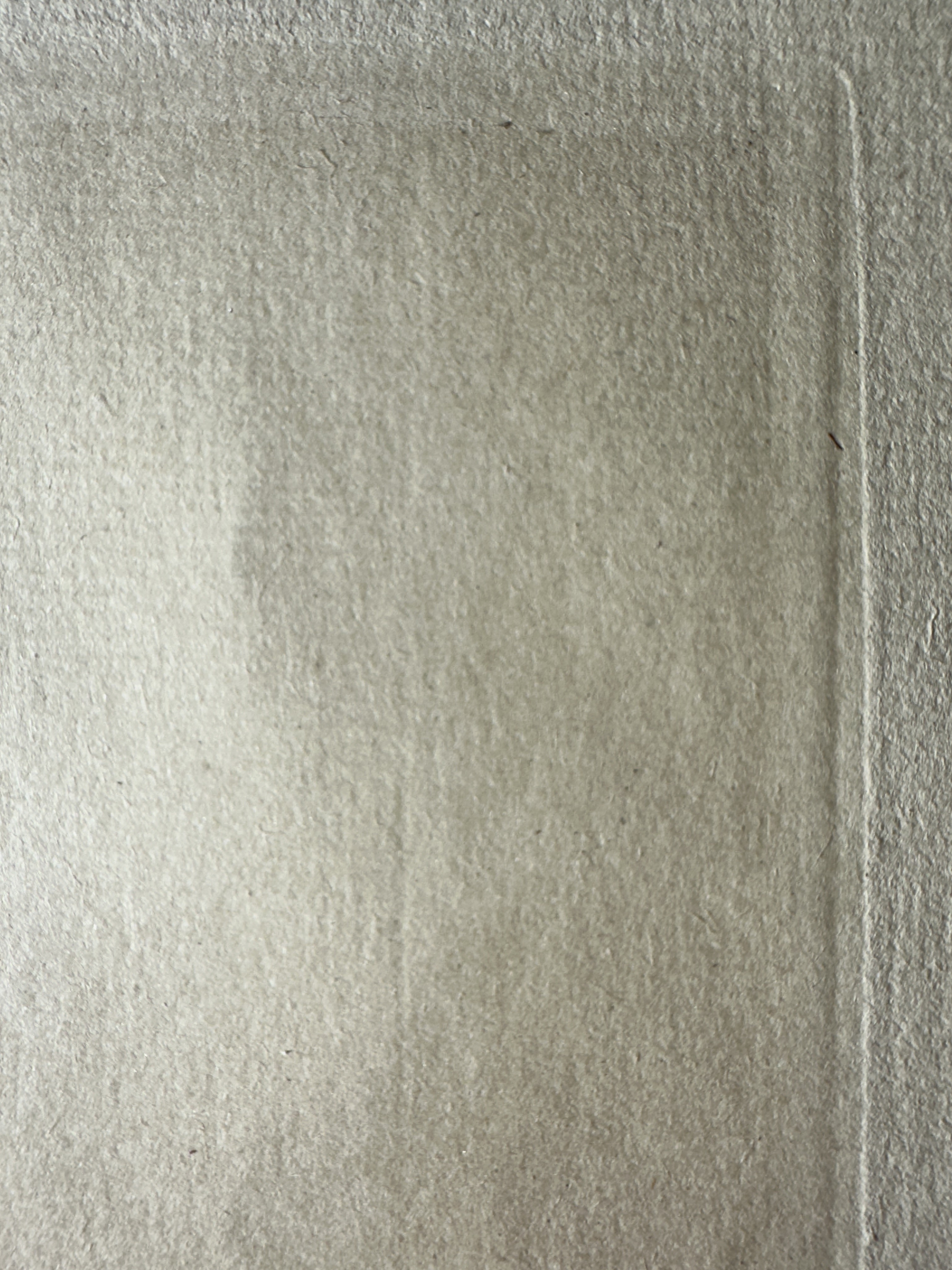
Corner documentation of the impressed plate edge for comparative assessment of press impression and plate limits.
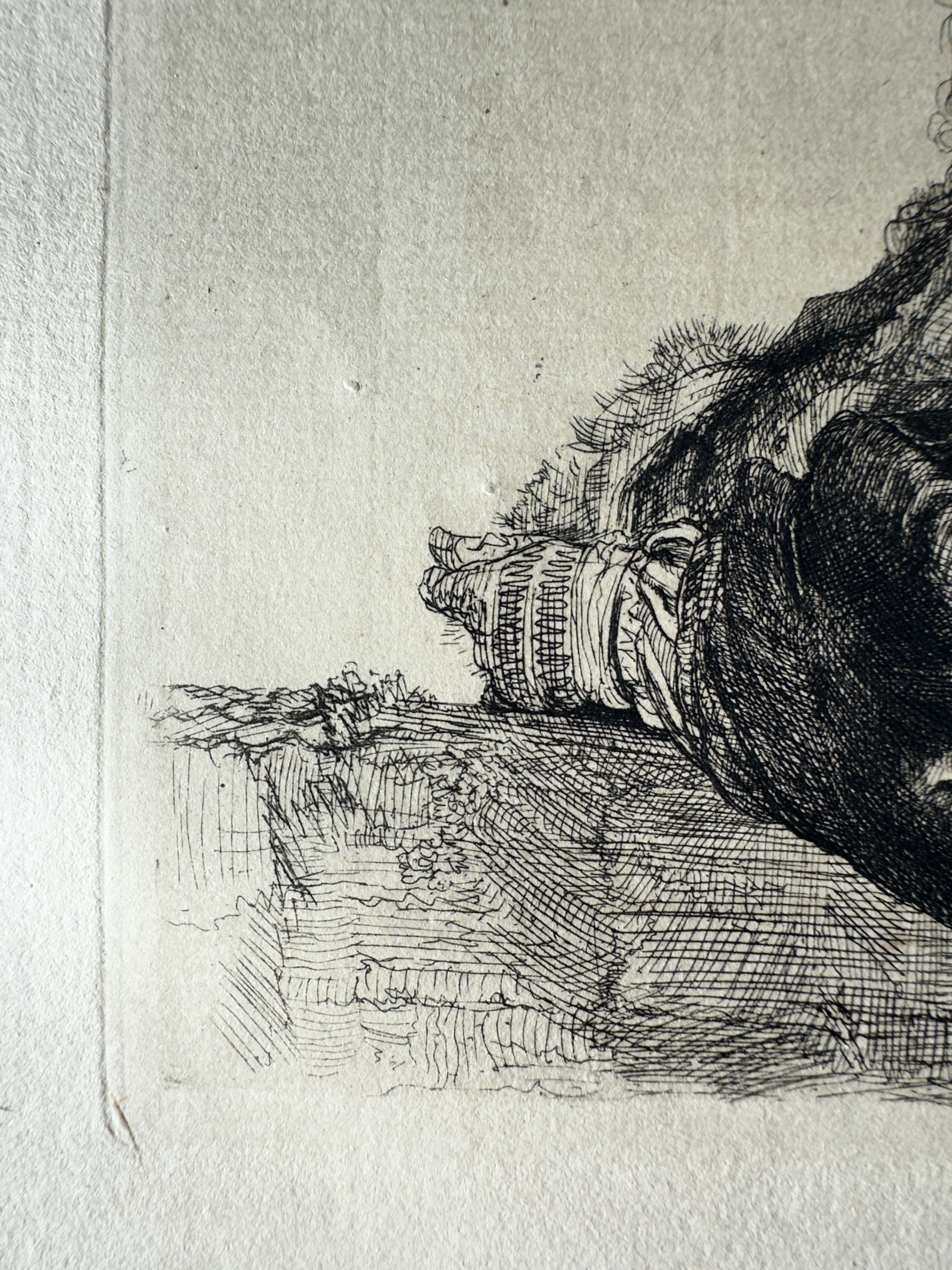
Lower-left plate impression corner used to document depth, edge definition, and paper deformation consistent with intaglio pressure.

Lower-right plate impression corner showing the plate boundary and adjacent printed field for structural comparison.
Burr and Line Morphology
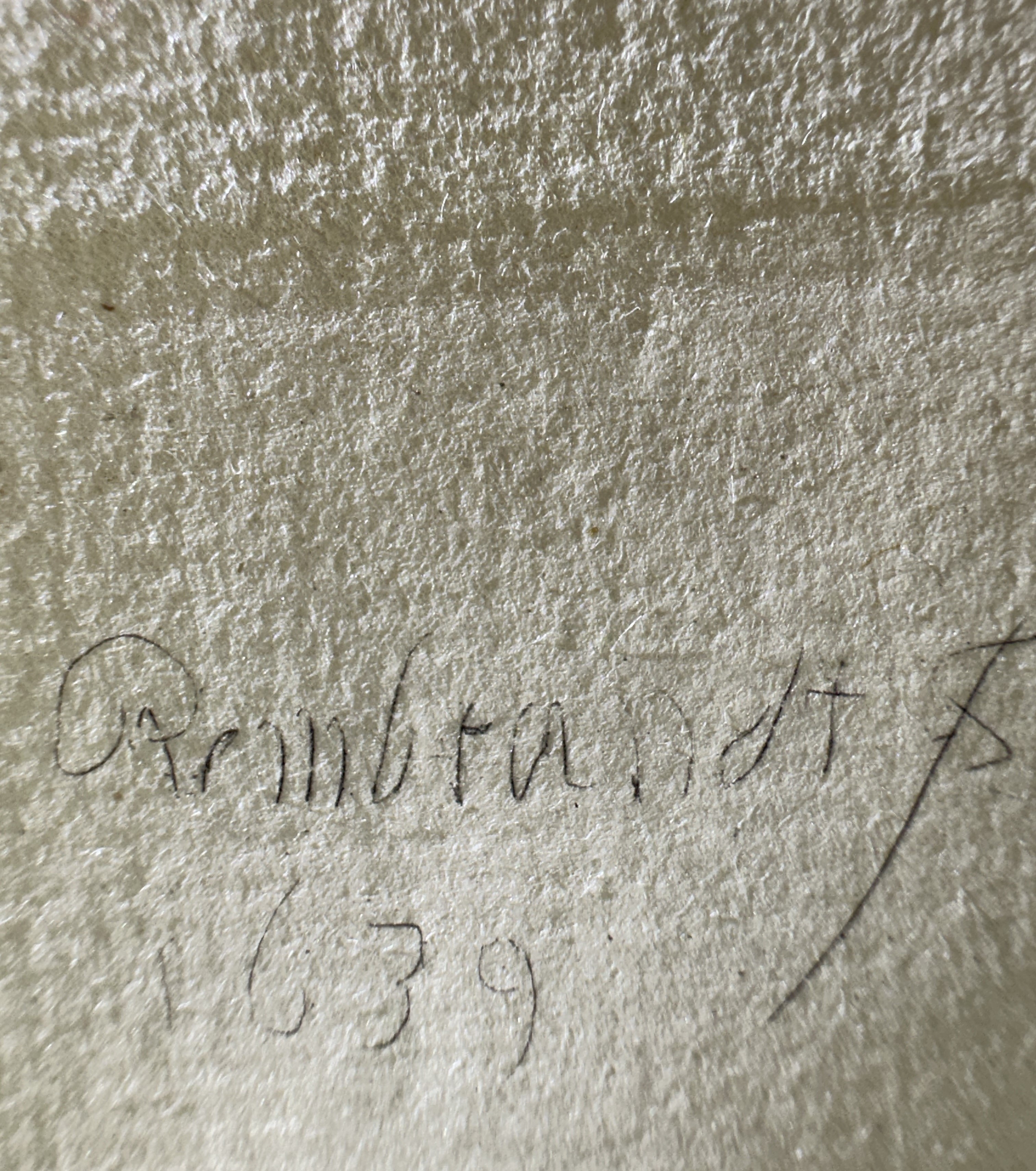
Macro documentation of raised burr and relief behavior within the ultra-fine signature strokes.
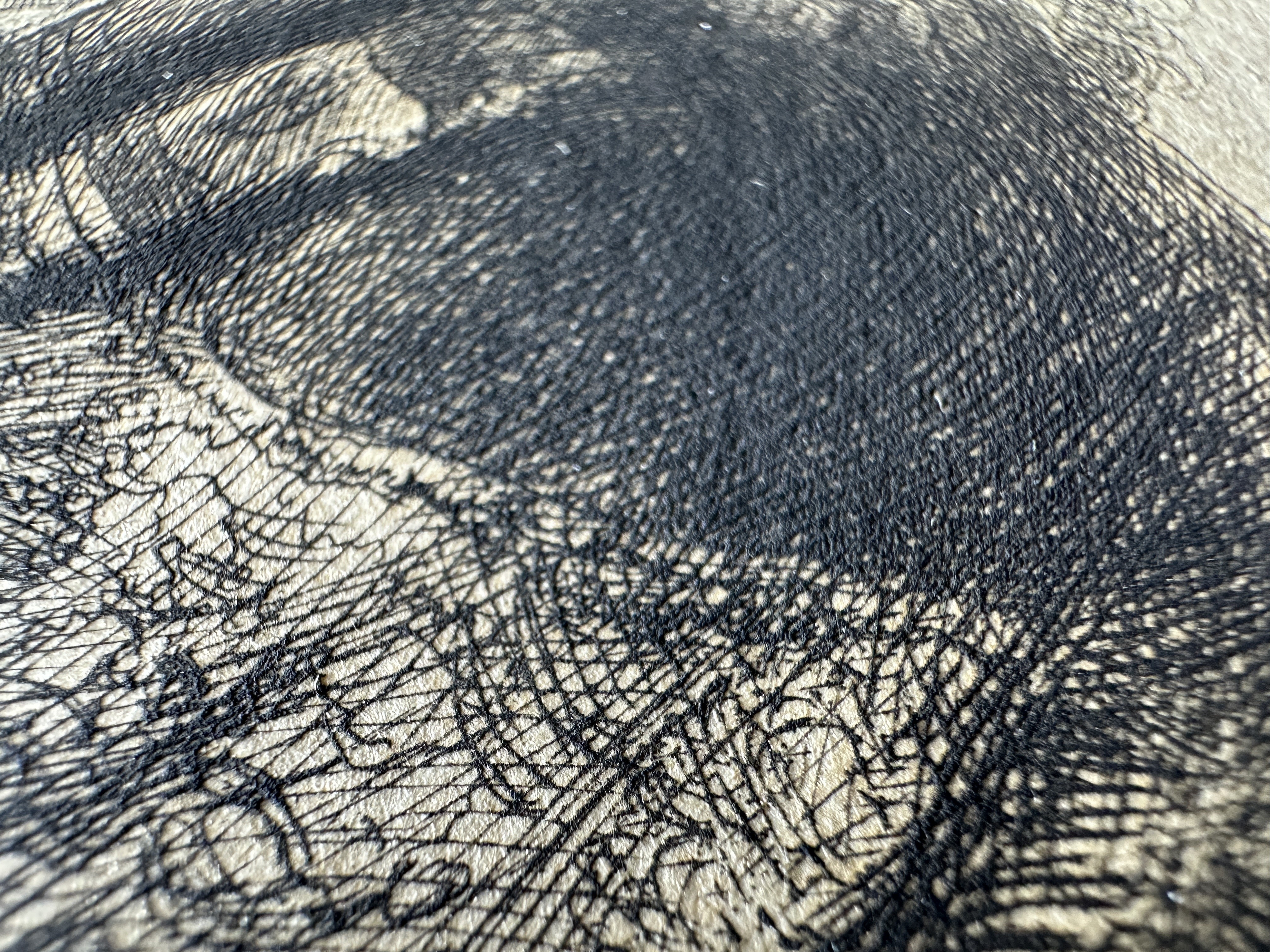
Close-up recording of burr activity along key incised strokes, showing raised edge effects and ink retention.
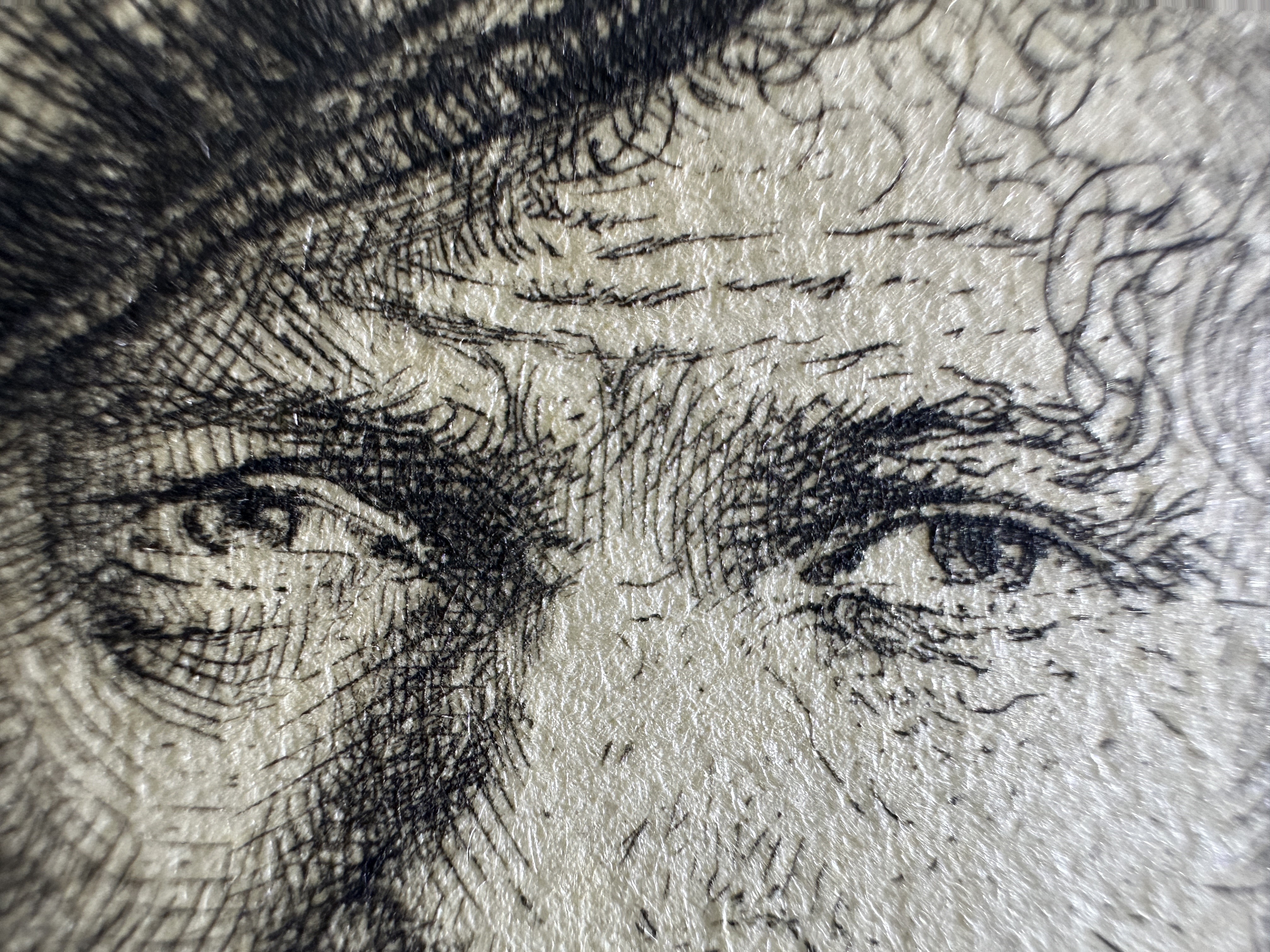
Additional burr-focused detail documenting localized relief and ink build-up consistent with drypoint/etched incision.
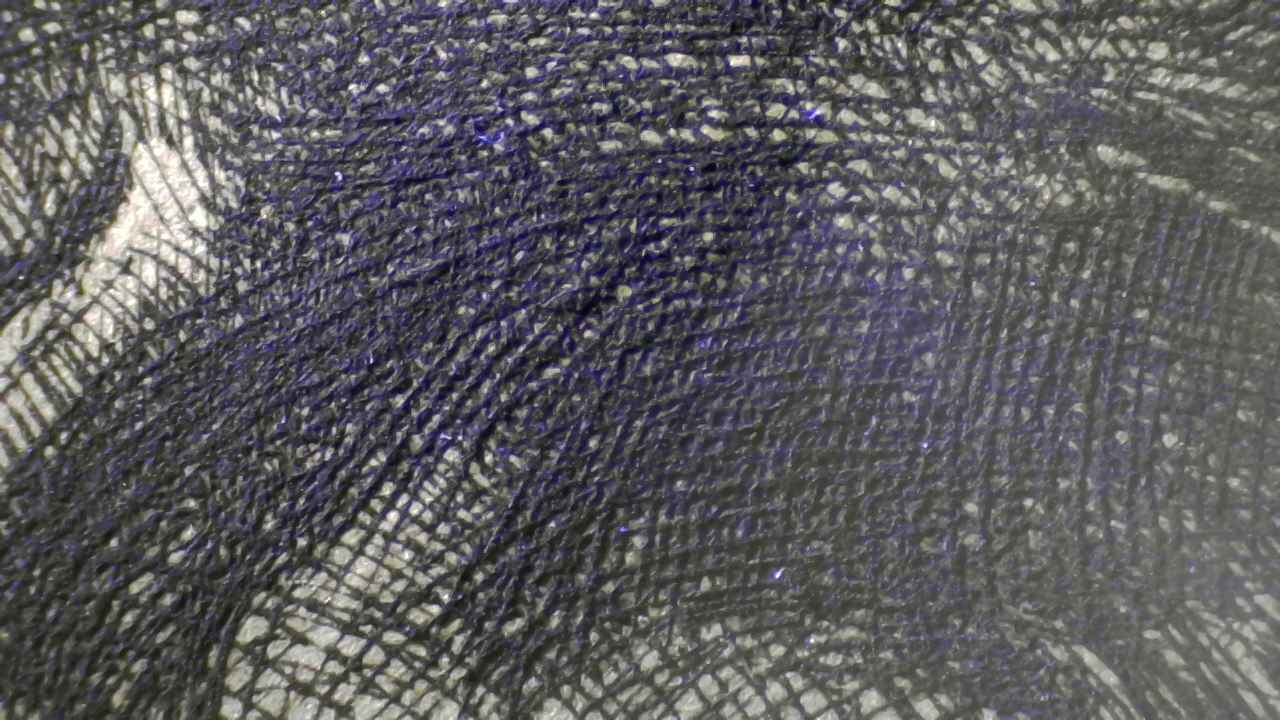
Grazing illumination capturing specular highlights and shadow asymmetry typical of raised burr along incised edges.

Calibrated macro view documenting raised burr with a visible scale reference for measurement-based reporting.
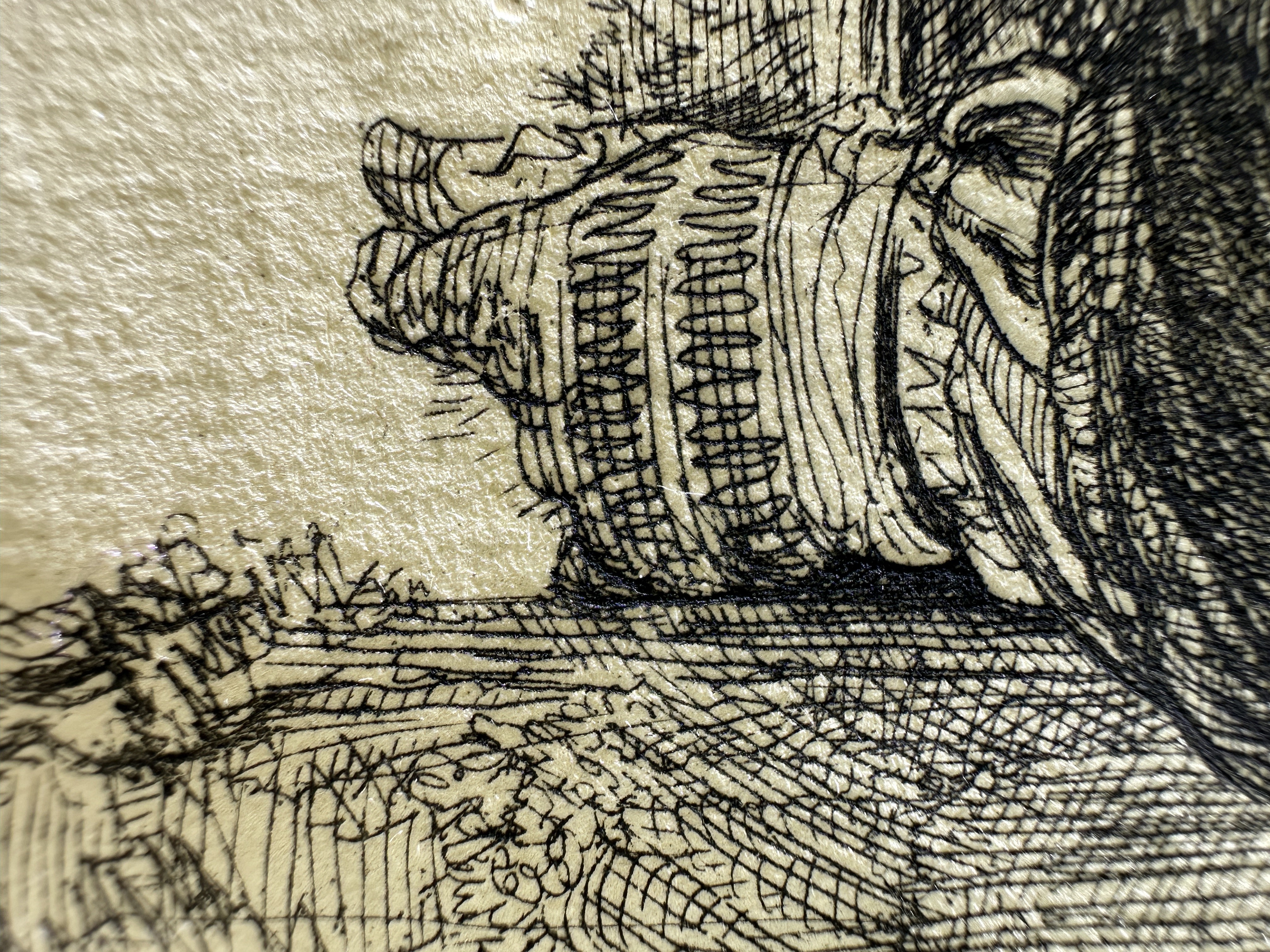
Macro view of hand modelling and surrounding hatchings to document line behavior, ink deposition, and micro-relief.

Detail of the lower-right architectural element, recorded for plate-state comparison and line completion assessment.
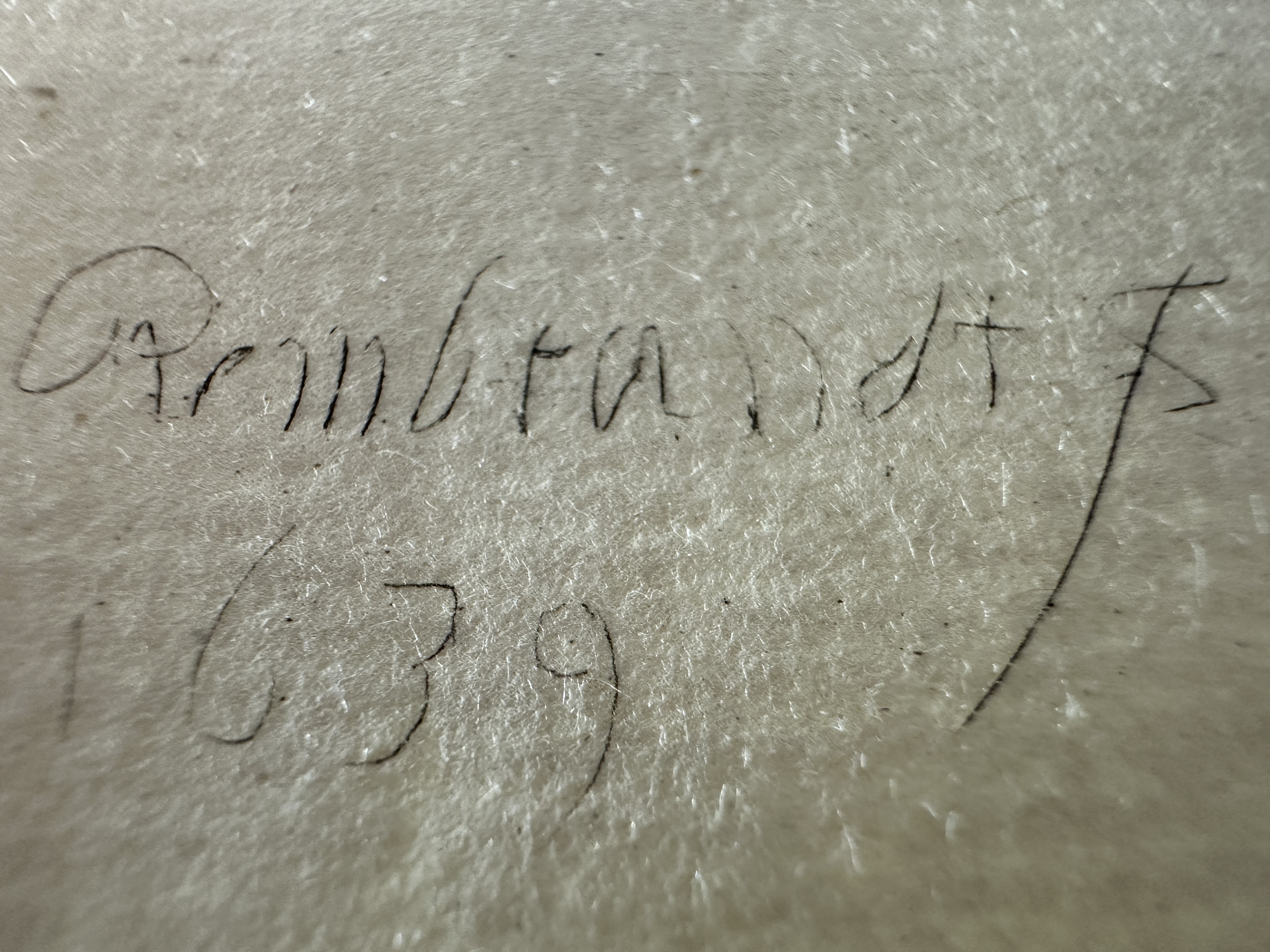
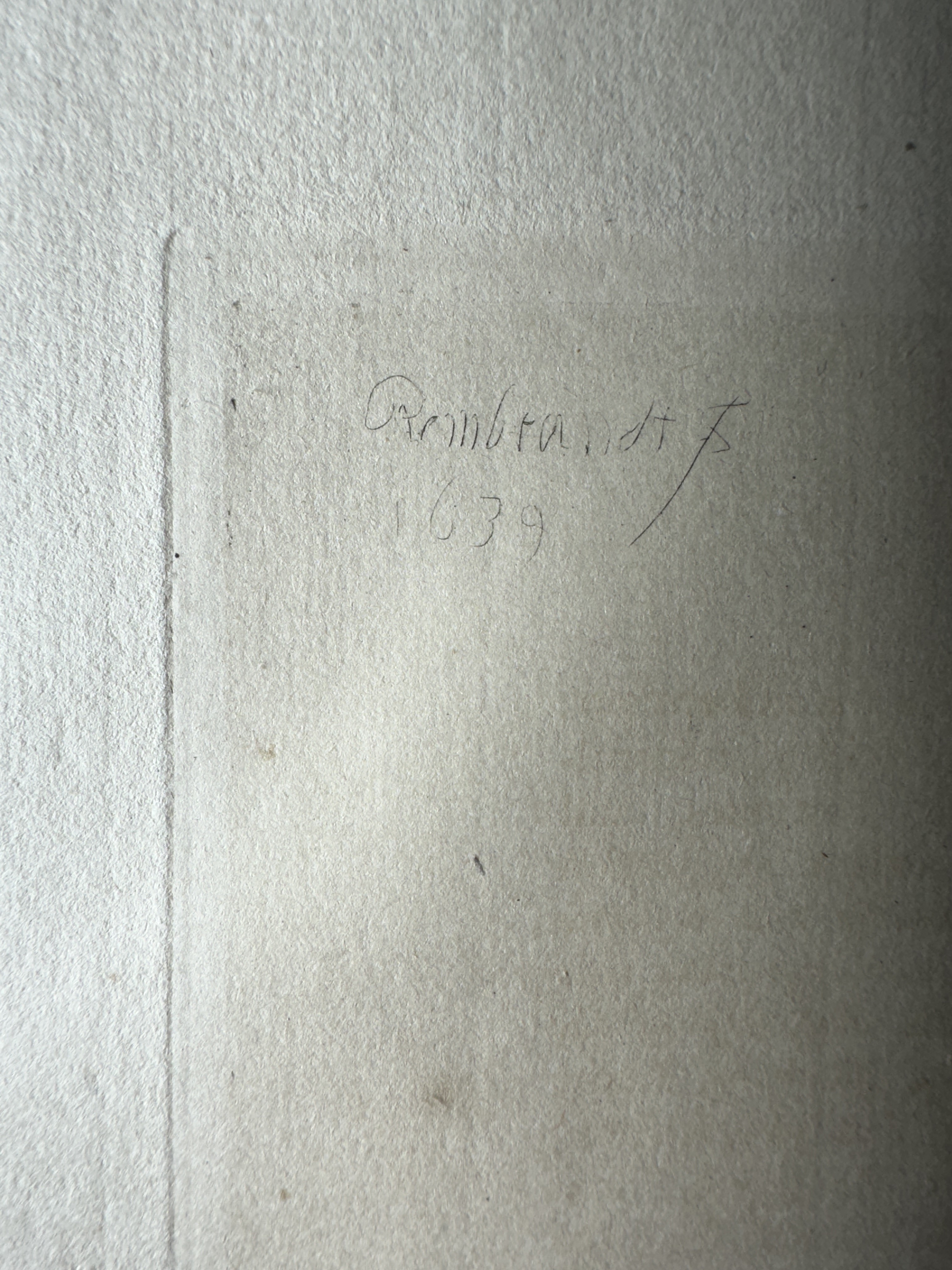
Macro capture of the signature area to document stroke structure, ink pooling, and relief consistent with incised printing.

Macro documentation of facial modelling, hatch density, and edge clarity for comparative assessment of plate development.

Detail focusing on fine line transitions and local ink accumulation across the nose–mouth region.
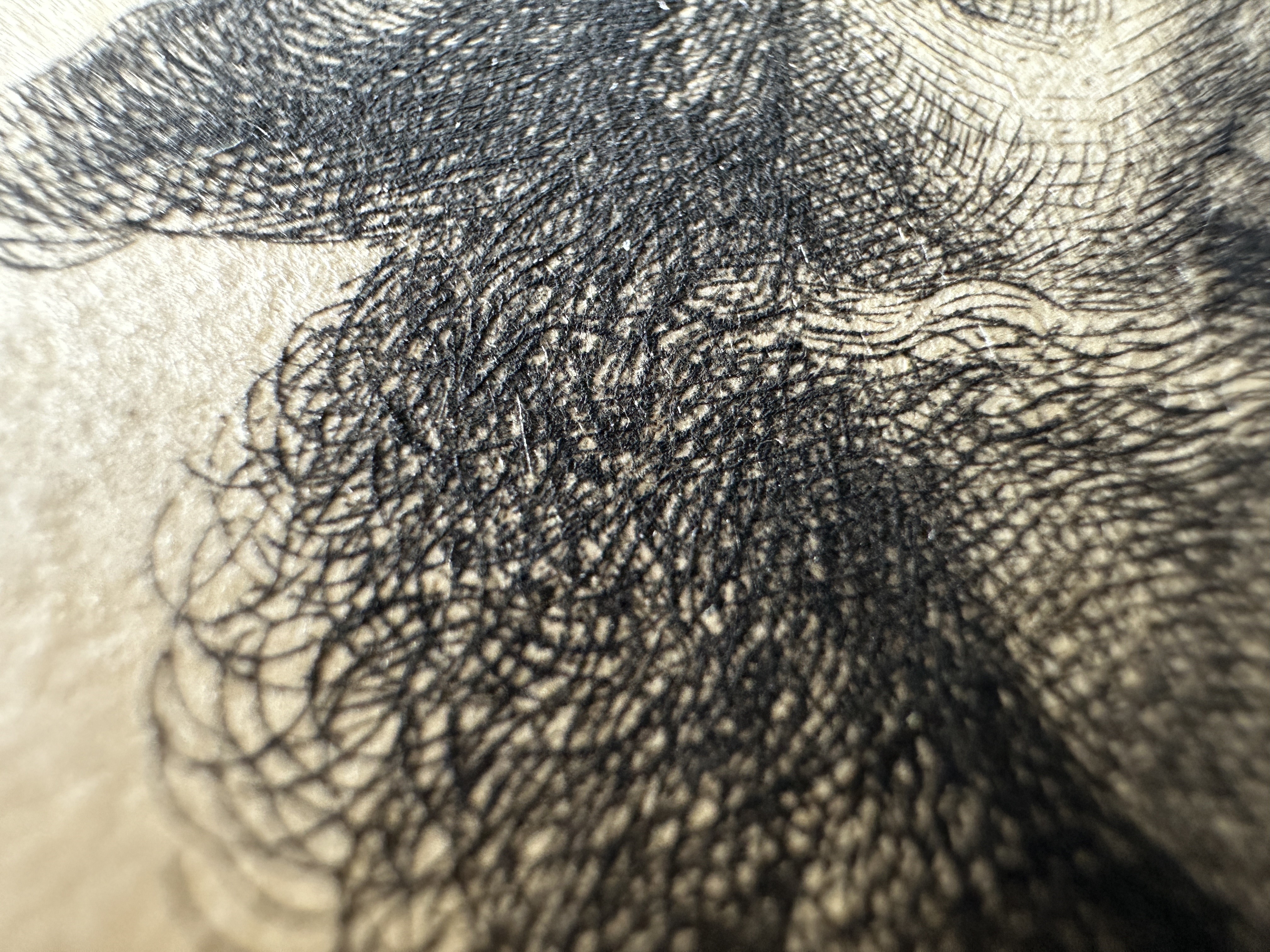
Macro documentation of hair and moustache strokes, showing organic line variation and localized ink retention.

Hair stroke field recorded to document groove behavior, crossing structure, and absence of photomechanical patterning.
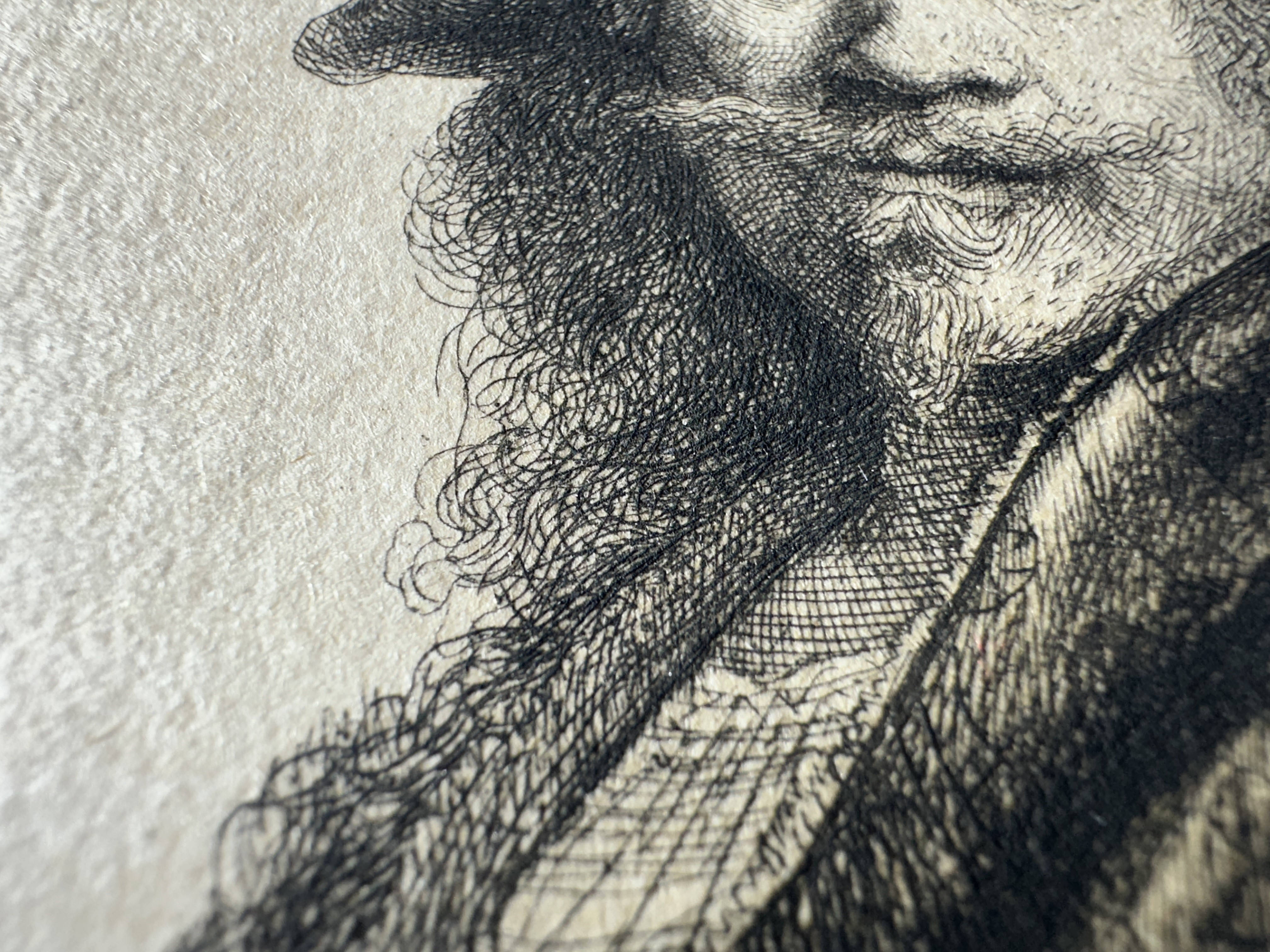
Transition zone documenting differences in stroke density and ink loading between hair and garment shading.
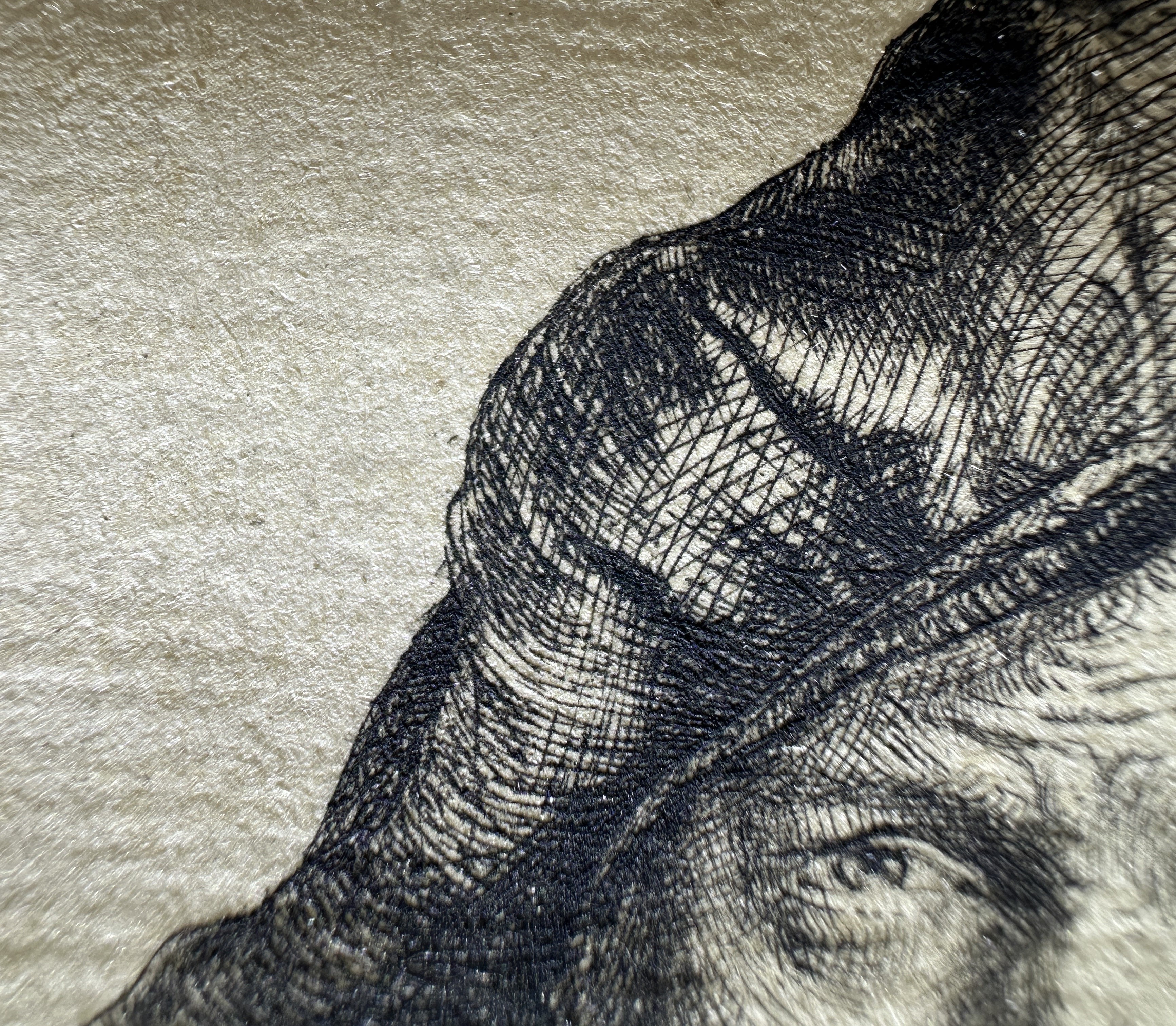
Macro view across face and headwear to document contour sharpness, tonal build-up, and relief-related edge behavior.
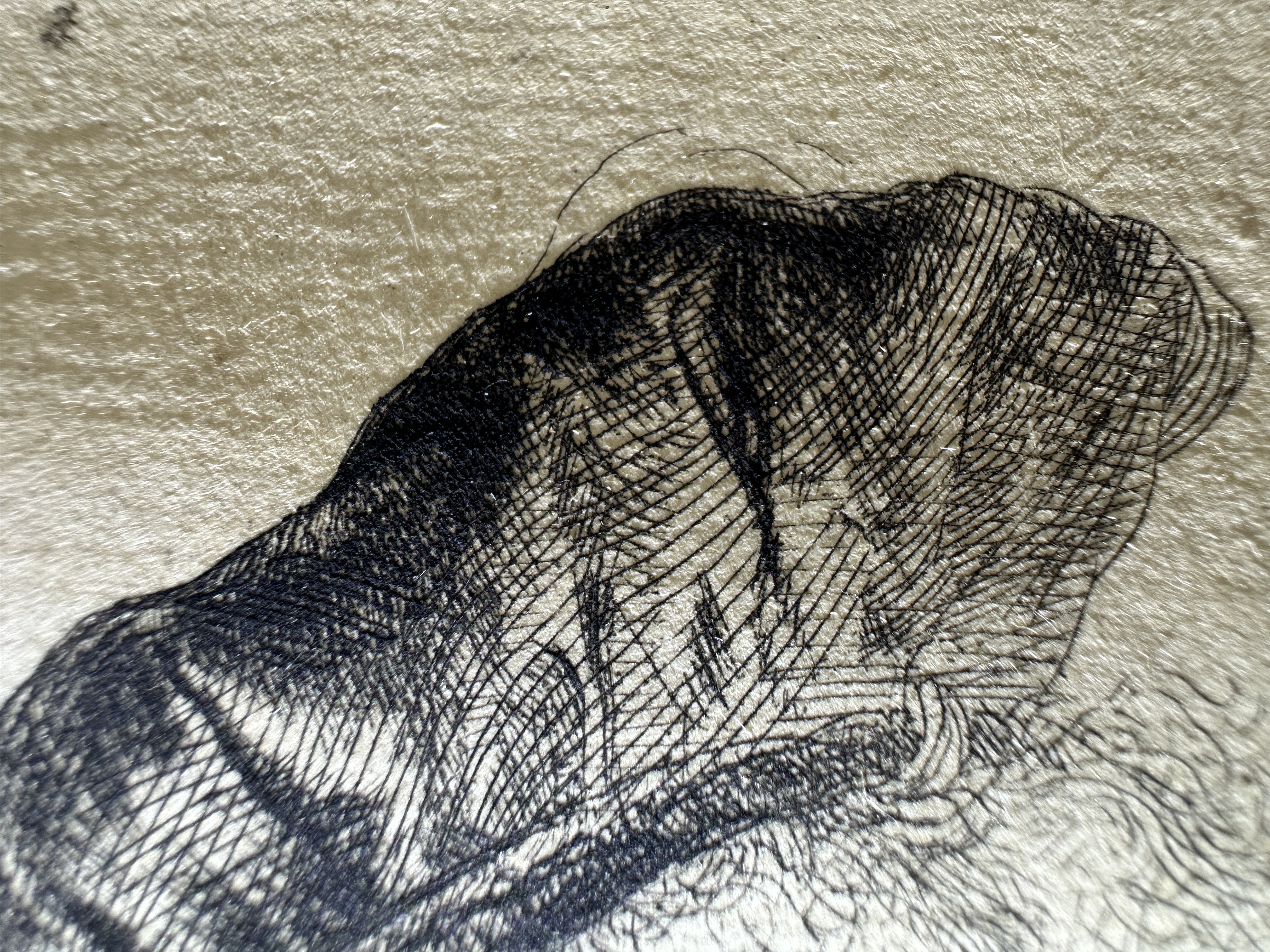
Headwear shading recorded to document groove structure, cross-hatching density, and ink pooling in darker passages.

Lower-right garment zone used to document stroke reinforcement patterns and local printing behavior.
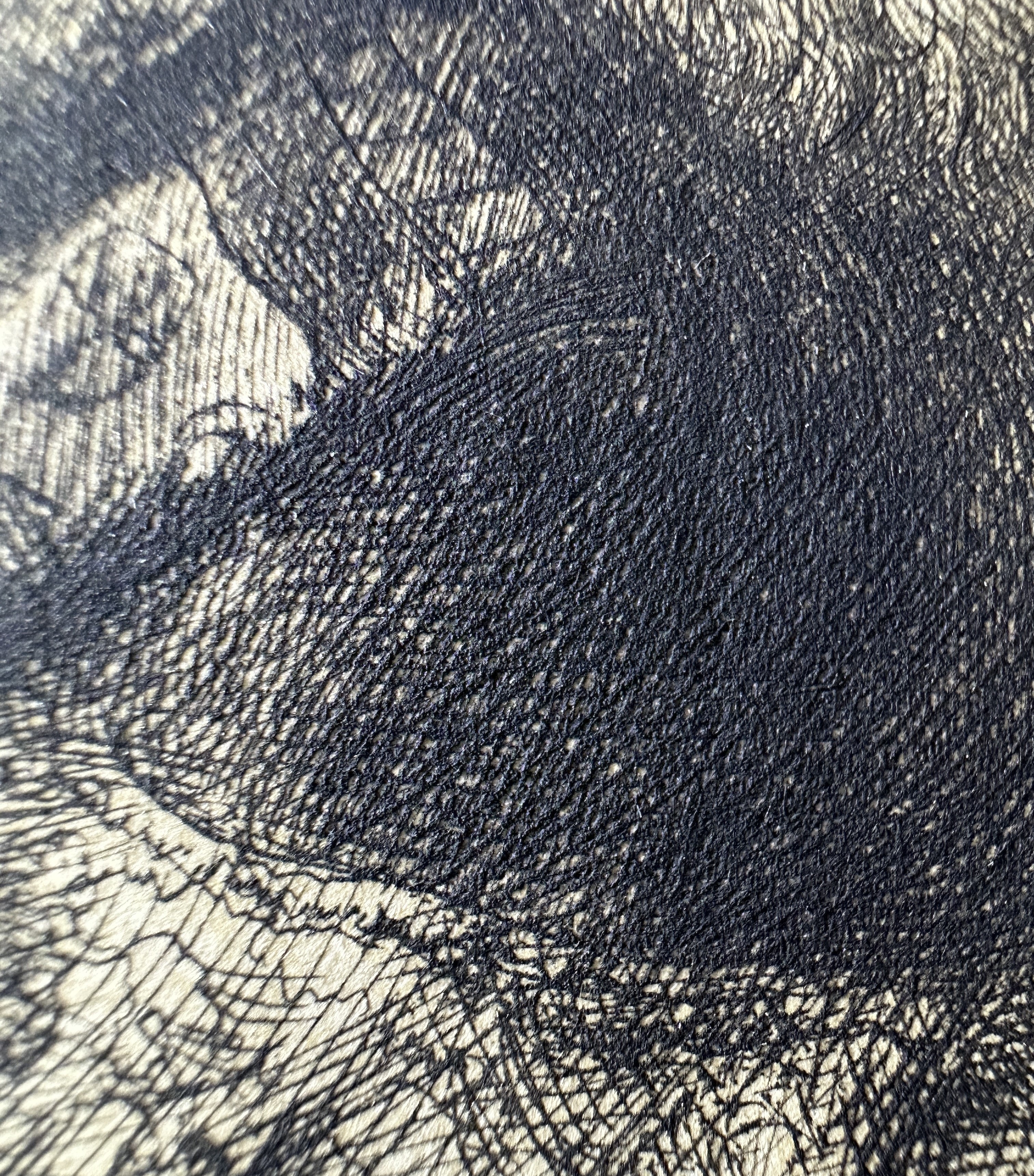
Jacket shading recorded to assess line continuity, tonal build, and ink retention within recessed grooves.
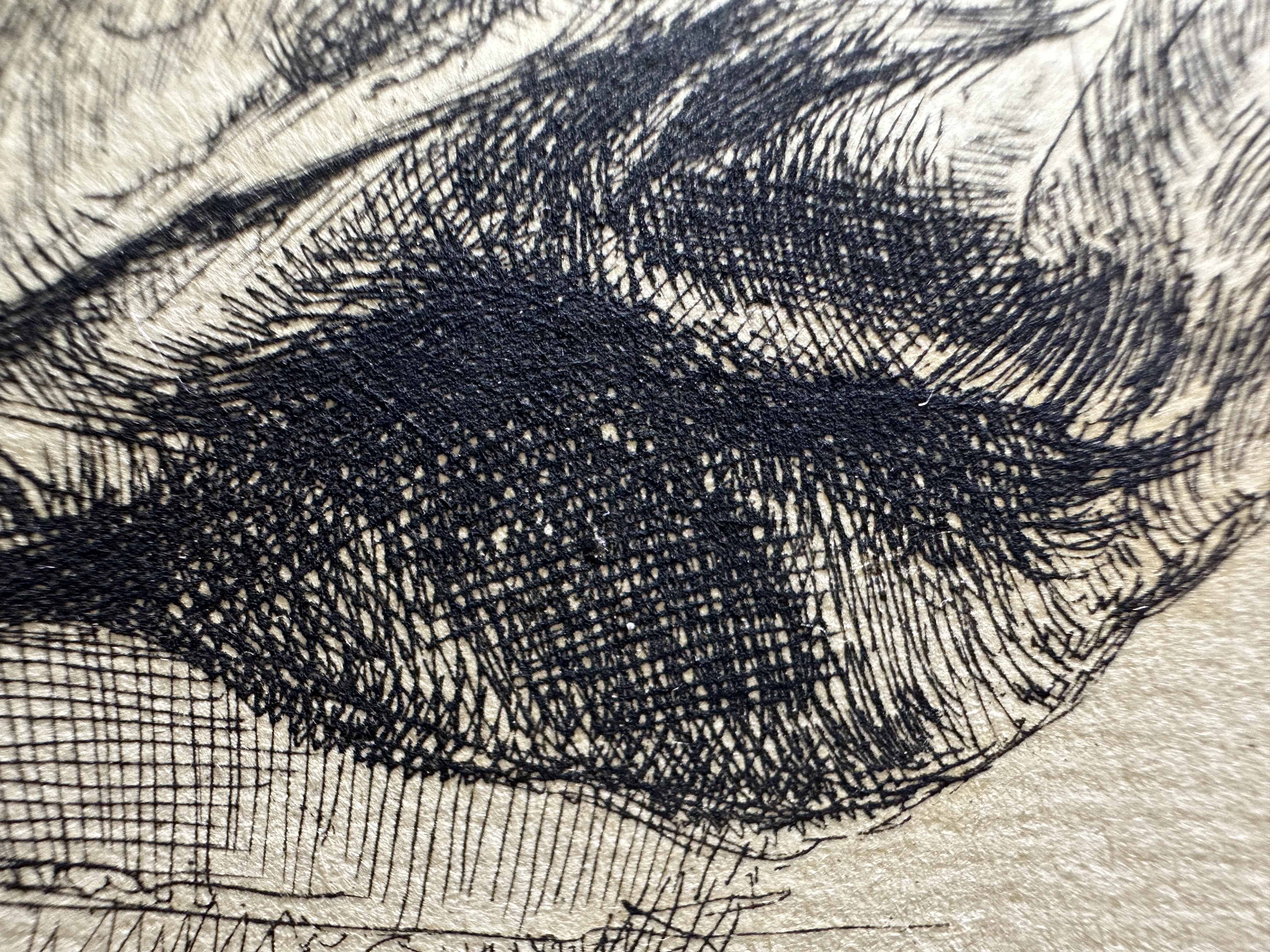
Raking-light documentation emphasizing surface relief and raised-edge effects in the headwear strokes.

Macroscopic detail showing ink embedded within the paper fibers along incised cross-hatched lines, with natural variation in ink load.

It is articulated solely through directional hatching and line density, and tonal depth emerges from overlapping strokes rather than a continuous tone.
Technical Microscopy
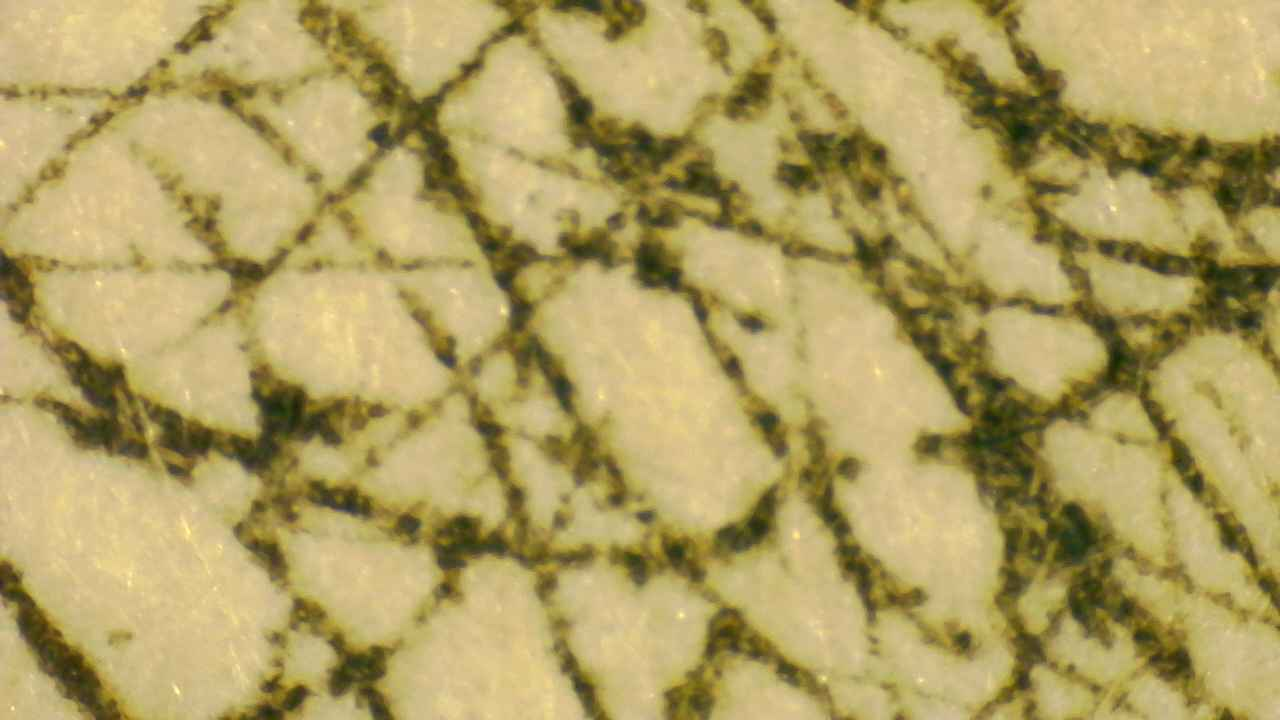
High-magnification documentation of hair strokes showing groove behavior and organic line vibration (no screened pattern).

Fine signature strokes recorded to document incised-groove structure and direct ink–fiber interaction.
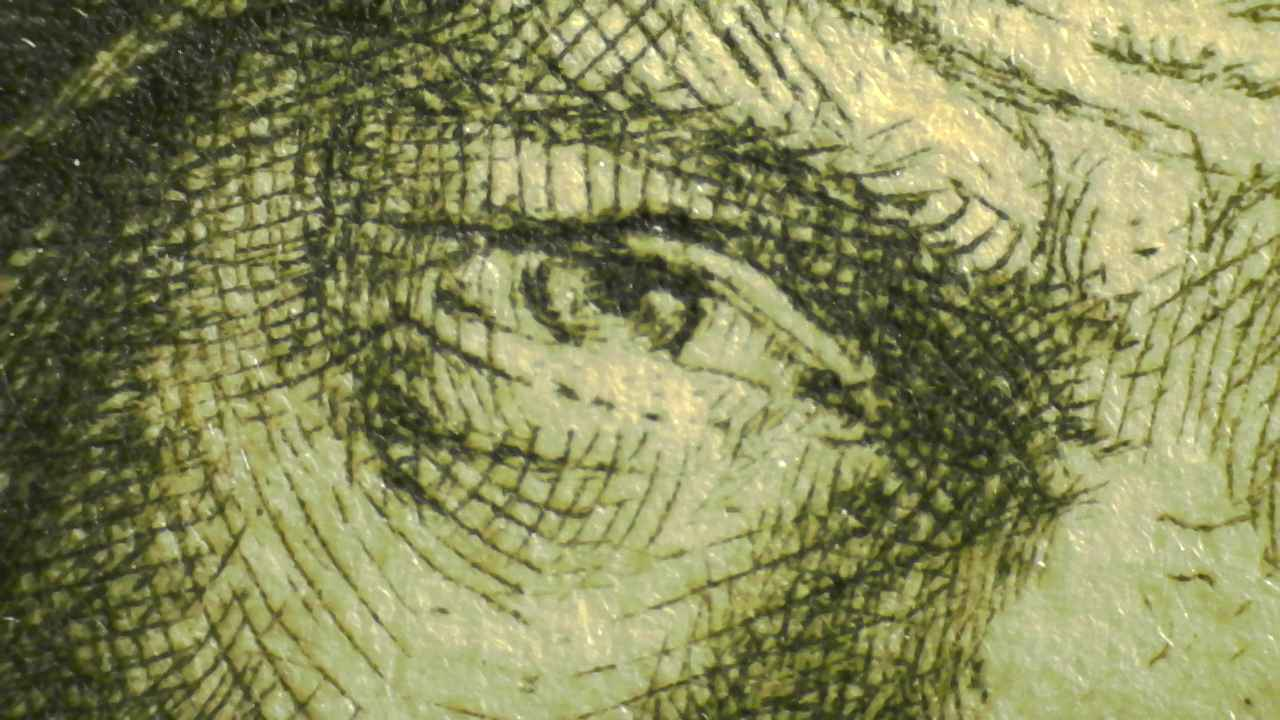
Microscopic view of eyelid and surrounding hatchings showing tonal build within line valleys (intaglio behavior).

Microscopy of the headwear shading showing dense strokes with natural variation and ink pooling inside incised channels.
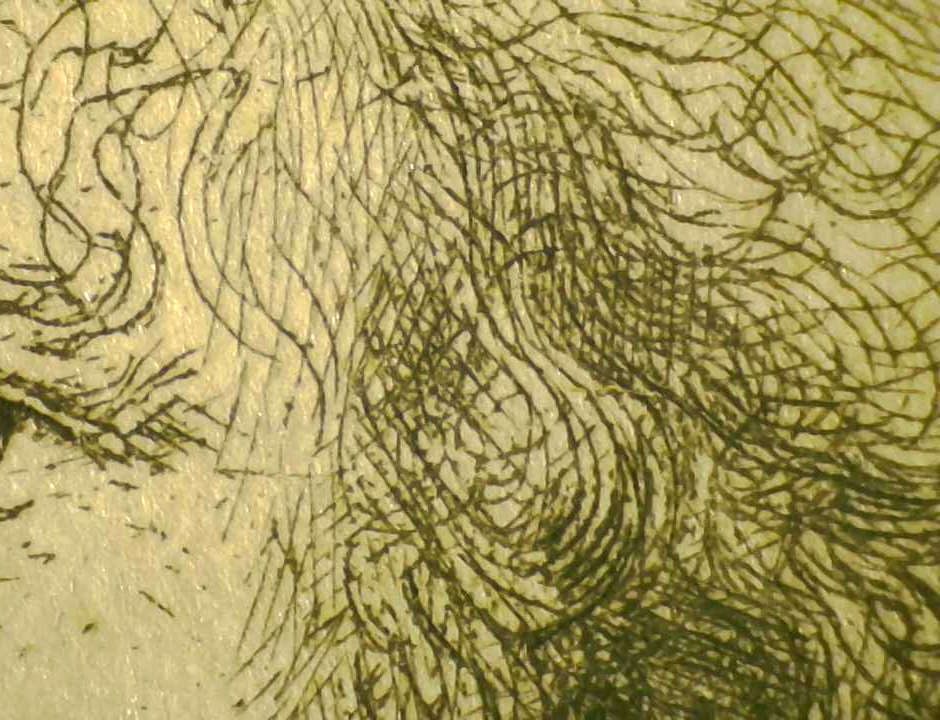
Fine hair lines recorded to document continuous incised strokes and the absence of repeating dot/grain structures.
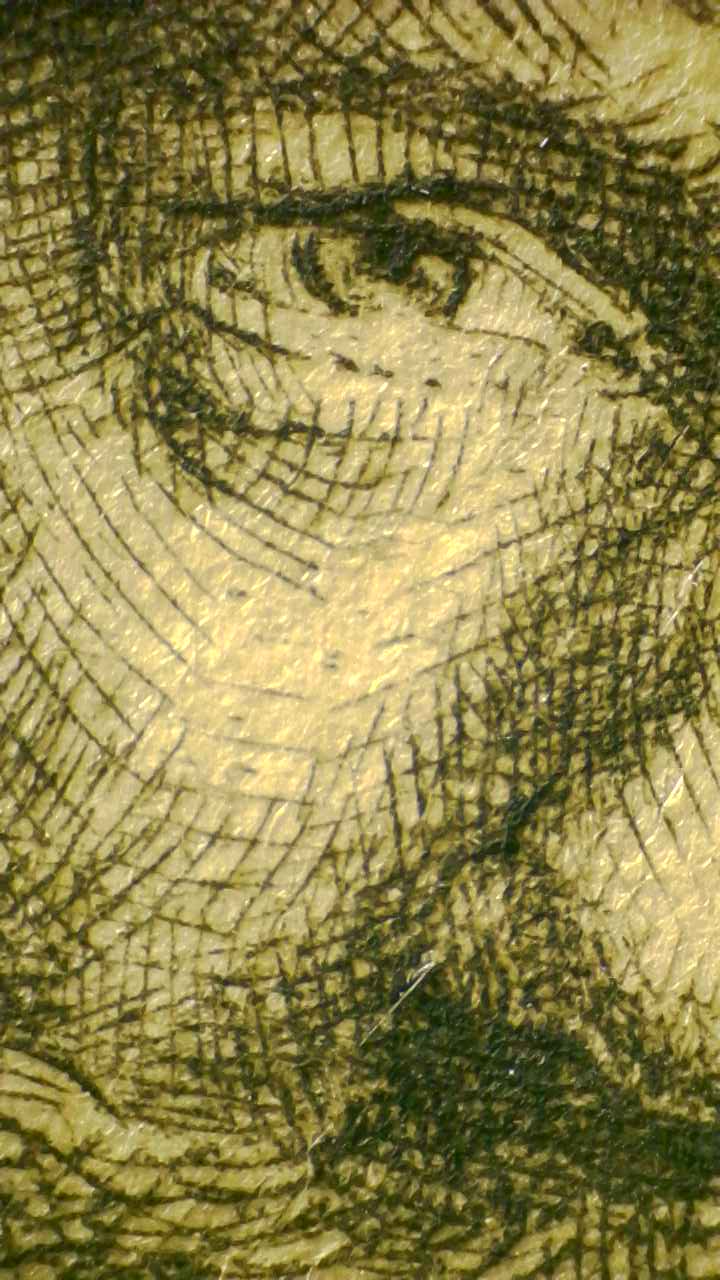
Microscopic intersection zone showing differential ink accumulation at crossings consistent with real groove depth.
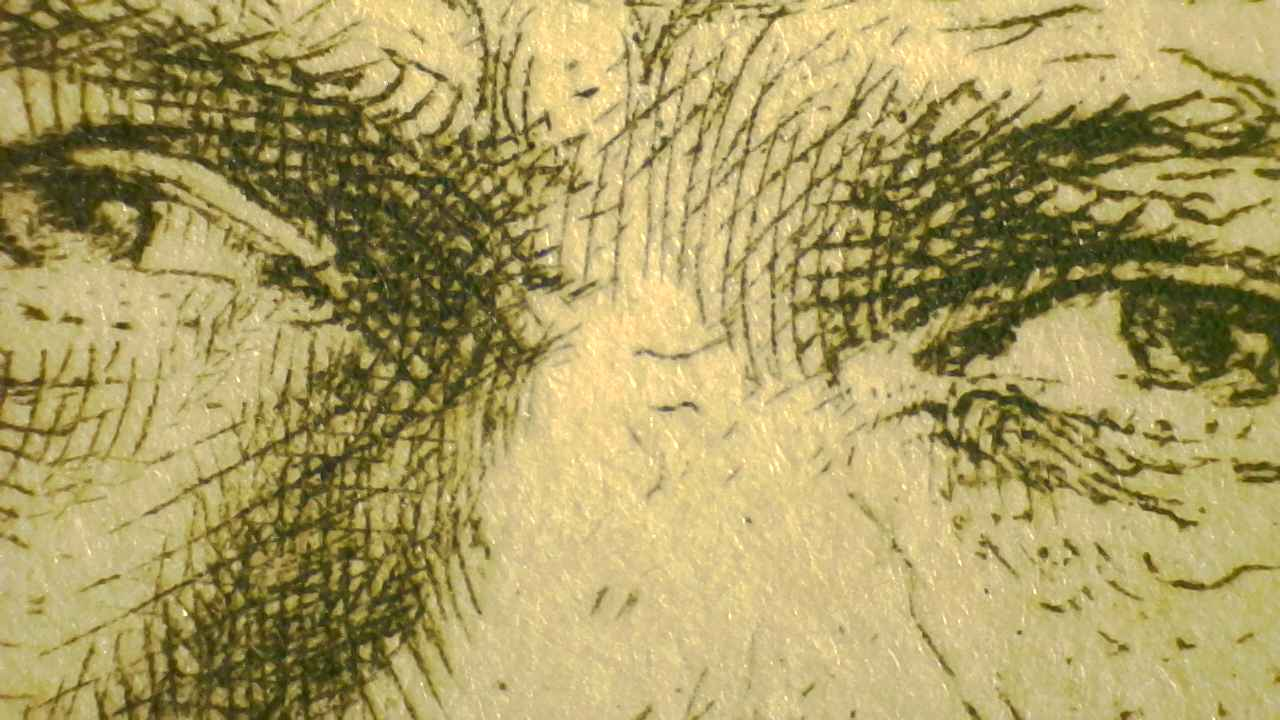
Comparative microscopic view of both eyes to document consistent line behavior and ink deposition in paired features.

Close-up of signature stroke segments, recorded to show line edges, ink retention, and fiber interaction.

Detail of the date in the signature, documented for stroke character, incision continuity, and ink behavior.

Microscopic view of facial passages to document line morphology, tonal transitions, and non-mechanical stroke variation.
Comparative Overlays
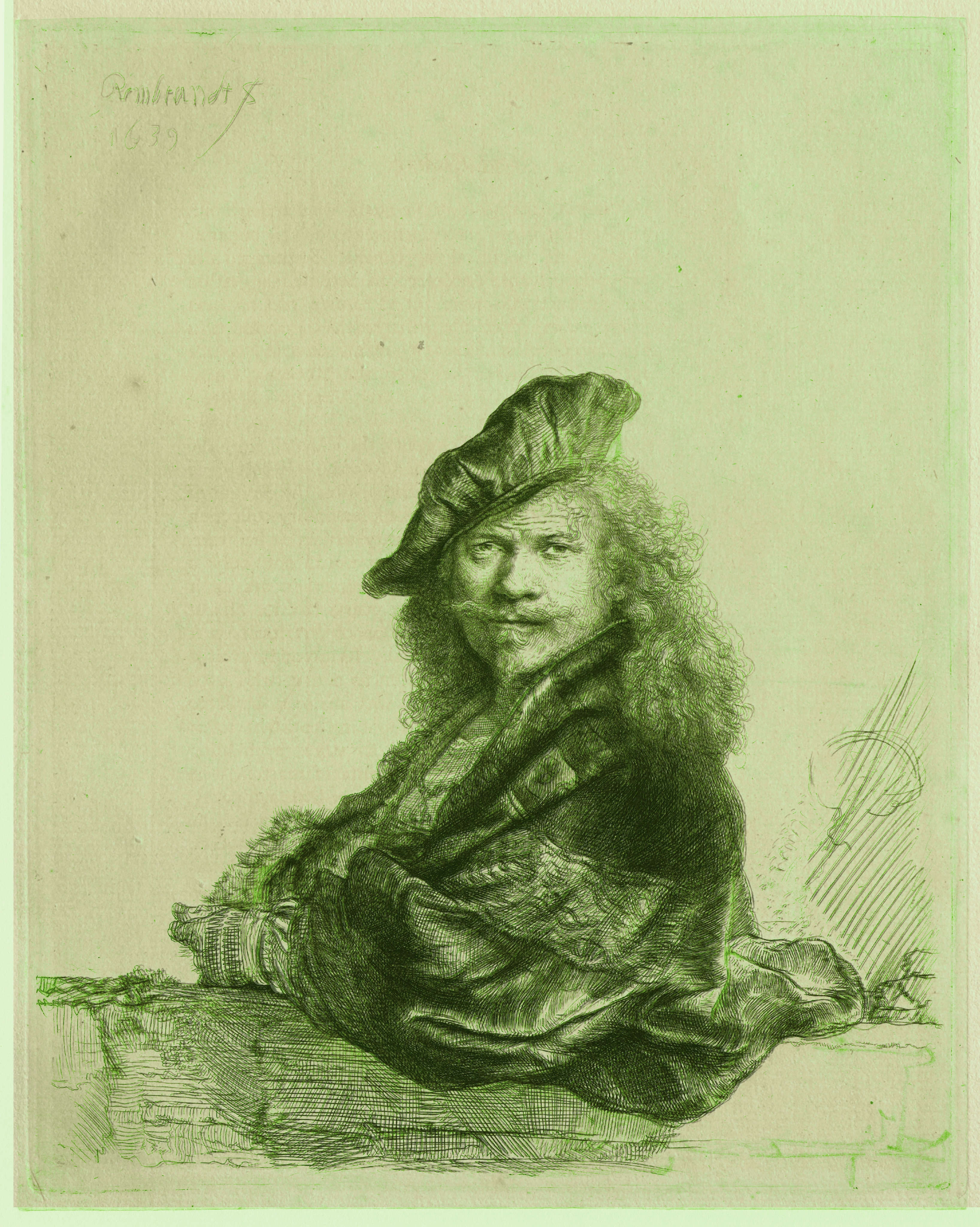
Overlay demonstrating structural correspondence and placement within the plate-impression boundaries of the sheet.
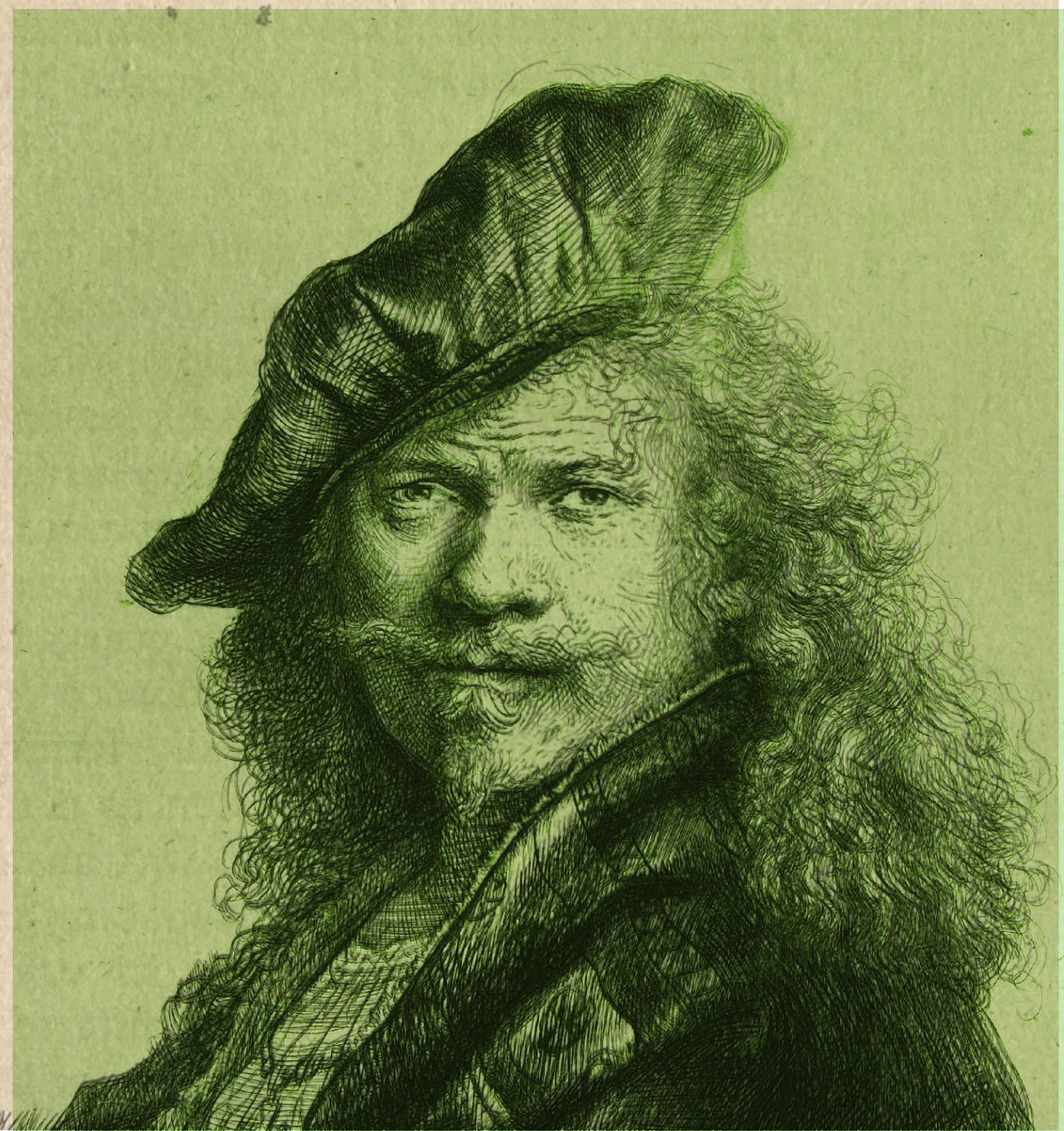
Overlay presented to demonstrate proportional and morphological correspondence of facial features within the same matrix.
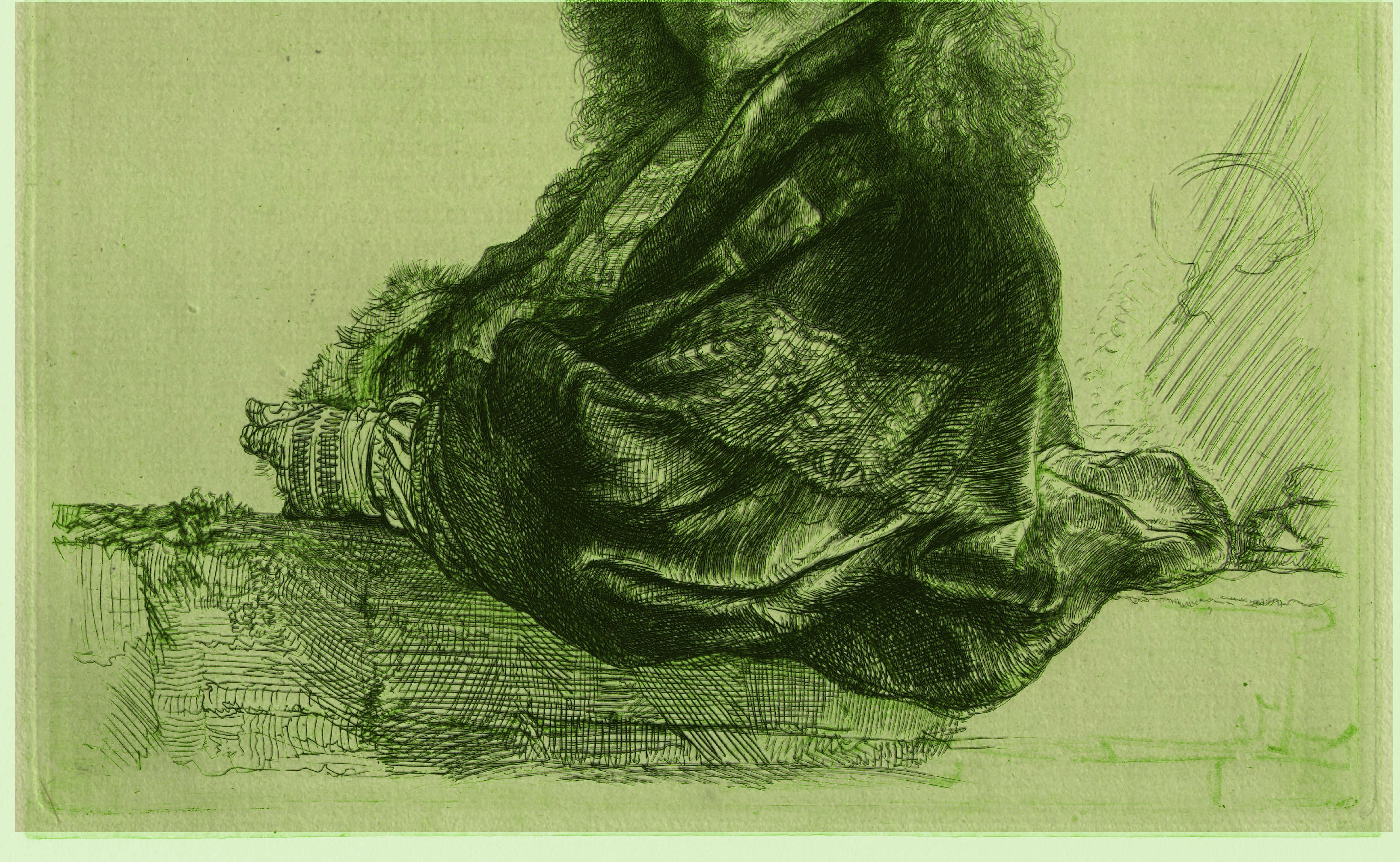
Detail overlay of the lower architectural element, used to compare line placement and completion within the engraved field.
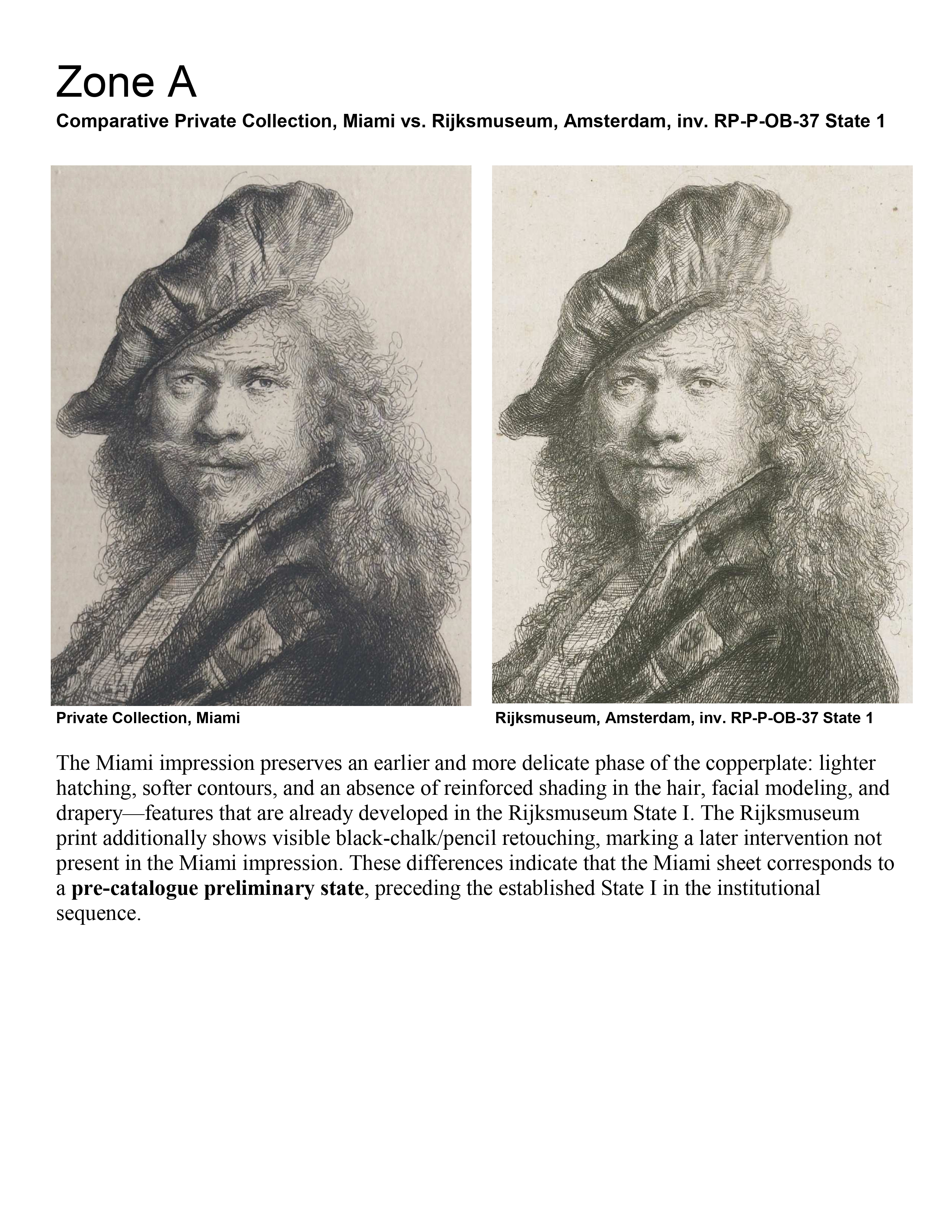
Comparative A/B zone isolating upper body and facial modelling for plate-development review against the institutional reference.

Comparative A/B zone isolating lower drapery, stone sill, and right margin to document consistent differences in plate development.