The Álvarez Collection
Private Viewing Room • Technical file

The Mill B. 233-Rembrandt van Rijn

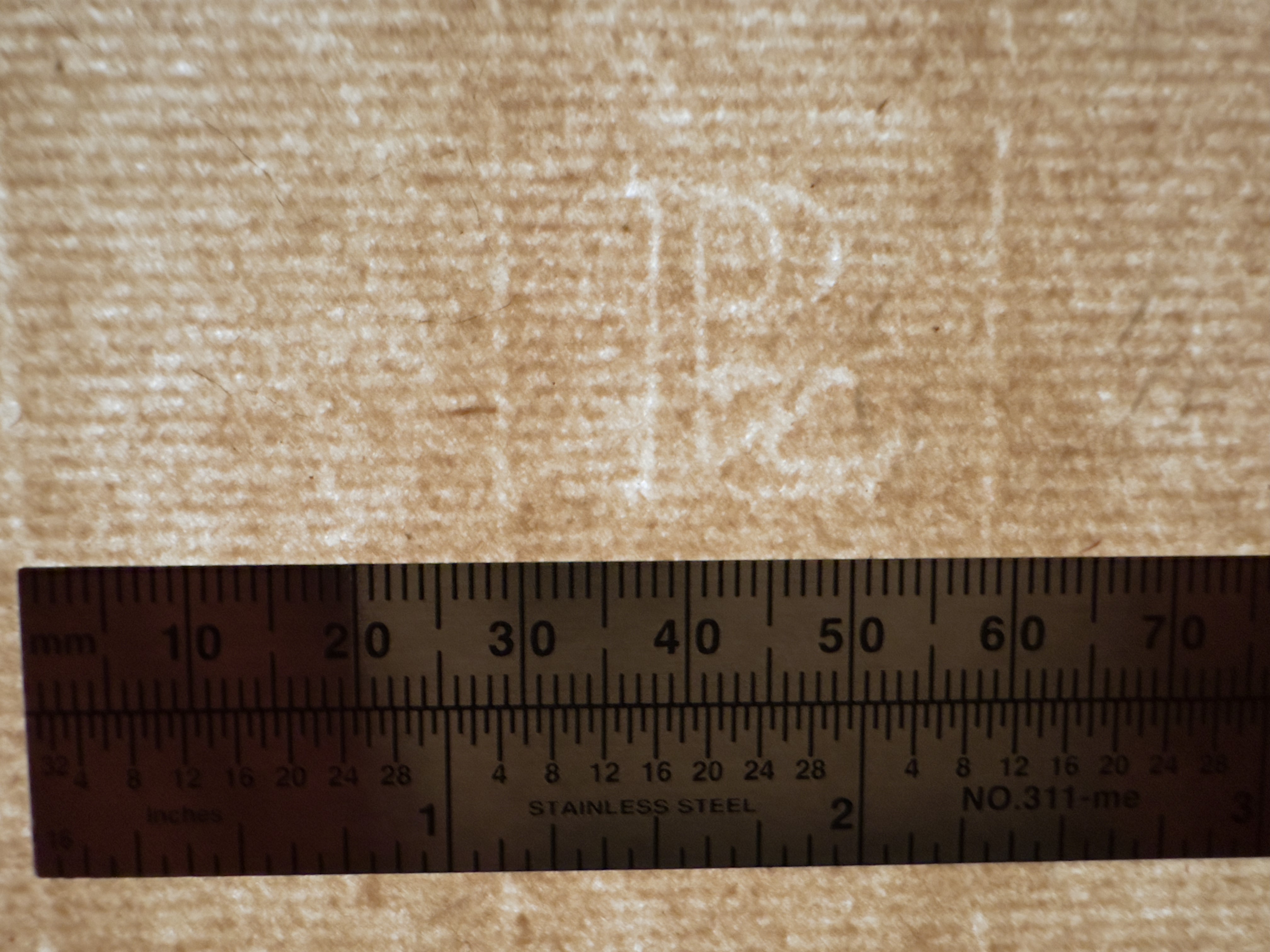
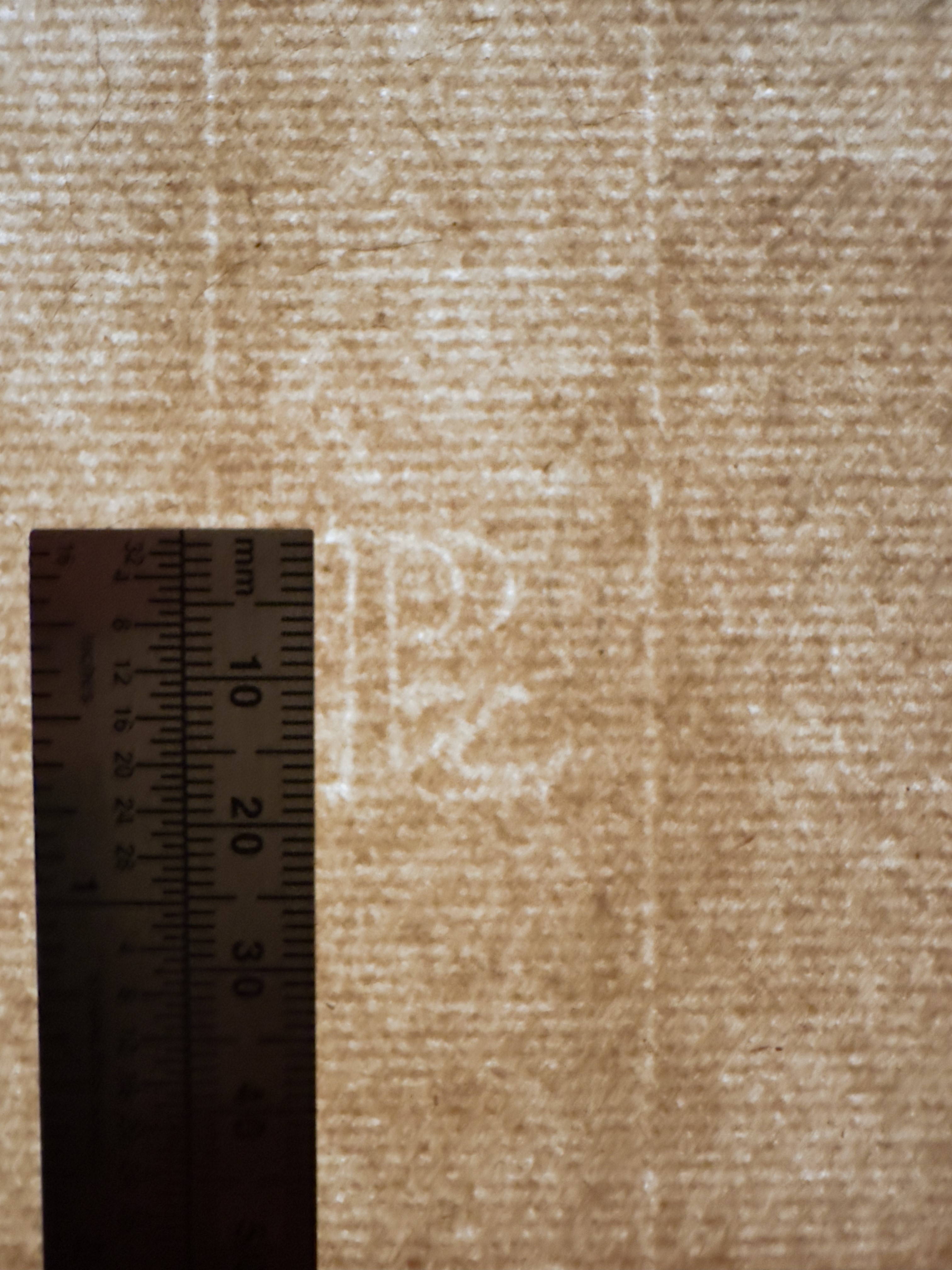
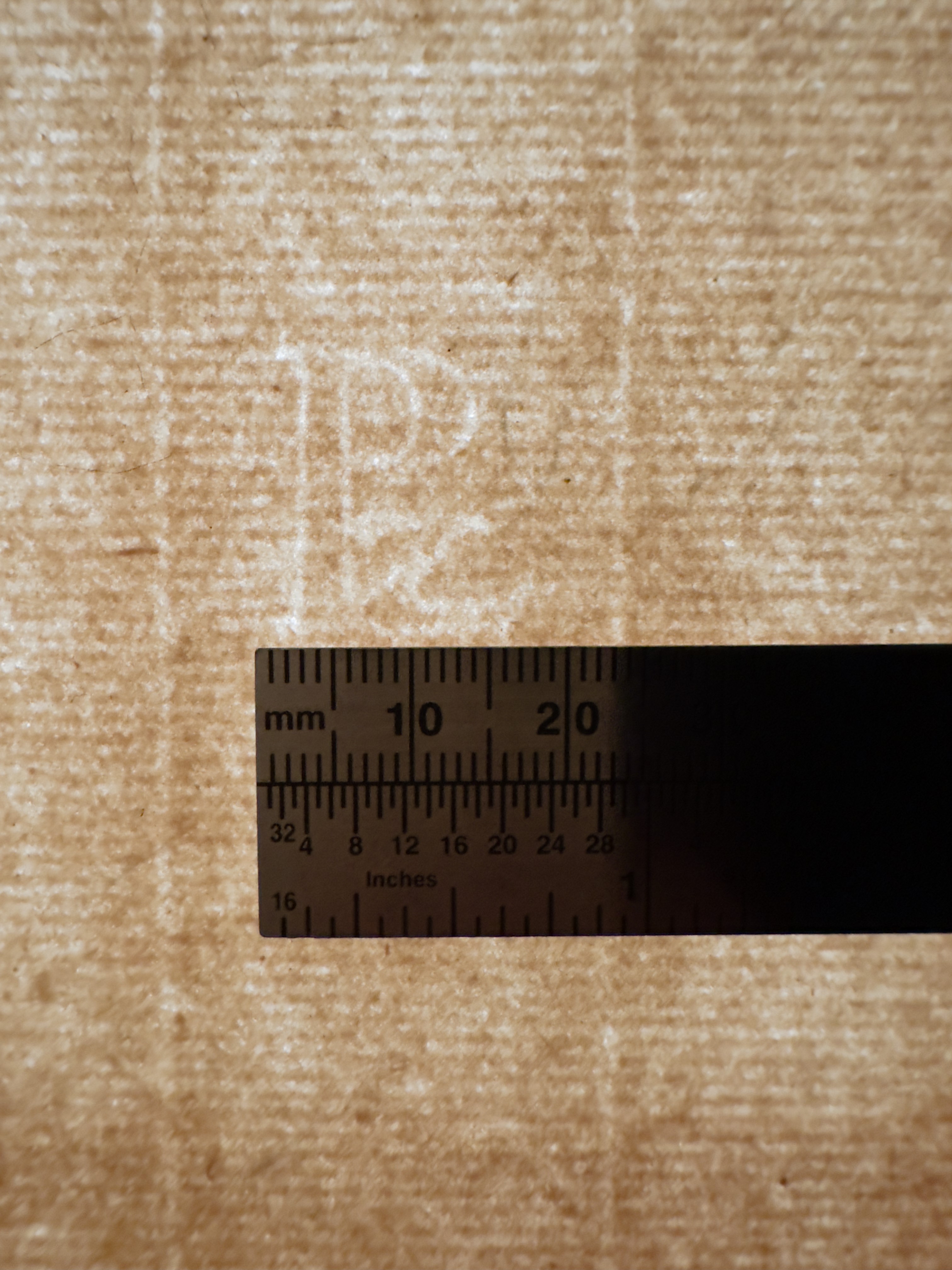
This impression of The Mill combines three convergent lines of evidence: a Van der Ley PvL.a countermark registered in the WIRE Project, an almost perfect macth with the Rijksmuseum's first state impression RP-P-1962-90, and measurable active burr in the lower balustrade and signature. Together, they place the sheet in the early Van der Ley printing campaign, printed directly from Rembrandt’s plate.

TECHNICAL DATA

File ID
AC-RM-233-REV-2025
Artist
Rembrandt Harmenszoon van Rijn (1606–1669)
Title
The Mill B. 233
Date of Execution
c. 1641
Technique / Materiality
Intaglio (etching, drypoint, and burin) on handmade laid paper.
Dimensions
Height 145 mm × Width 206 mm
Sheet Dimensions
Height 245 mm x Width 320 mm
Sheet Weight
8 grams
Collection
The Álvarez Collection (Miami)
Provenance
Private family collection, preserved over generations

Research Objective

Technical certification of the integrity of the original copper matrix and chronological validation of the paper support through digital metrology, comparative overlay analysis, and observation of organic degradation phenomena.

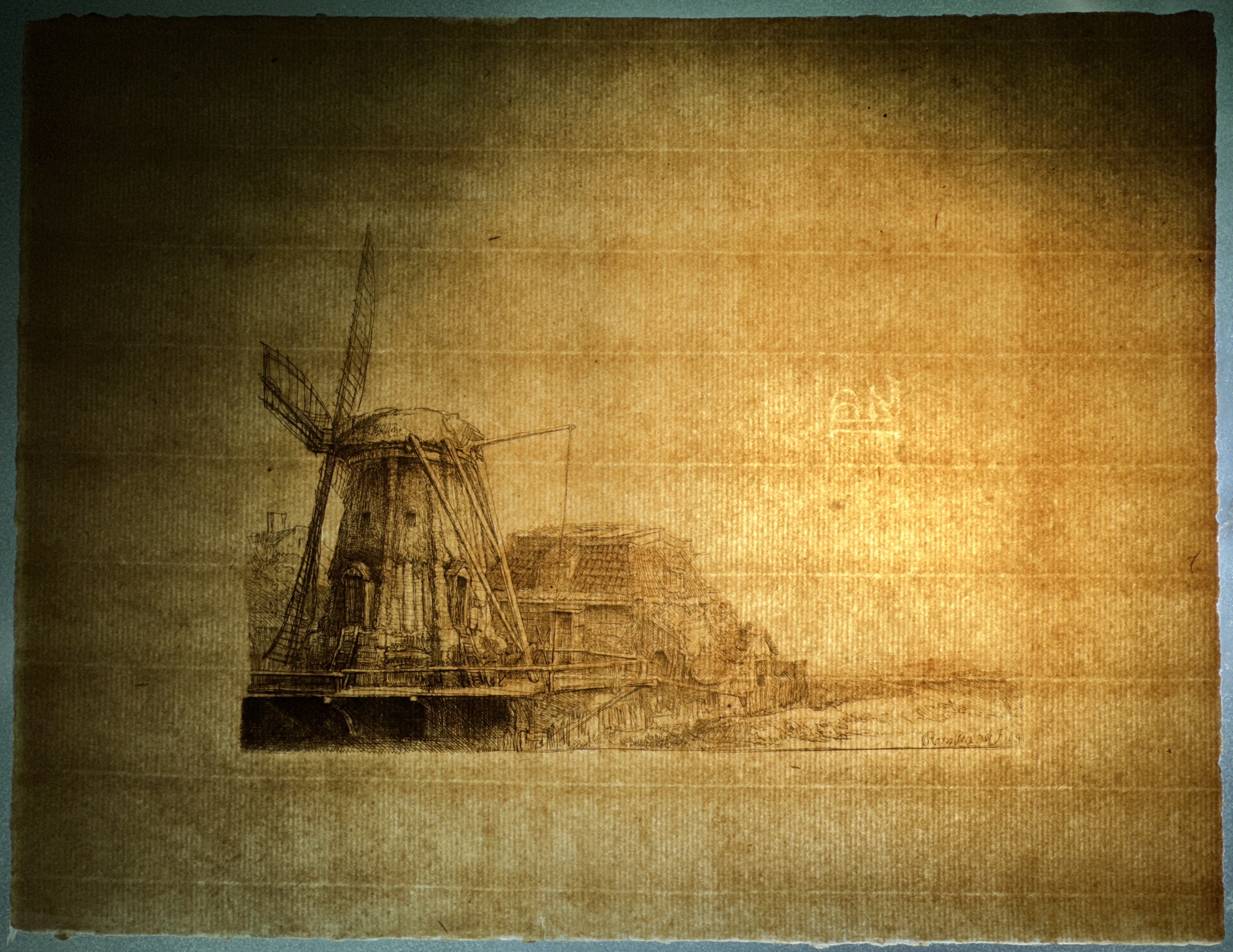
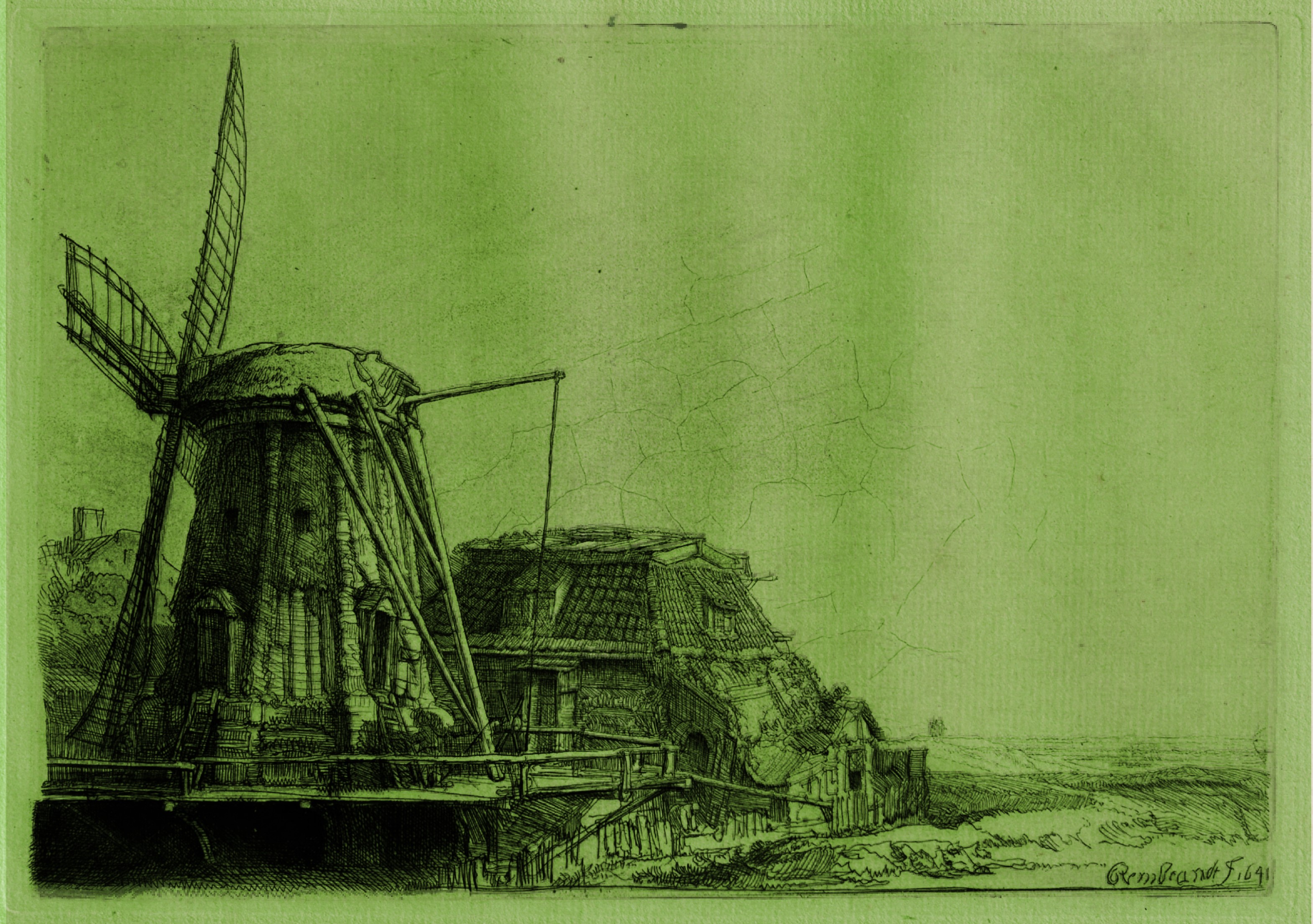
Full view of the print
Figure 1. Full view of the print
Overall view of the impression showing the complete composition, tonal balance, and preserved margins.
Full reverse
Figure 2. Full reverse (transmitted light)
Reverse of the sheet under transmitted light, revealing the paper structure, chain lines, and evidence of press pressure corresponding to the original plate.

DIAGNOSTIC OVERVIEW

This section details the physical condition and technical state of the work based on direct observation of its material and structural components.

TECHNICAL DATA & METHODOLOGY

The technical analysis of this impression has been structured through a comparative macro-identification protocol designed to verify the authenticity of the imprint and the integrity of the copper plate engraved in 1641. Unlike a standard visual examination, this methodology focuses on the physics of ink transfer, in which the interaction between metal and rag paper fibers functions as an irreproducible biometric fingerprint.

The rigor of this study is grounded in the observation of three critical phenomena, characteristic of so-called life impressions:

  1. Three-dimensionality of the pigment, documented through raking light.
  2. Autonomy of the microscopic line, verified in micro-figures and hatching.
  3. Capillary integration of the ink, observable in the signature and date.

I. Specular Reflection Analysis and Active Burr
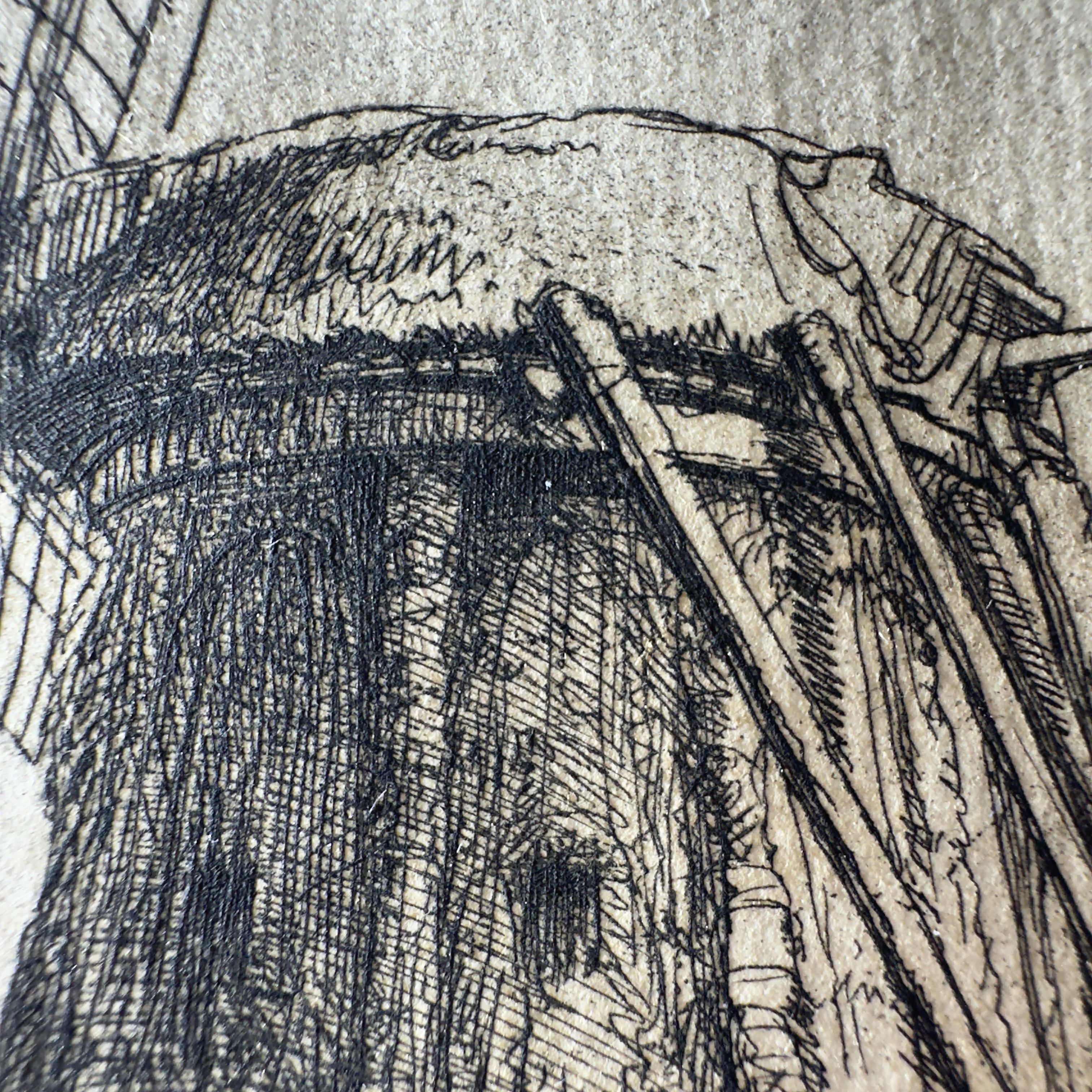
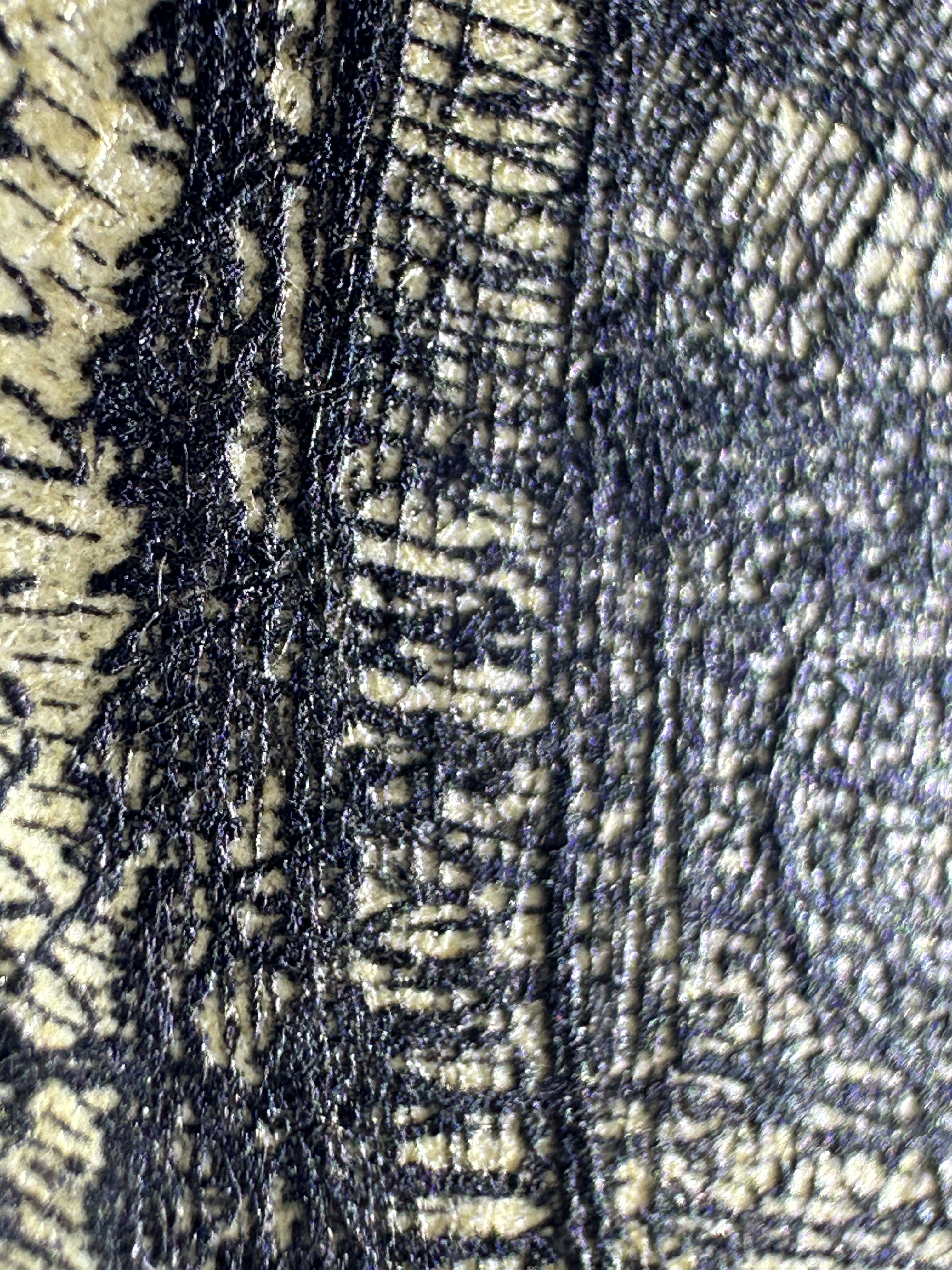
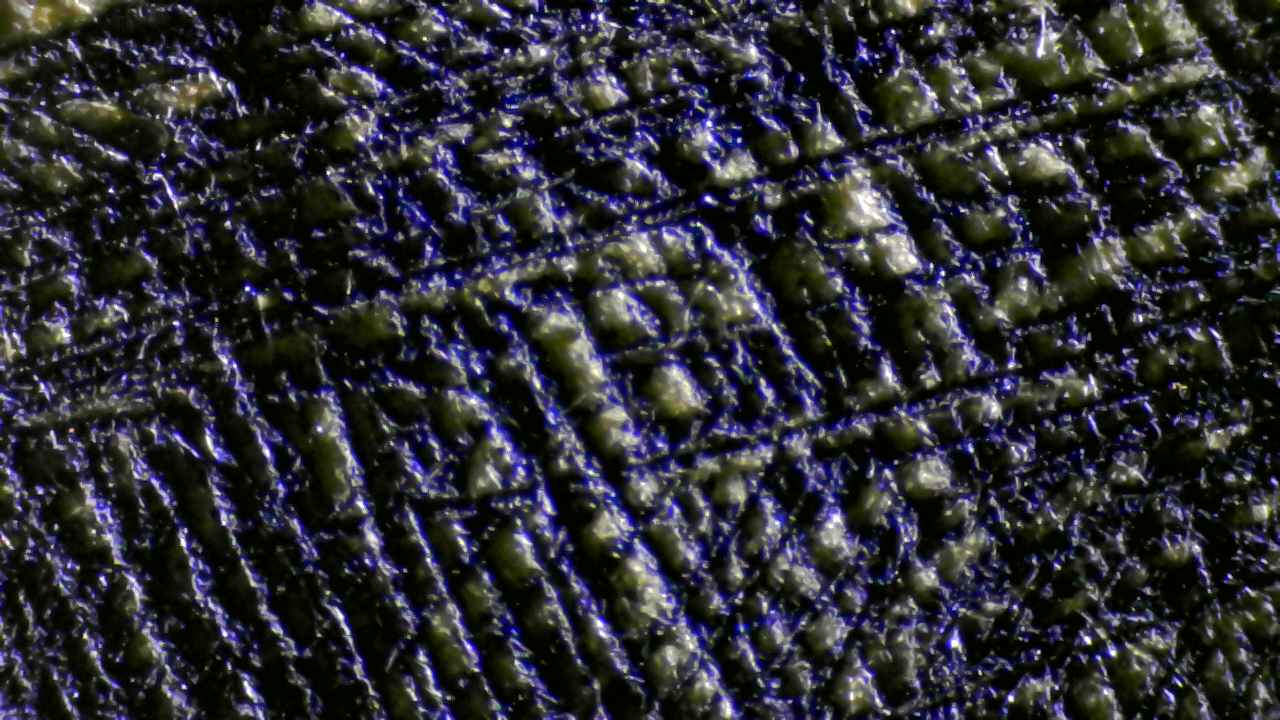
Through the capture Specular reflection burr, the three-dimensional relief of the ink is documented. Raking light reveals that the saturation of the blacks is not flat, but originates from an intact drypoint burr that projects physical micro-shadows onto the paper fibers.

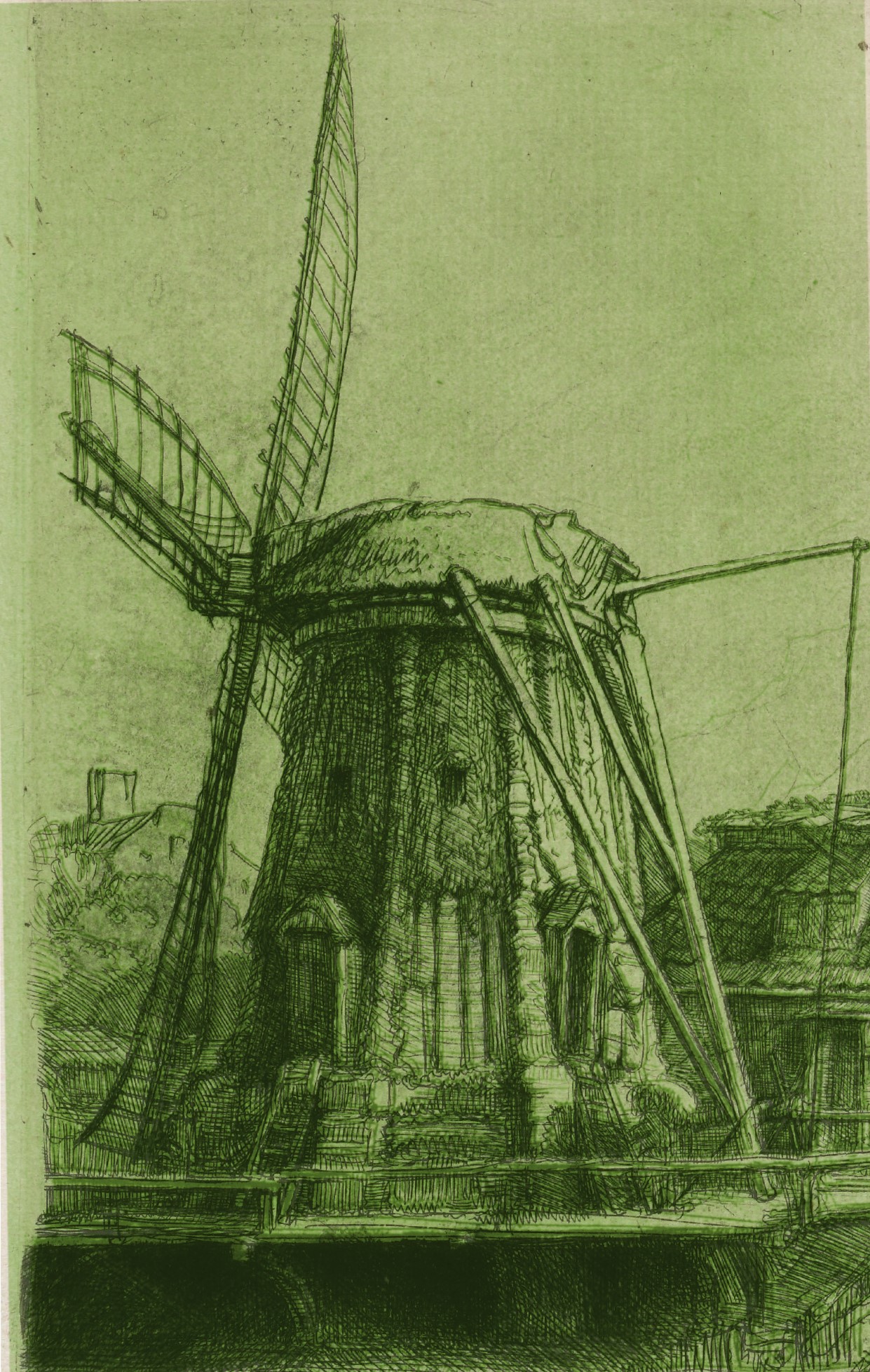
II. Structural Integrity of the Mill Sails
Macro detail of the mill blades showing intact linear intersections and preserved edge definition. The absence of rounding, collapse, or obstruction at the crossing lines does not indicate wear on the copper plate and confirms a high-fidelity intaglio print from an initial plate.

III. Micro-Architecture of the Linear Structure
Macro detail revealing the architectural organization of the engraved line system. The preserved independence of adjacent strokes, visible paper intervals between lines, and consistent groove geometry indicate a clean, unworn plate and a controlled intaglio printing process.

IV. Analysis of Hatching and Tonal Vibration
Macro detail analyzing the hatching system and the resulting tonal vibration. The preserved autonomy of each engraved line generates an optical modulation in the shaded areas, confirming the manual execution of the intaglio printing process.

V. Definition of Micro-Figures
The ultrafine lines of the Macro Burr print depict human figures rendered at a millimeter scale with exceptional shorthand definition. The preservation of these extremely fine lines is consistent with an early stage in the plate's life, as these details are among the first to erode with repeated use.

VI. Linear Dynamics in the Water
The presence of filiform lines is documented at the base of the composition. The sharpness of these lines, without fading or interruption, is consistent with a maximum retention of the artist’s original graphic intention.

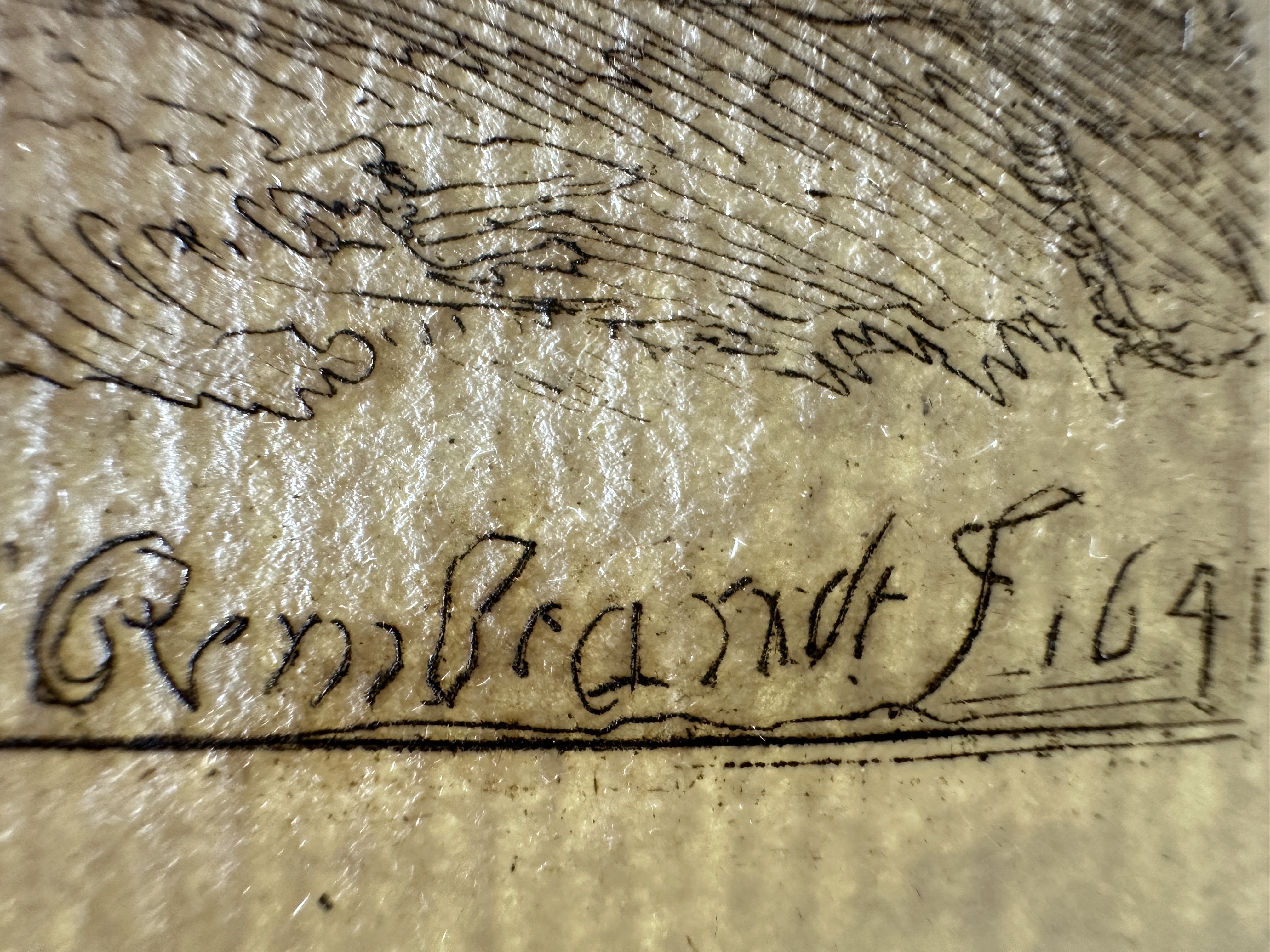
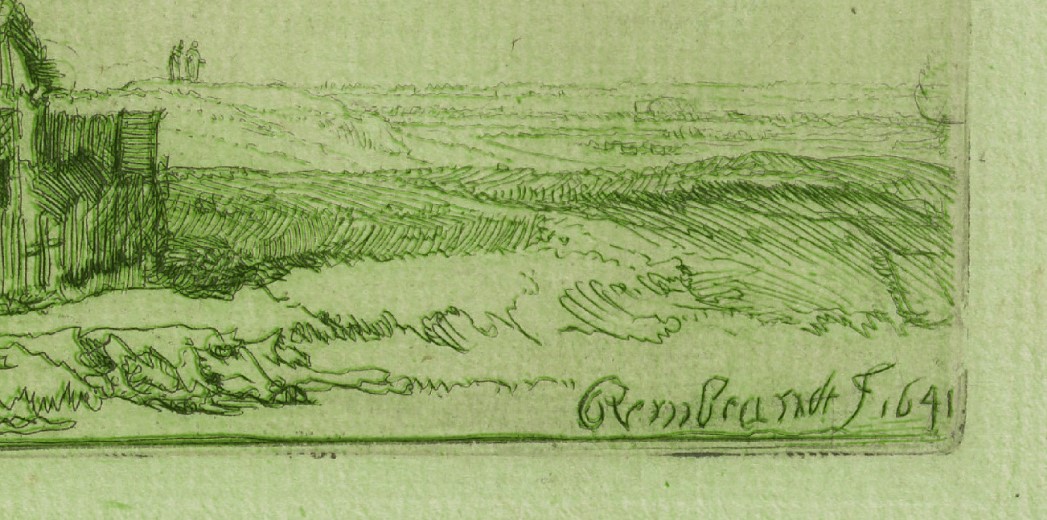
VII. Calligraphy and Morphology of the Signature (1641)
The signature and date at macroscopic resolution. Capillary integration of the pigment into the rag paper is clearly observable, with the ink penetrating the fiber rather than resting superficially on the surface. The morphology of the characters corresponds to the artist’s calligraphic standards of this period and displays variable stroke pressure, a feature only compatible with direct manual incision into copper.

I. Specular Reflection Analysis and Active Burr
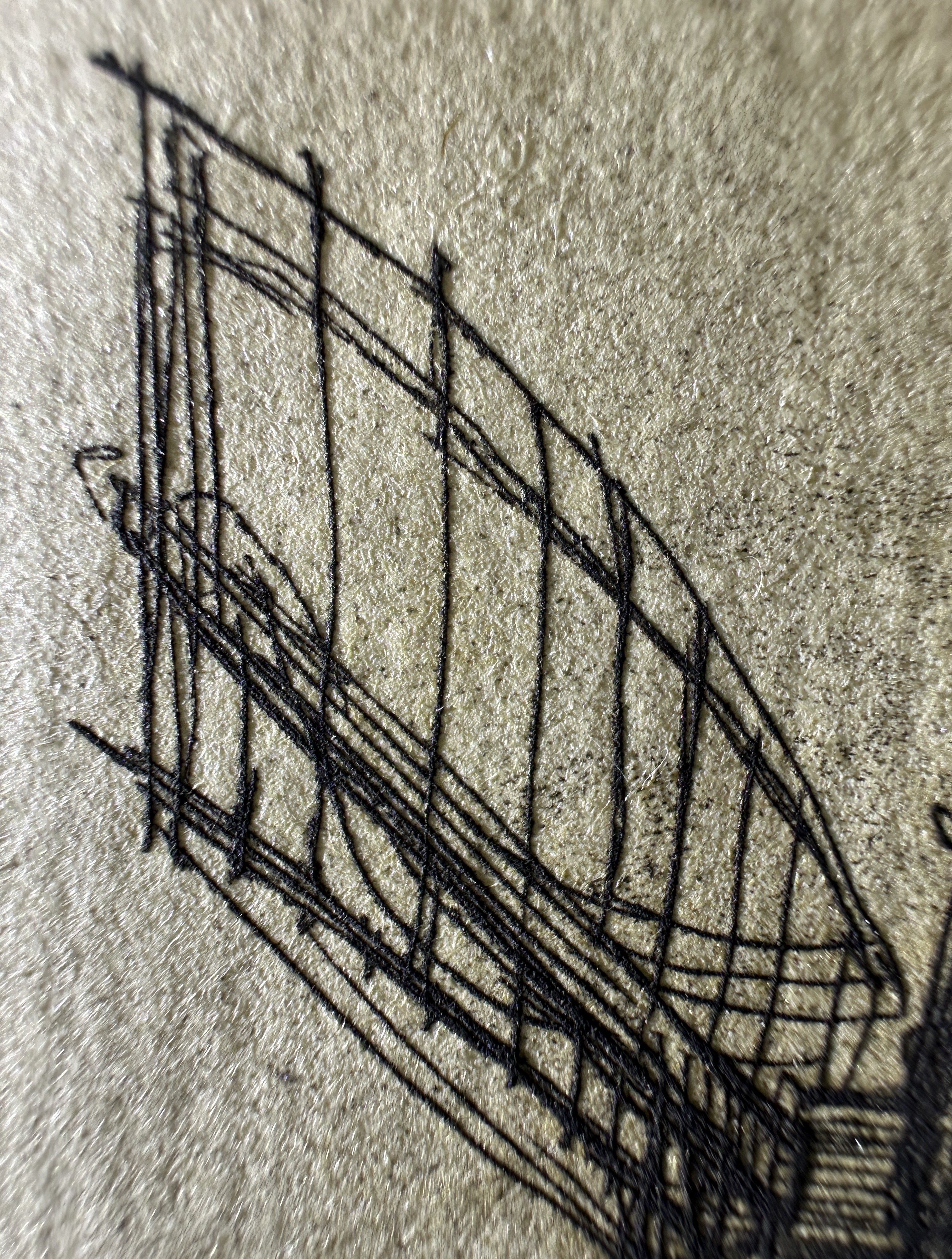
II. Structural Integrity of the Mill Sails
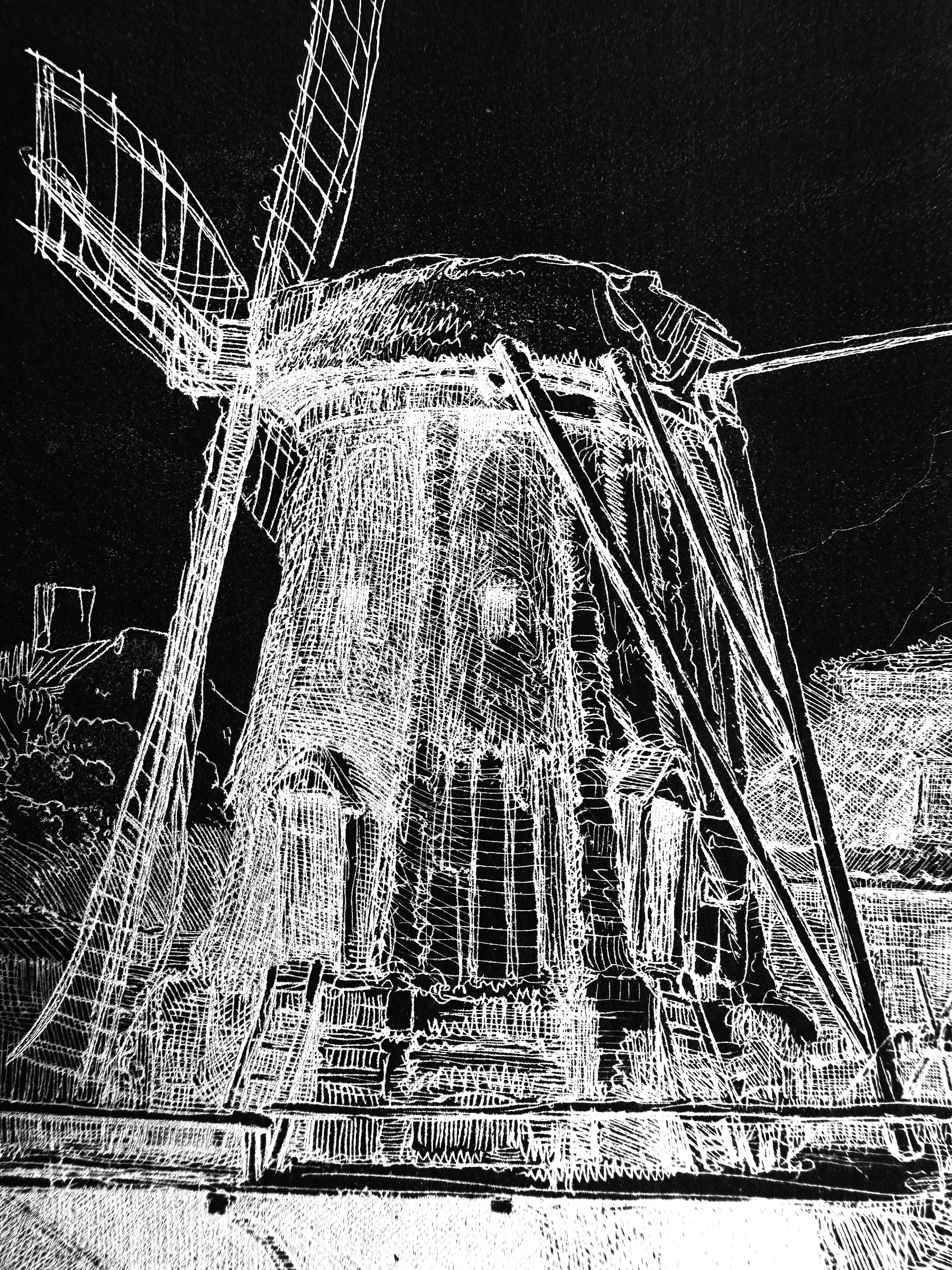
III. Micro-Architecture of the Linear Structure
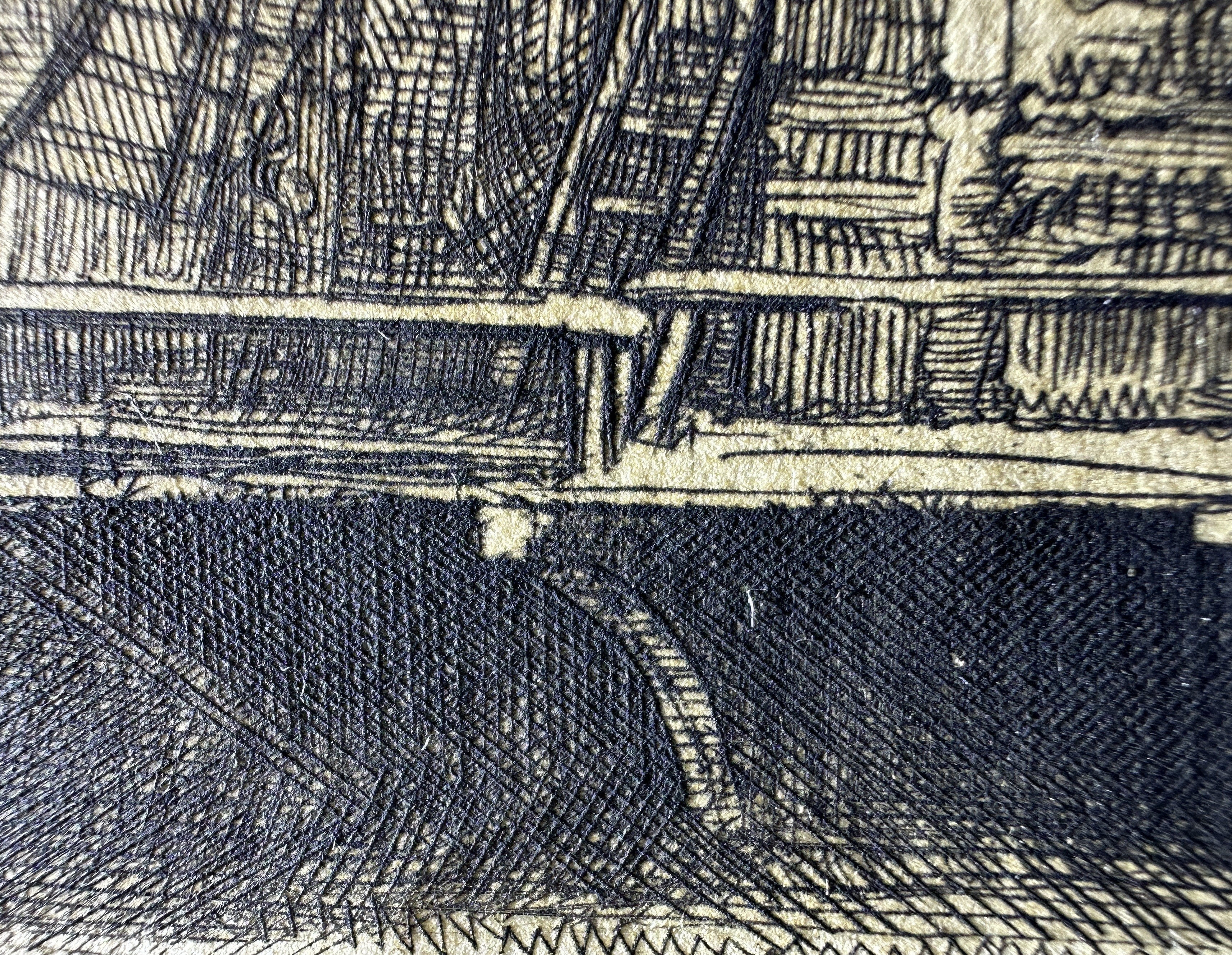
IV. Analysis of Hatching and Tonal Vibration
V. Definition of Micro-Figures (Narrative Integrity)
VI. Linear Dynamics in the Water
VII. Calligraphy and Morphology of the Signature (1641)

Conclusion

The convergence of these seven lines of evidence—ranging from the physical relief of the burr to the preservation of shorthand micro-figures—demonstrates full technical coherence with the production standards of Rembrandt van Rijn. No morphological anomalies or indications of photomechanical reproduction are identified; on the contrary, the presence of active filiform lines and extremely fragile strokes places this impression within the highest documented range of historical printing quality for The Mill.

Paper Watermark

The coexistence of the PvL.a countermark and the active presence of drypoint burr is interpreted through the physical principles of intaglio printing described by Ad Stijnman (2012), who establishes that drypoint burr is a physically fragile microstructure with a short lifespan within the working cycle of a plate.

I. Fragility of drypoint burr
According to Stijnman (Engraving and Etching 1400–2000), the copper burr raised by the needle degrades rapidly under repeated pressure and through physical and chemical effects associated with plate handling (rolling-press pressure, cleaning, and environmental oxidation).
Technical conclusion: The presence of sharp, structurally active burr in the micrographs presented in Point 4 is consistent with an impression printed during an early phase of the plate’s life.

II. Chronological implication for PvL.a paper
If a sheet bearing the PvL.a countermark retains active burr, this suggests that the corresponding paper batch was available and in circulation at a moment compatible with an early printing phase of the plate. The WIRE reference (HMP 234985.b) and the chain-line measurement (29.04 mm) provide the comparative framework for this identification.
Methodological note: The official registration of the mill in 1665 does not, by itself, exclude the possibility of earlier circulation of molds or paper batches, particularly within artisanal production contexts.

III. Evidence of a “life impression” (ink–fiber technical interaction)
Stijnman notes that a paper’s ability to receive intaglio ink with physical relief and to retain fragile details depends on technical conditions of the support (preparation, dampening, and sizing). In this impression, the integration of ink into the paper fibers—visible under magnification—is consistent with an original intaglio printing process in which the support captured the groove relief without collapsing the microscopic readability of the burr.

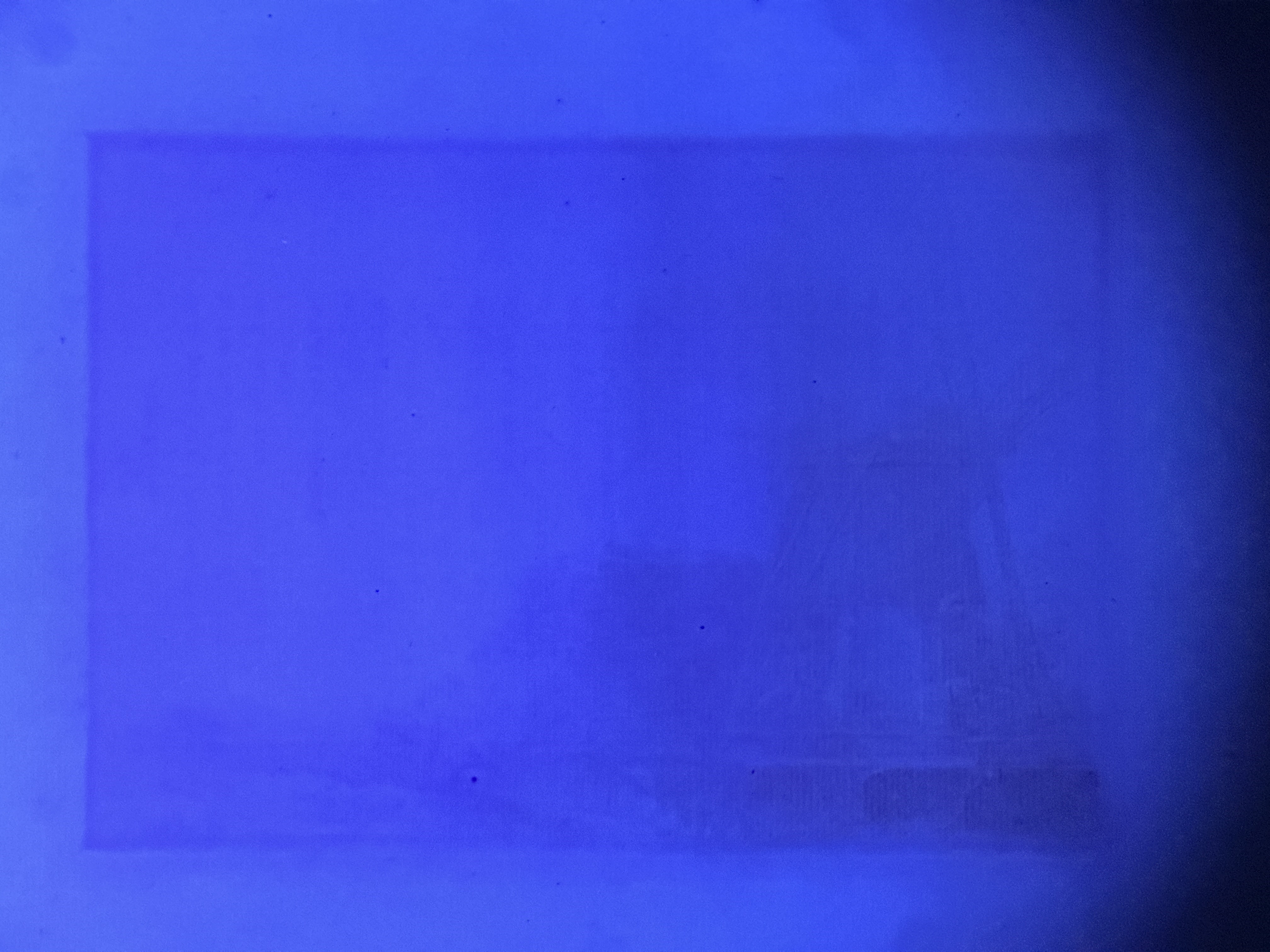
IV. Reverse under ultraviolet illumination (low intensity).
The paper exhibits a homogeneous fluorescence consistent with historic rag paper, with no evidence of modern optical brighteners, localized restoration, adhesives, or reinforced areas. the platemark appears as a continuous zone of altered fiber density, consistent with mechanical pressure from intaglio printing.

V. Physical properties of the paper support.
The sheet measures 37 × 24 cm and weighs 9 g, corresponding to an approximate density of ~101 g/m².

This value falls squarely within the documented range of 17th-century laid rag papers used for intaglio printing, and is fully consistent with the observed fiber structure, thickness, flexibility, and response to printing pressure.

Associated visual evidence (support set)

Full sheet / PvL.a watermark
Chain lines (29.04 mm)
Watermark height
Watermark height
Watermark width
Watermark width
Paper fibers under the microscope
Reverse under ultraviolet illumination (low intensity).

MICROSCOPIC LINE ANALYSIS

This analysis focuses on the biometric characteristics of the engraved line in order to confirm manual execution by etching and drypoint, and to conclusively exclude any modern photomechanical, heliographic, or digital process. Microscopic examination makes it possible to observe physical features that can only be produced through the direct interaction between tool, matrix, ink, and paper in a historical intaglio process.

1. Saturated Filiform Burr (Active Drypoint)

2. Velvety Black Drypoint Burr

3. Deep Intaglio Burr — Active Hatching Structure

4. Active Filiform Drypoint Burr -Signature “R

DIGITAL OVERLAY & MUSEUM COMPARISON

Using Computer-Aided Geometric Alignment (CAGA), an absolute morphological correspondence with the standard 1641 plate has been confirmed. This geometric congruence establishes that the print was made from the original copper plate.

This section presents a direct digital comparison between Álvarez de El Molino's private print (green lines) and the catalogued reference print held at the Rijksmuseum, inv. RP-P-1962-90 (black lines). Through structural overlays and controlled area analysis, the identity of the copper plate and the state of preservation of the print are examined.

1. Structural Superposition (Digital Overlay)
Structural Superposition (Digital Overlay)
Using Overlay.1.1.jpg and Overlay Estructura.1.jpg, a comparative transparency was performed against the Rijksmuseum’s catalogued impression (inv. RP-P-1962-90).
2. Control Zone Analysis (Zone A)
Control Zone Analysis (Zone A)
Zone A (Central Structure): The private impression displays greater definition. The shadow beneath the bridge and the texture of the mill’s wooden structure retain a deeper and more articulated black.
3. Control Zone Analysis (Zone B)
Control Zone Analysis (Zone B)
Zone B (Signature and Date): The inscription “Rembrandt f. 1641” exhibits identical calligraphy in both impressions.
4. Overlay — Signature and Date
Overlay — Signature and Date
Comparative digital overlay of the signature “Rembrandt f. 1641”, demonstrating identical engraving morphology and confirming execution from the same original matrix.
5. Overlay — Mill Structure
Overlay — Mill Structure
Structural overlay of the mill architecture, illustrating precise correspondence in compositional geometry and confirming identity of the copper plate.

Provenance and History

The print was transmitted from generation to generation, remaining consistently within the same family. Its state of preservation suggests minimal handling: it was kept for decades in a protected environment, away from direct light, fluctuations in humidity, and the damage often caused by framing. In fact, it is likely that the print has been handled far less over the past one hundred years than during the last three months, when it was meticulously examined under the microscope, with raking light, and through watermark analysis as part of this technical study.

This continuity of private custody—without recorded sales, auction appearances, or dealer interventions—accounts both for the exceptional state of preservation and for the survival of physical features that are often lost in circulating impressions, such as active burr, beveled plate corners, and fully preserved deckle edges.

Provenance therefore supports the attribution not only through lineage, but through material coherence: every aspect of the sheet’s condition aligns with an impression that has remained intact, untrimmed, and undisturbed since the seventeenth century.

Matrix and Technique References

Stijnman, Ad. Engraving and Etching 1400–2000: A History of the Development of Manual Intaglio Printmaking Processes. HES & De Graaf, 2012.
Used in the report:
This work forms the methodological basis for the Microscopic Line Analysis. Stijnman demonstrates that drypoint burr is an ephemeral physical relief. Its presence in the micrographs constitutes scientific evidence that the plate was in a “young” stage of use, consistent with an early phase in the life of the matrix.

Hinterding, Erik. Rembrandt as an Etcher: The Practice of Production and Distribution. Sound & Vision Interactive, 2006.
Used in the report:
Hinterding classifies plate states and documents Rembrandt’s management of print runs. This reference is used to validate that the variations identified in Zone A and Zone B correspond to an early stage in the life of the plate.

Support References (Paper and Watermarks)

WIRE Project (Watermark Identification in Rembrandt’s Etchings). Cornell University.
Specific reference: Record HMP 234985.b.
Used in the report:
Serves as the comparative reference for the PvL.a watermark.

Ash, Nancy & Fletcher, Shelly. Watermarks in Rembrandt’s Etchings. National Gallery of Art, Washington, 1998.
Used in the report:
Provides the standard morphology of Pieter van der Ley (PvL) watermarks. This reference supports the argument that although the paper mill was formally recorded in 1665, molds bearing these initials were already circulating in artisanal use prior to that date.

Institutional Comparative References

Rijksmuseum, Amsterdam. Online Collection Database.
Specific reference: Inventory RP-P-1962-90 (The Mill).
Used in the report:
This institutional impression is used for the digital overlay comparison. The coincidence of engraved lines between the private impression and this international standard demonstrates identity of the original matrix.

Access and research collaboration

High-resolution files, complete macro-photography sets, and the internal technical report for the Álvarez impression of The Mill are available to researchers upon request. Comparative video-microscopy sessions can also be arranged for institutions interested in examining in detail the characteristics associated with an early phase of the plate’s life.

All observations presented on this page are based on direct examination of the private impression and on published images from institutional collections. Attribution, dating, and official terminology remain open to academic discussion and are offered here as a contribution to ongoing research on Rembrandt’s prints.

For inquiries, image permissions, or collaborative research projects, please use the contact form on the main website or write to:

susana123.sd@gmail.com
fineartoldmasters9919@gmail.com
susana@alvarezart.info

Phone: +1 786 554 2925 / +1 305 690 2148

Álvarez Collection Verification Record #AC-RM-233-2025