The Jewish Bride B. 340-Rembrandt van Rijn
This record presents a technical analysis based exclusively on direct physical evidence and replicable comparison:
plate-state diagnostics (State IIa), microscopy of line and burr, overlays, and comparative study against museum impressions.
The study focuses on structural markers defining a distinct transitional state (IIa): the right-wall line system and the incomplete
central dress triangle—features absent in State II and reworked or removed by State III.
Paper evidence (Fortuna watermark and laid structure) is documented in transmitted light and integrated as material support evidence,
without relying on frequency claims beyond the cited technical literature and datasets.
Technical Data · Work ID
- File ID
- AC-RM-235-REV-2025
- Artist
- Rembrandt Harmenszoon van Rijn (1606–1669)
- Title
- The Jewish Bride B. 340
- Date of Execution
- c. 1635–1638
- Technique
- Etching and drypoint on laid paper
- Dimensions
- Height 219 mm × Width 169 mm
- Sheet Dimensions
- Height 312 mm x Width 245 mm
- Sheet Weight
- 9 grams
- Collection
- The Álvarez Collection (Miami)
- Provenance
- Private family collection, preserved over generations
Research Objective
Technical certification of the integrity of the original copper matrix and chronological validation of the paper support through digital metrology, comparative overlay analysis, and observation of organic degradation phenomena.

Entire composition for overall condition, margins, and plate impression assessment.

Full-sheet transmitted-light documentation to reveal the Fortuna watermark.
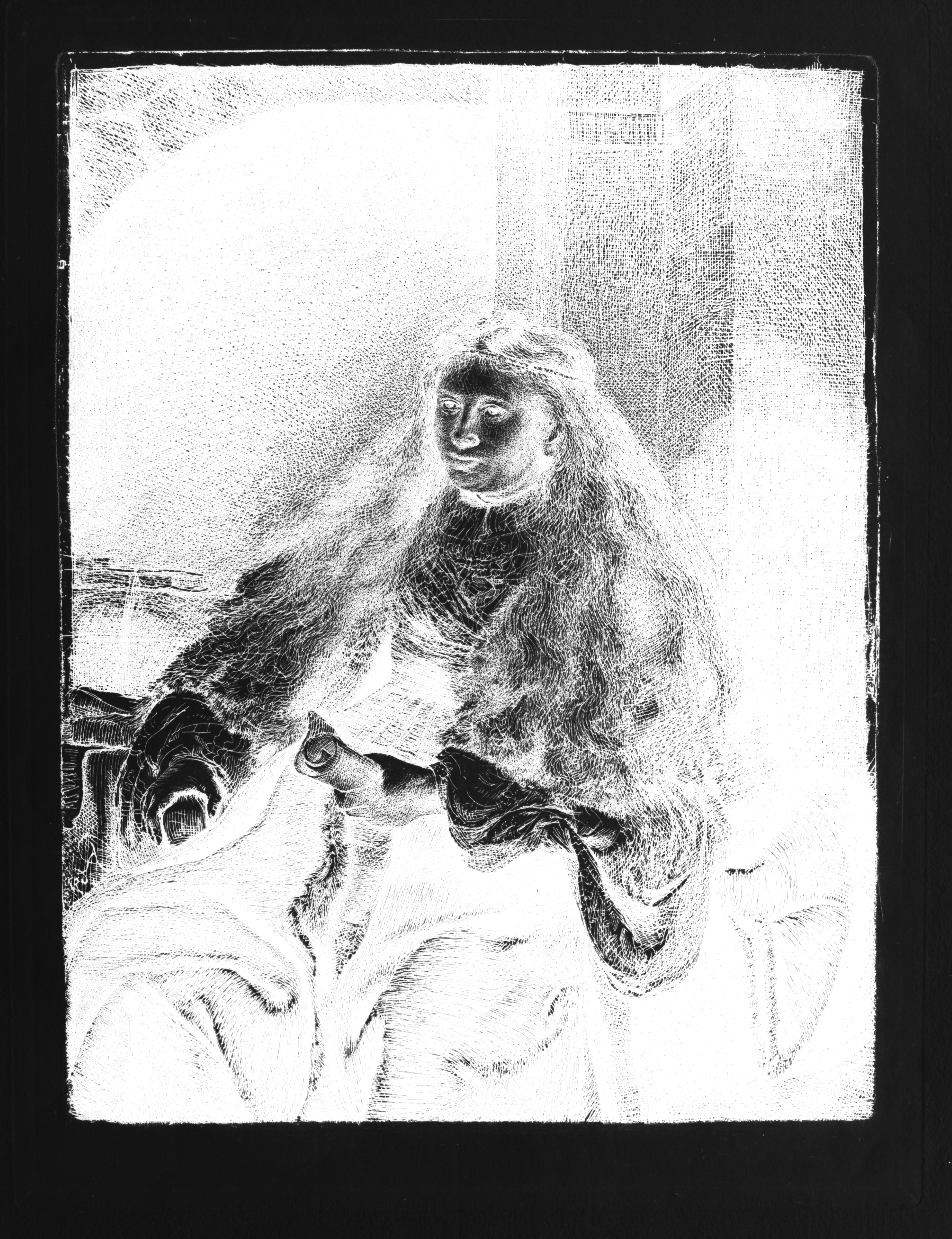
The tonal inversion of the macro photograph enhances the visibility of the network of engraved lines and the distribution of the ink that make up the portrait.
Diagnostic overview
The investigation focuses on five diagnostic axes:
- Paper and watermark analysis (Fortuna)
- Burr and line morphology (macro + micro)
- Plate state diagnostics
- Comparatives against museum impressions
- Structural overlays
State IIa
State IIa is defined here as a structural plate state, not a tonal or printing variant. It is characterized by engraved elements introduced and later modified or removed before the plate reached the catalogued State III. The diagnosis is anchored in two convergent, state-bounded structures: Zone A (central dress triangle) and Zone B (right wall / architectural system).
Microscopy and process exclusion
High-magnification microscopy (400–600×+) documents authentic intaglio morphology: physically incised grooves, organic line vibration, ink accumulation within recessed channels, and direct ink–fiber interaction. No reticulated screens, dot patterns, chemical textures, or surface films consistent with photomechanical reproduction are observed.
Paper evidence
The sheet bears a fully legible Fortuna watermark (dancing female figure on a globe), documented in transmitted light. The watermark and laid structure are treated strictly as material support evidence and integrated with the plate-state diagnostics and microscopy.
Watermark and Paper Analysis
Fortuna Watermark
- Central watermark, visible in transmitted light.
- Fully intact (100%).
Morphological description:
- Pedestal with central globe.
- Female figure in dancing pose.
- Veil or handkerchief raised above the head.
- Complex figurative wire construction.
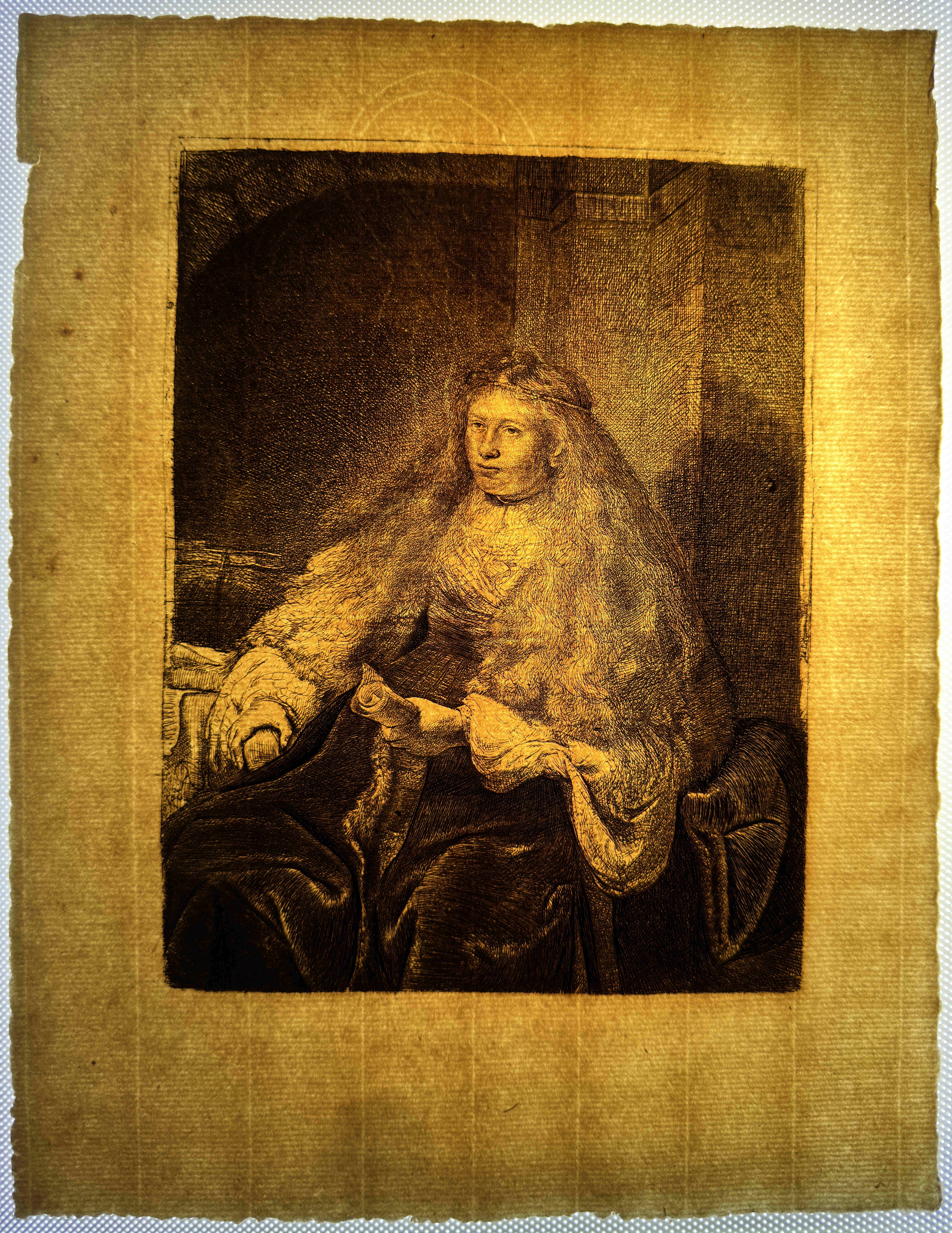
Full-sheet watermark documentation.
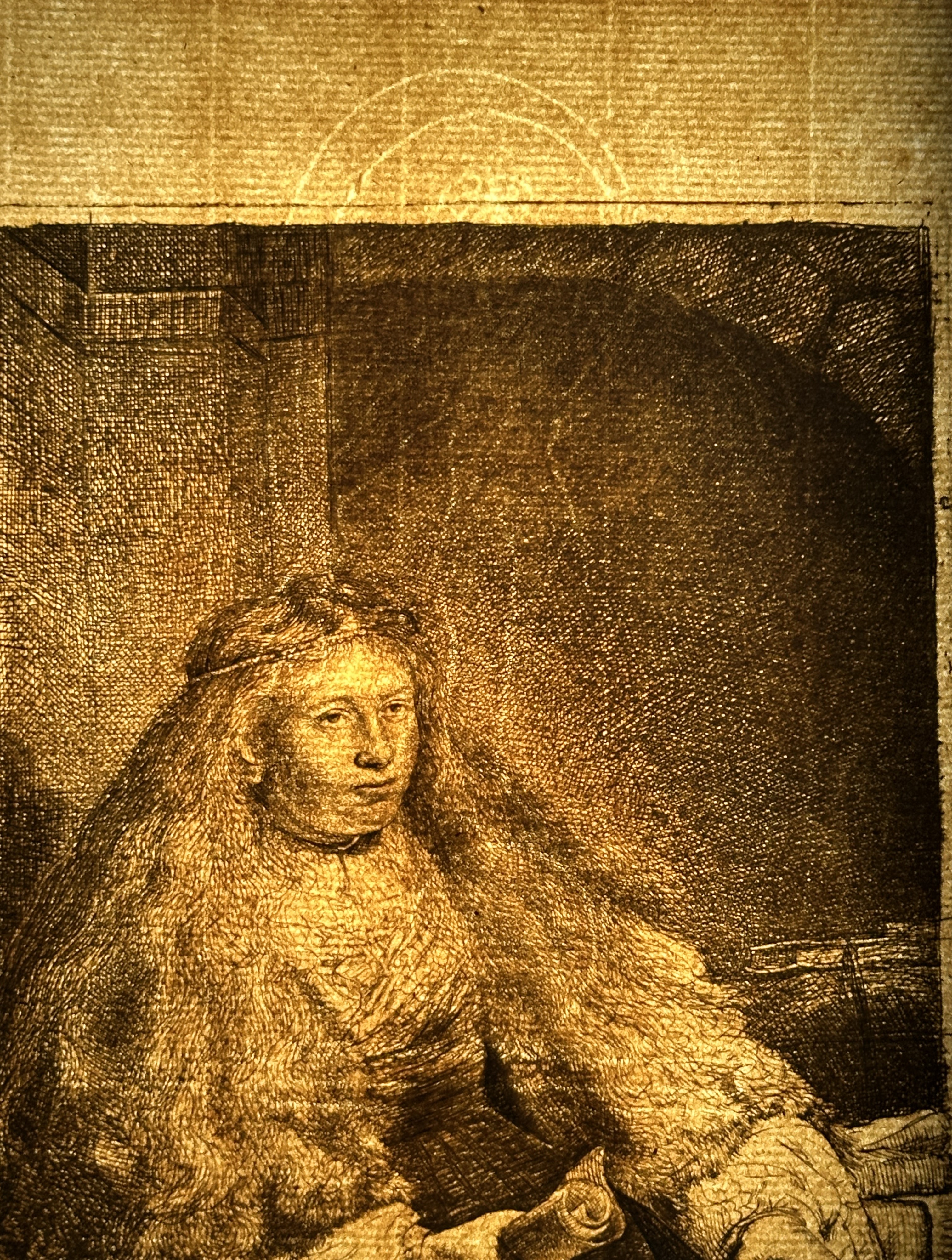
Detail view of Fortuna figure and wire profile.
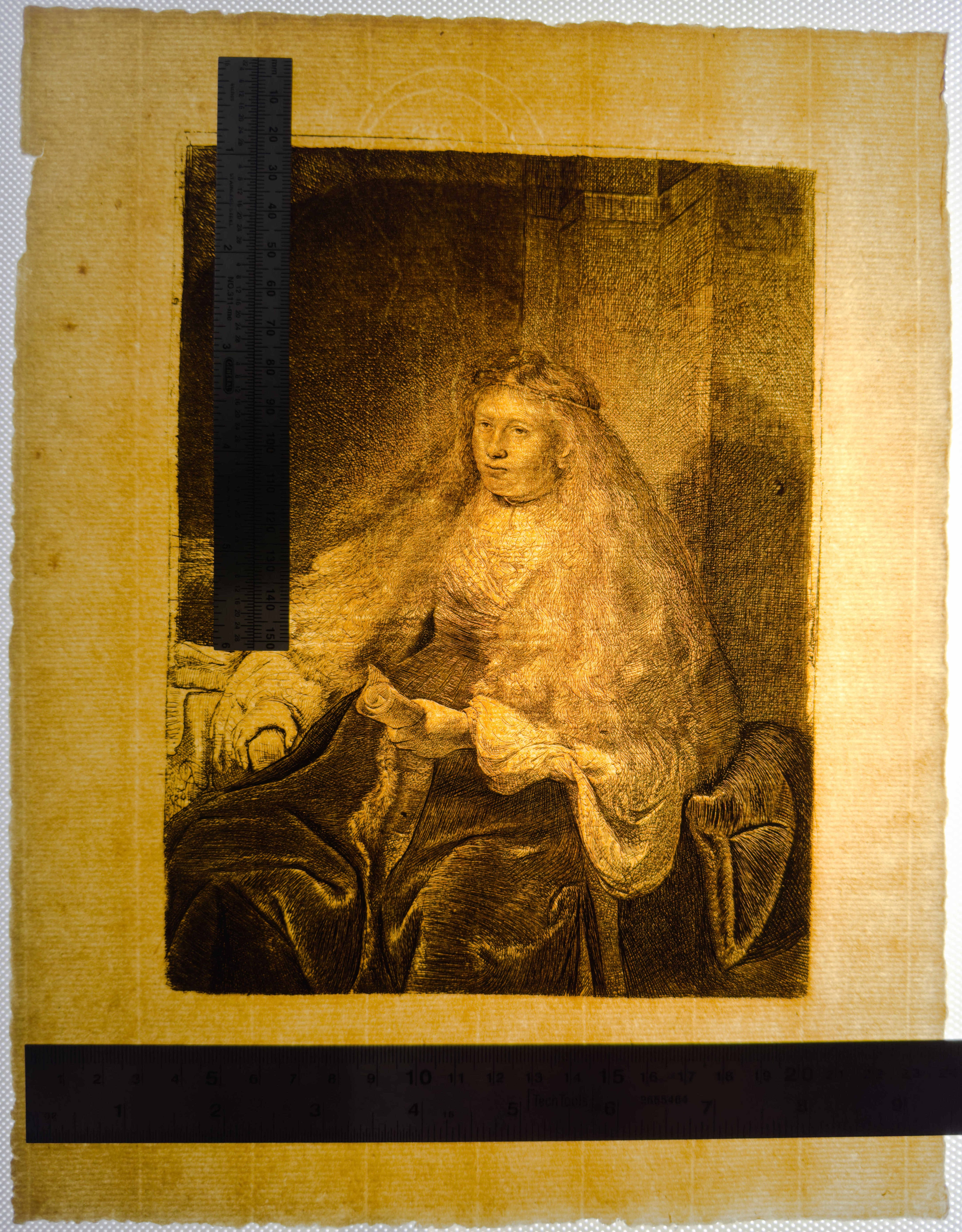
Measurements Chain lines and filigree y laid paper texture and fiber behavior.
Identification
The watermark corresponds to the Fortuna type documented in technical studies of watermarks in Rembrandt’s prints:
- Ash, Nancy & Fletcher, Shelley, Watermarks in Rembrandt’s Prints, National Gallery of Art, 1998 (variants F.a–F.d).
- WIRE Project (Cornell University) records Fortuna watermarks in Rembrandt impressions, with documented chain-line spacing of 27–30 mm and occurrences alongside PvL / PvL Ley countermarks.
PvL countermarks are associated with the mill of Pieter van der Ley (active ca. 1638–1660).
Documented examples in Rembrandt prints
- Self-Portrait Leaning on a Stone Sill, 1639 (B.21).
- Christ Disputing with the Doctors, 1652 (B.65).
- The Hundred Guilder Print (B.74), selected impressions.
Relevance to the Álvarez impression
- Confirms handmade paper.
- Chronologically compatible with Rembrandt’s lifetime.
- Materially consistent with strong burr preservation.
Combined with the structural evidence of State IIa, it reinforces the technical and chronological coherence of the impression.
Techniques Used by Rembrandt for Burr Formation
The burr present in The Jewish Bride results from a deliberate and complex combination of techniques employed by Rembrandt. Five techniques are materially identifiable in this impression.
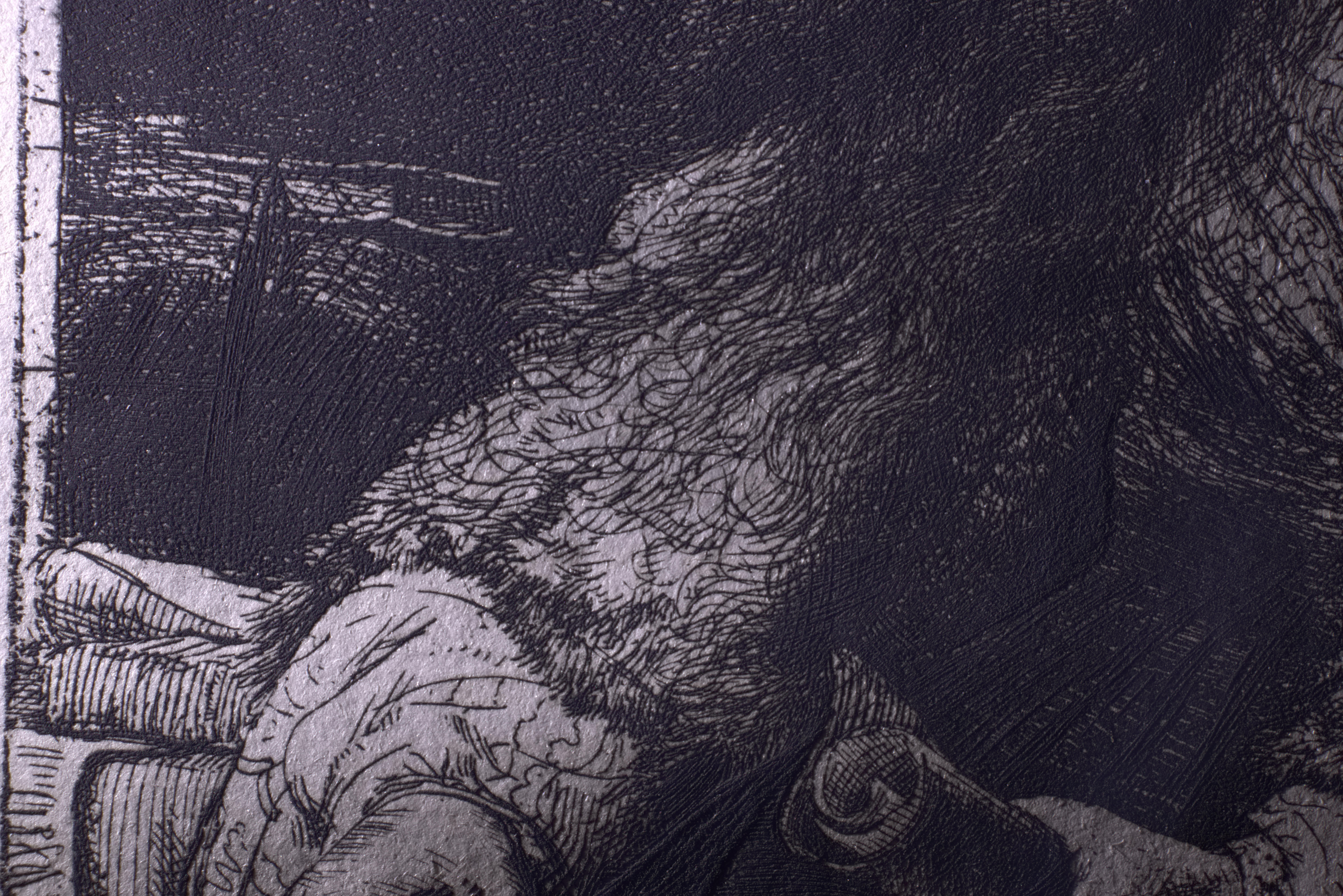
Macro detail showing intact burr formed by direct needle incision into the copperplate. The raised ink ridges and irregular line edges confirm a pure drypoint process with preserved relief.
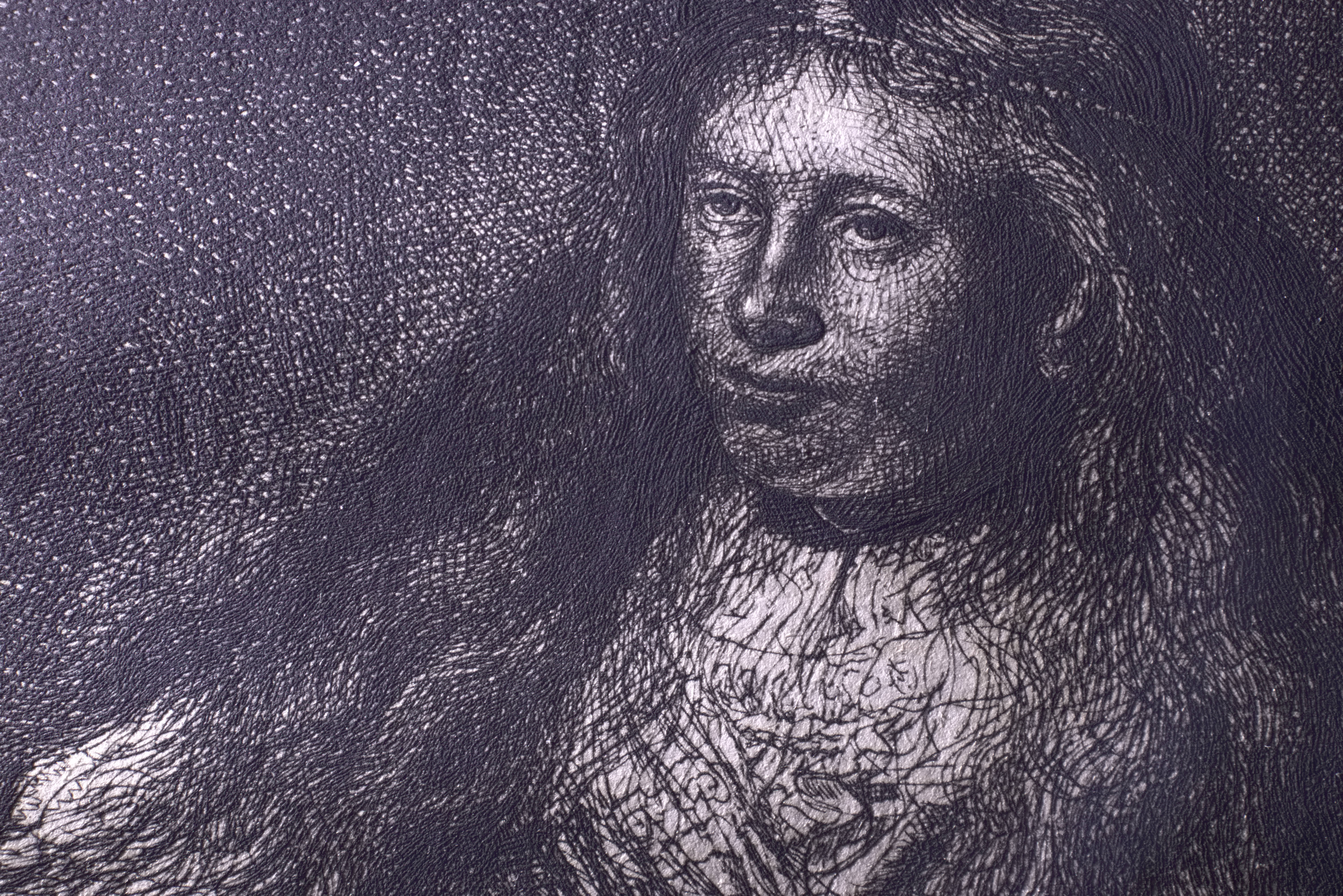
Macro detail showing a cleanly bitten etched line with sharp contours and low, uniform relief produced by the acid-etched groove. The line exhibits no burr, no metal displacement, and no ink halo, confirming a controlled mordant incision distinct from drypoint passages elsewhere on the plate.
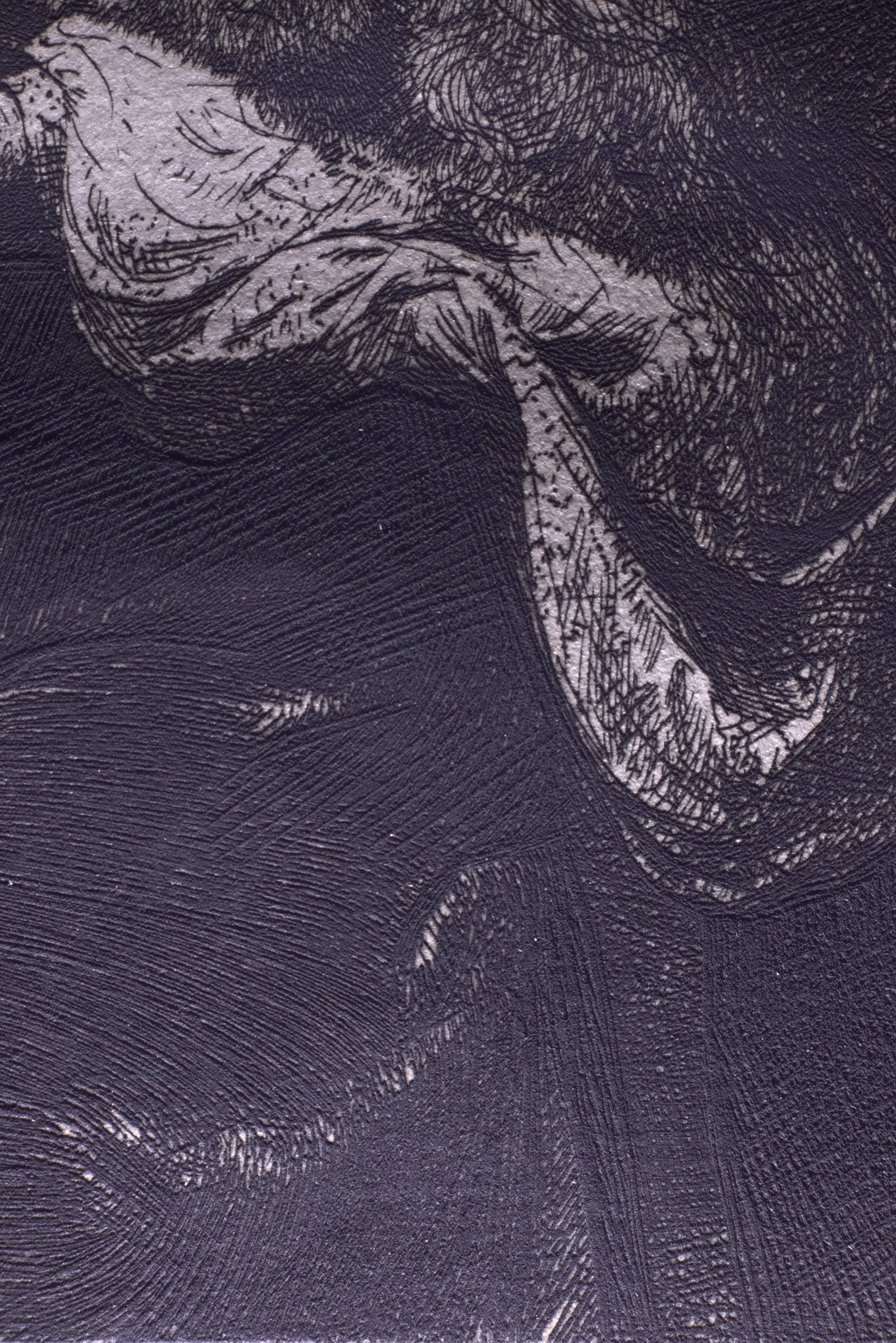
Macro detail showing a dense system of layered hatching and cross-hatching used to construct tonal mass. The repeated incision and directional variation produce active surface relief with secondary burr formation, visible as raised ridges and specular highlights. This combined behavior reflects manual plate work and pressure modulation characteristic of Rembrandt’s mixed intaglio technique.

Macro detail photographed under raking light revealing pronounced surface relief and active burr distribution along the engraved lines. The oblique illumination exposes raised ridges, micro-shadows, and height variation between adjacent strokes, confirming physical deformation of the copperplate and pressure-modulated drypoint work.

Macro detail photographed under grazing light revealing edge highlights along raised burr formations and plate relief. The oblique illumination exposes the physical elevation of engraved lines and the interaction between incised grooves and displaced metal.

A tonal inversion of the macro photograph enhances the visibility of the engraved line network forming the portrait. The transformation isolates the system of incised lines that construct the facial modeling and surrounding tonal field. The image reveals a dense accumulation of individually engraved lines following the anatomical contours of the face, with directional variations used to build volume and shadow. The surrounding background is likewise formed by a high concentration of short engraved strokes rather than a continuous tonal surface, confirming that the tonal effects derive from the density and interaction of engraved lines.
Drypoint
Drypoint is used to generate pronounced burr in selected passages:
- Soft, ink-rich line edges.
- Fragile burr partially collapsing in later impressions.
- Clear ink accumulation along line margins.
This burr confirms direct metal incision and an early printing phase.
Etching
Etching establishes the structural framework:
- Primary contours.
- Fine facial and hand details.
- Architectural outlines.
Etched lines show clean edges, no burr, and uniform depth.
Hatching and Cross-hatching
Systems of parallel and crossed lines are used to construct volume and shadow. In State IIa:
- These systems contribute directly to burr formation.
- Some configurations are later altered or removed.
Diffusion by Printing Pressure
Controlled variation in printing pressure produces:
- Local differences in burr intensity.
- Soft tonal transitions.
- Partial diffusion of line edges.
This effect is exclusive to authentic intaglio printing.
Differential Use of Etching in the Background
The background relies predominantly on etched lines:
- Minimal burr.
- Regular line structure.
- Atmospheric function.
The macro analysis reveals a complex and coherent intaglio printing process, involving physical displacement of the metal, active burr, and controlled pressure variation within a single linear system. The coexistence of drypoint, etching, and hatching with intact relief indicates an early print with exceptional preservation of the original plate's volume.
Microscopy · Line and Burr Analysis
Microscopic examination confirms:
- Authentic drypoint burr with irregular edges.
- Variable V/U mixed line sections.
- Ink retention consistent with hand-engraved intagio.
- Physical evidence of engraved lines later removed from the plate.
The State IIa structures are therefore material, not optical.
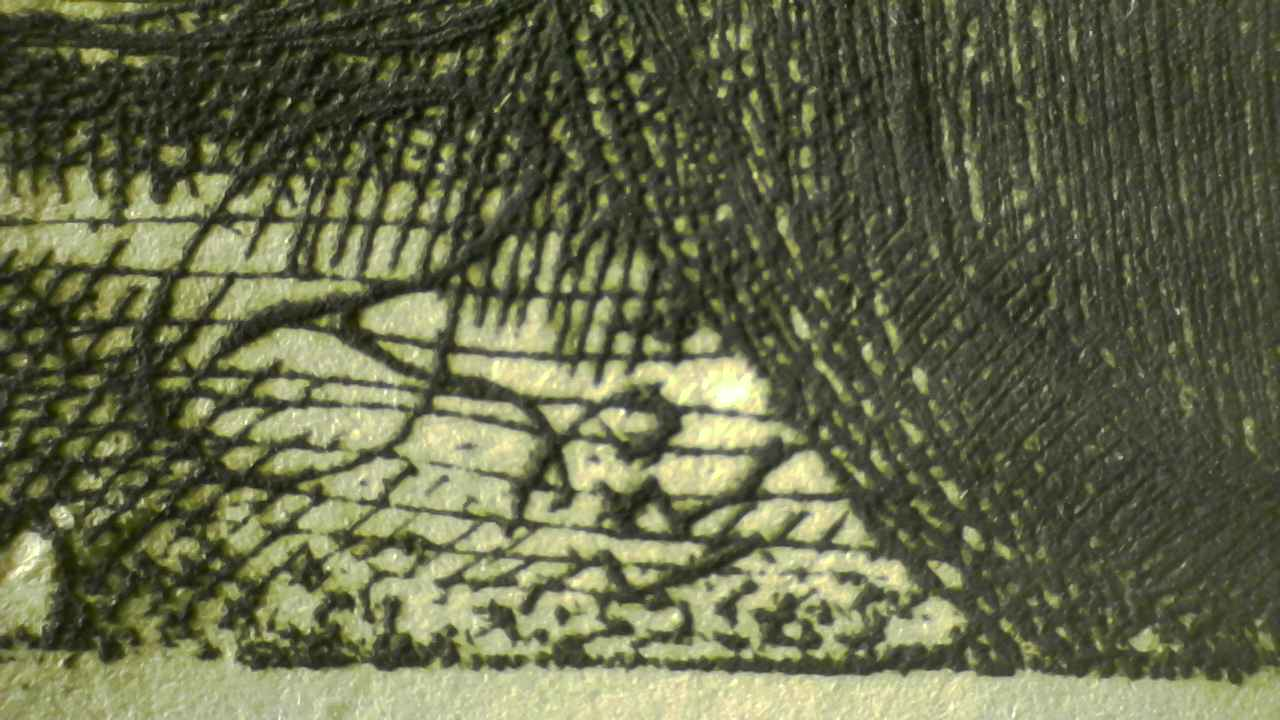
line morphology and ink behavior.
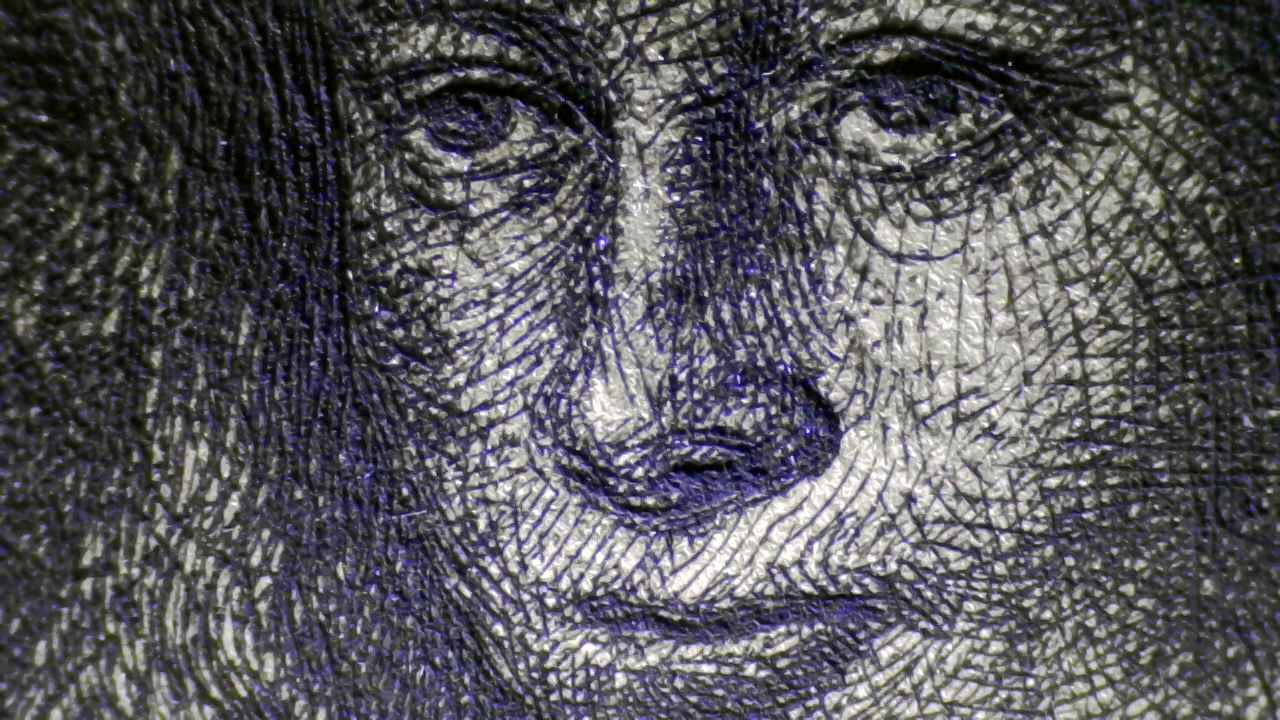
Edge behavior and ink pooling in incised grooves.
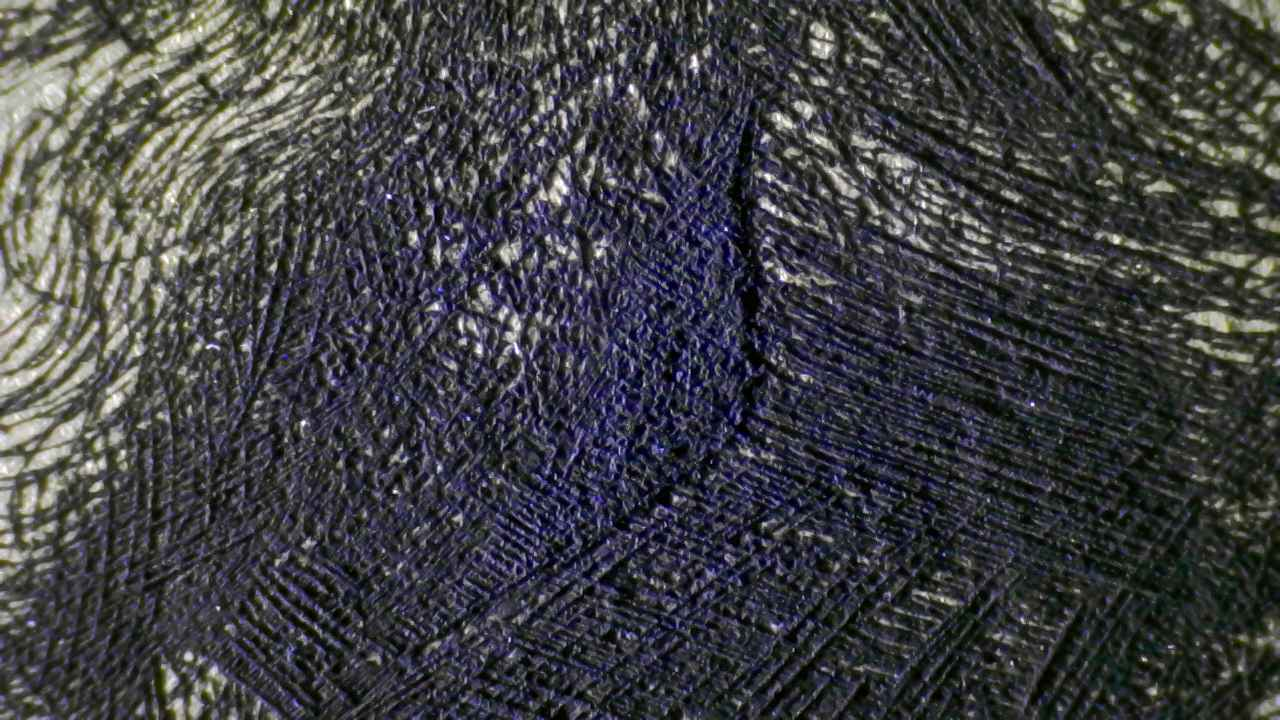
Burr retention and micro-relief.
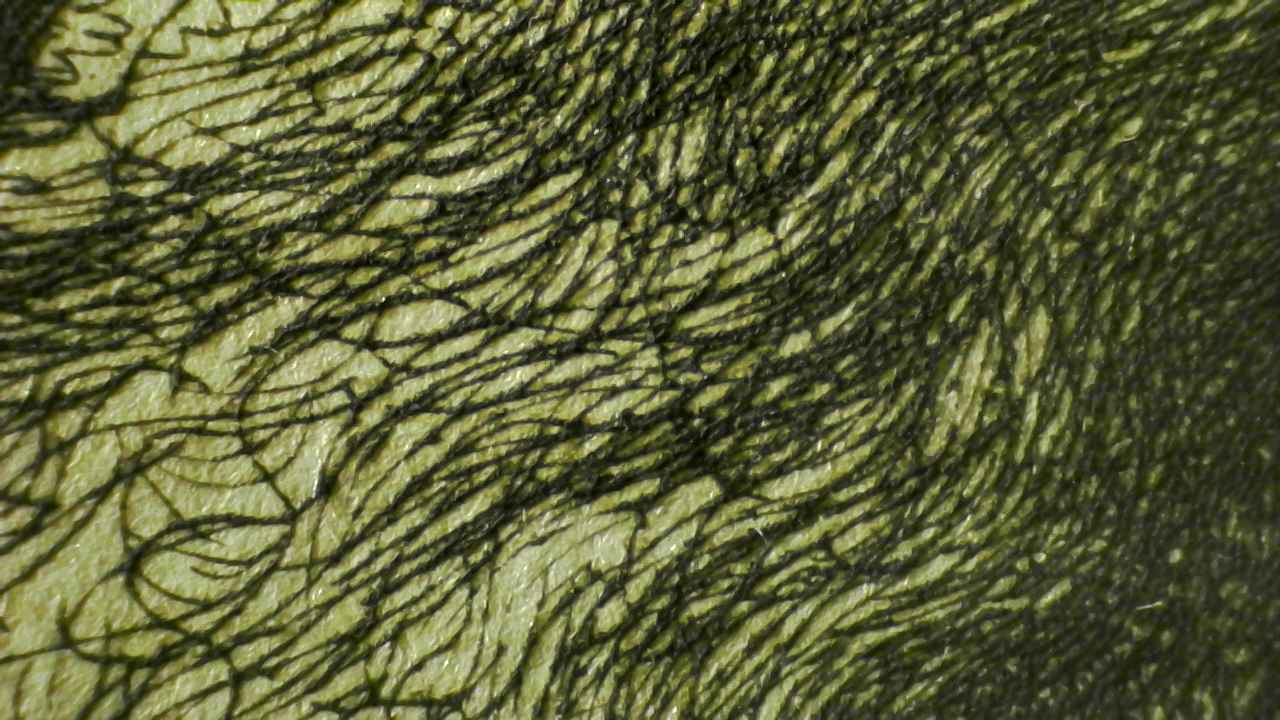
Burr-rich micro-structure.
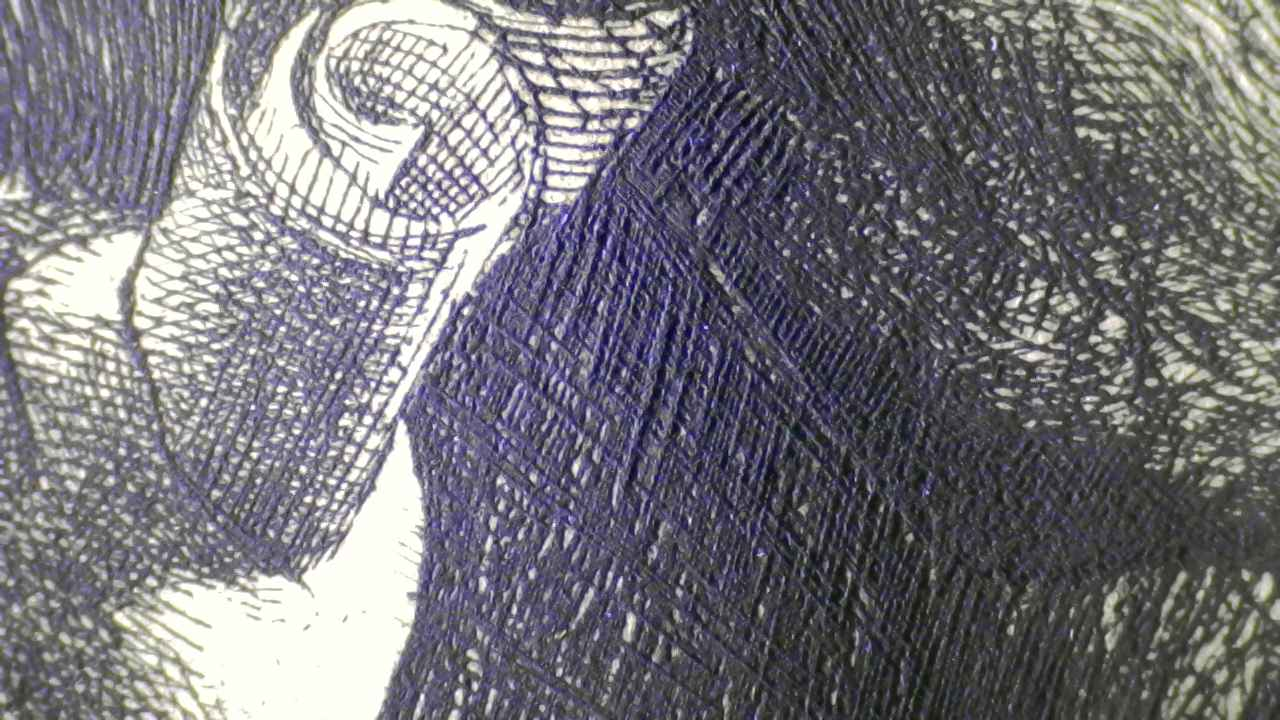
Additional micro-zone.
Armand Durand and the documentation of State IIa
Note that the existence of an earlier structural configuration of this plate is historically documented. Armand Durand’s heliogravure reproduction of The Jewish Bride records a version of the composition that corresponds to this transitional configuration, prior to the fully established catalogued State III.
The Durand heliogravure reproduces the same diagnostic structural features observed in the present impression, including the unresolved triangular construction in the dress and the absence or incomplete development of later finishing elements. This demonstrates that Durand’s model could not have been taken from a State III impression, but from an earlier structural stage of the plate corresponding to what is here defined as State IIa.
Therefore, the Durand reproduction provides independent historical confirmation that this transitional state of the plate did exist, even if surviving impressions are today extremely rare or unrecorded in museum collections.
The very fact that Durand chose to reproduce this specific configuration of the plate, rather than the already well-known finished state, strongly suggests that his model was considered exceptional, rare, or historically significant already in the 19th century.
Plate State · State IIa (diagnostic analysis)
Plate state identification is grounded in structural line evidence and comparative study across State II and State III. State IIa is defined here as a structural transitional state: engraved elements introduced in IIa are later reworked or removed by State III.
Plate State Diagnosis — State IIa
State IIa is defined here as a structural plate state, not a tonal or printing variant. It represents a phase in which Rembrandt introduced engraved elements that were later modified or removed, before the plate reached the catalogued State III. This type of transitional state reflects active experimentation on the plate and cannot be explained by inking, wiping, pressure variation, or wear.

Diagnostic structure defining the State IIa configuration.

Diagnostic line system present in IIa and removed or replaced in State III.
Diagnostic Zone A — Central Dress Triangle
- State II: no triangular structure in the central dress area.
- State IIa (Álvarez impression): appearance of an incomplete triangular form, built from converging diagonal lines.
- State III: reworking of this area; the IIa configuration disappears permanently.
This triangular structure:
- Is engraved, not tonal.
- Exists only in State IIa.
- Functions as a primary state marker.
Diagnostic Zone B — Right Wall / Architectural Structure
- State II: light architectural treatment.
- State IIa: introduction of a dense diagonal and cross-hatched line system.
- State III: complete removal of this system and replacement by a different pattern.
The deliberate removal of a coherent engraved structure confirms intentional plate revision, not print variation.
Selective Isolation Methodology
A technique for isolating systems of engraved lines has been applied by suppressing tonal values and normalizing contrasts. This process allows the surface ink load to be ignored, revealing only the underlying structural configuration of the incisions on the copper plate. Evolutionary Discrepancy of States (State Phylogeny) When comparing the Álvarez Print with the reference copy in the Rijksmuseum (RP-P-OB-725, State III), critical divergences in the architecture of the drawing are identified The Álvarez Print preserves a coherent system of converging lines in key areas (such as the central triangle of the drapery) that have disappeared in State III due to the abrasive reworking of the plate. The presence of these structures demonstrates that the analyzed work documents a state of the matrix that is chronologically earlier than the degradation observed in standard public collections. The recurrence of these strokes in multiple isolated areas confirms that they are not random tonal effects or printing accidents, but an integral physical condition of the plate at a specific moment in its history.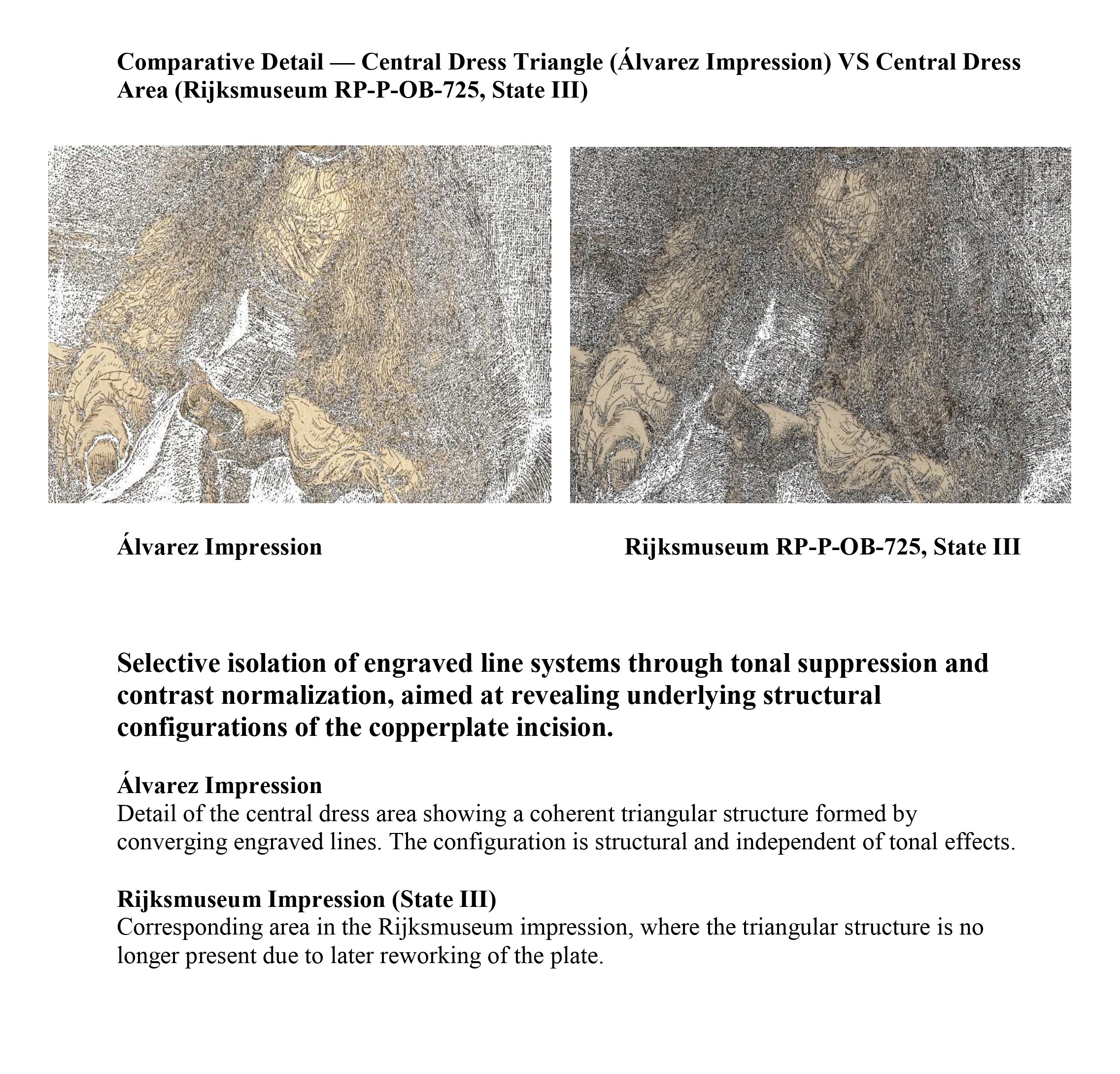
Comparative plate documenting the State IIa triangle configuration.
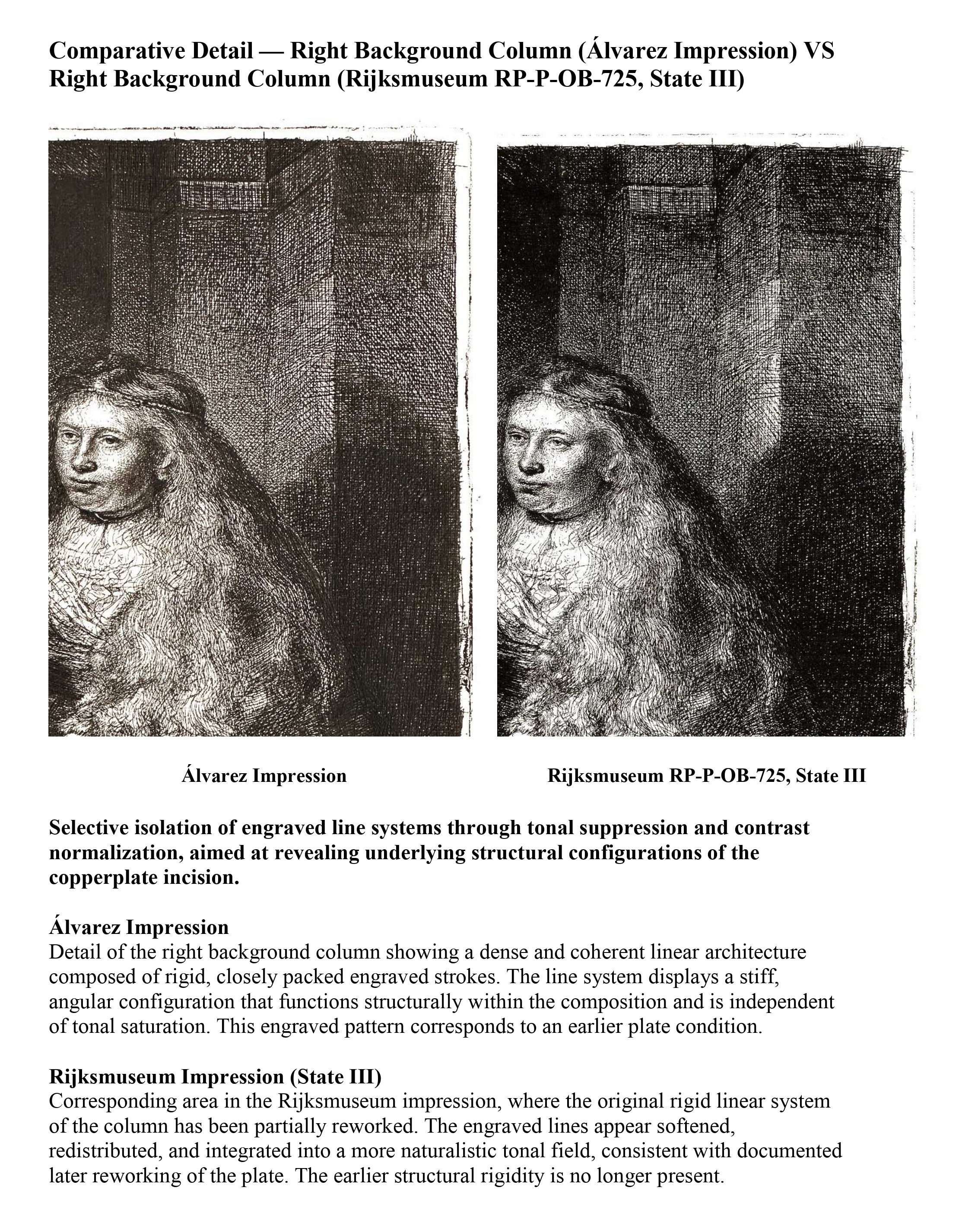
Comparative plate documenting the State IIa right-wall structure.
Overlays
- Appearance of engraved elements in State IIa.
- Their elimination or reworking in State III.
Overlays function as structural proof, not interpretation.
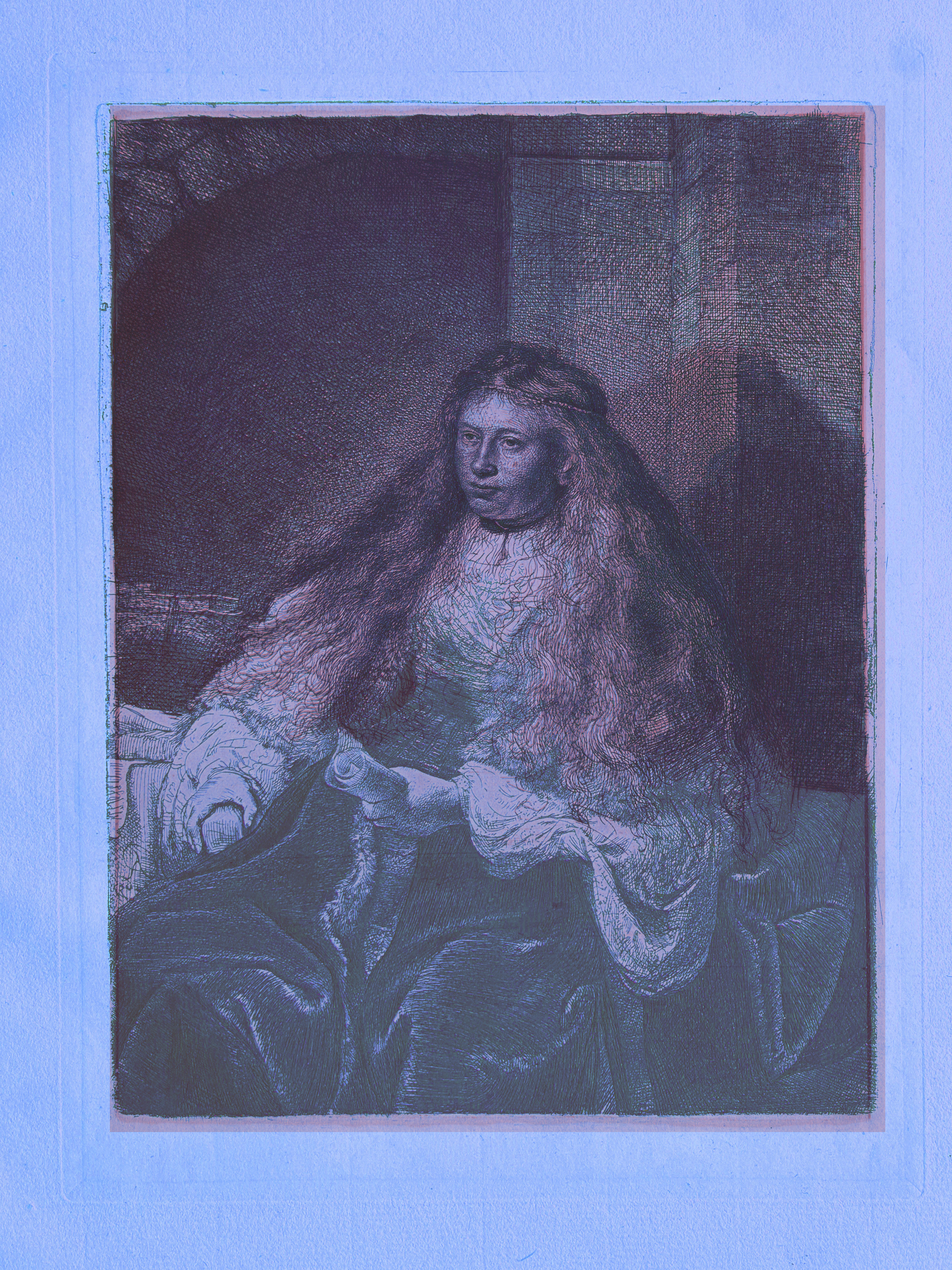
Blue layer reduced to reveal the underlying State II line system (red), demonstrating engraved structures present only in the Álvarez Collection impression.
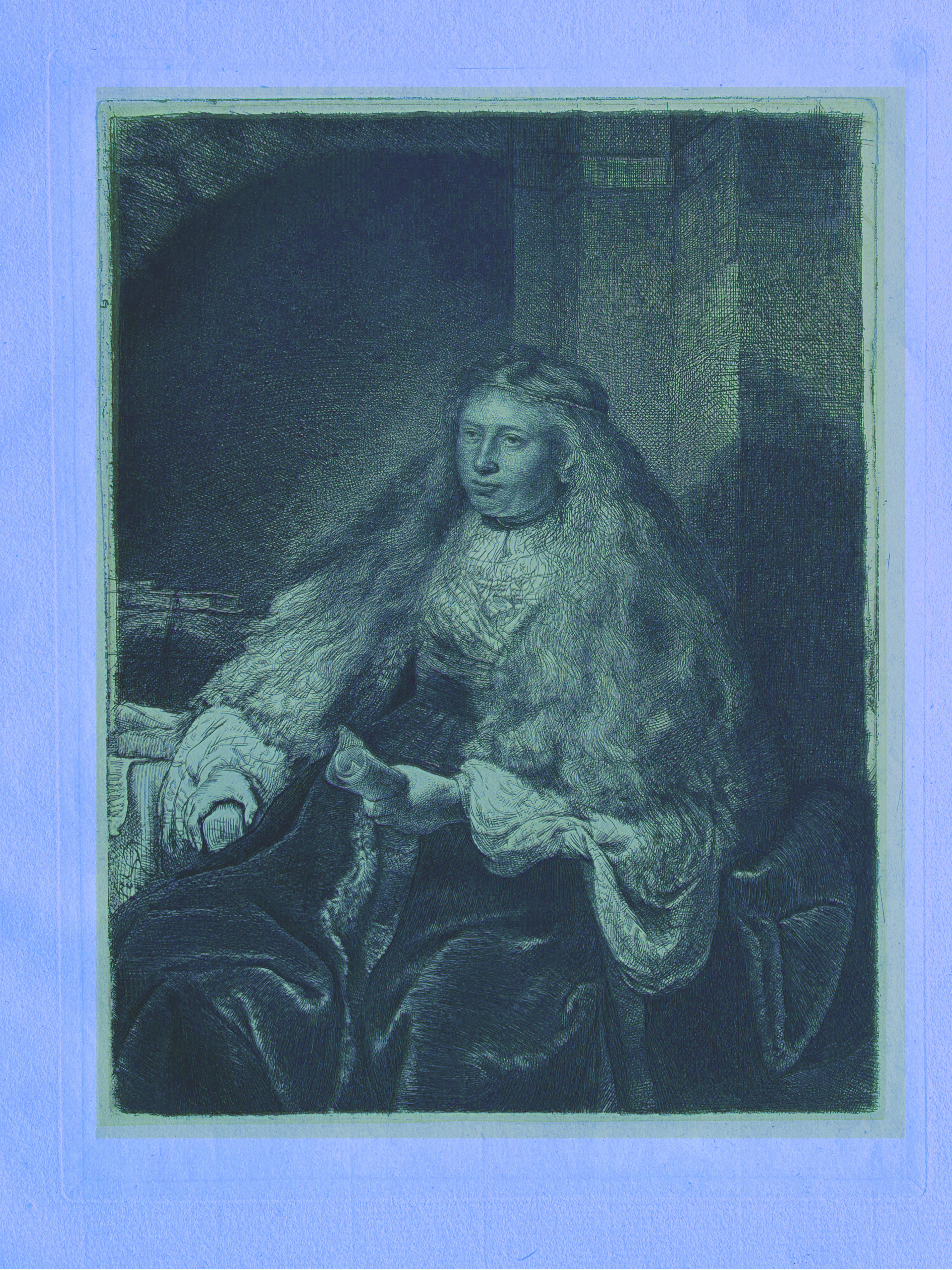
Overlay comparing the Álvarez Collection impression (blue) with Rijksmuseum inv. RP-P-OB-725, State III (green). Reduced opacity highlights structural differences resulting from plate revision.

Red: Rijksmuseum, inv. RP-P-OB-724 (State II), Blue: Álvarez Collection, private impression (State IIa), Green: Rijksmuseum, inv. RP-P-OB-725 (State III). The overlay visualizes the appearance and subsequent removal of engraved structures, confirming a distinct intermediate plate state (State IIa).
Taken together, these overlays document a sequential modification of the copperplate: the emergence of engraved structures in an intermediate configuration (State IIa) and their subsequent reworking in State III. The consistency of these structural changes across the full composition confirms plate evolution rather than tonal or printing variation.