Technical Gallery
Jan Six (1647) · Full Image Set
Technical Data

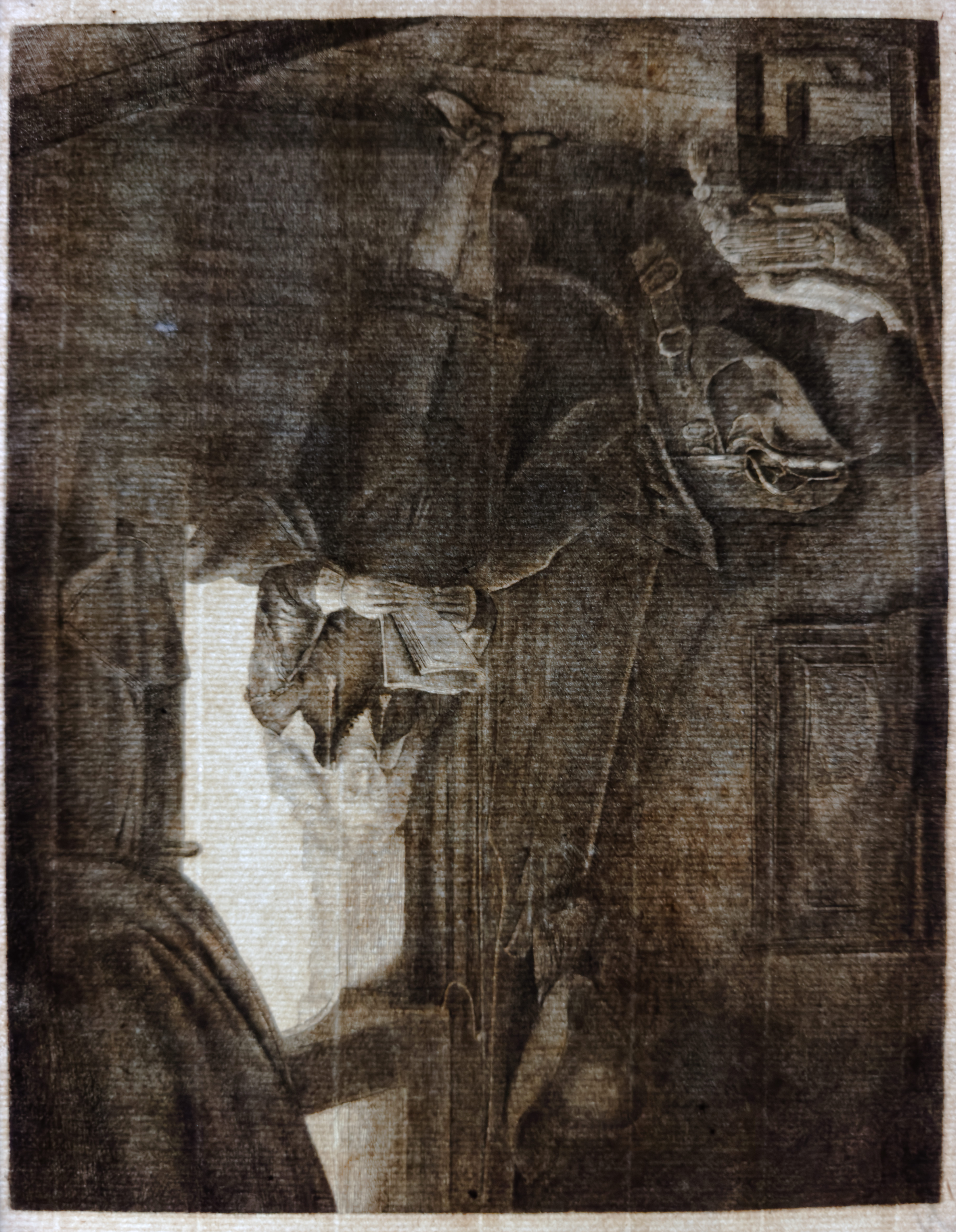
Full recto view of the Álvarez impression of Jan Six, showing the complete composition, margins and plate orientation. This impression preserves an earlier “State 0” configuration, prior to the recorded State II.

Verso view of the sheet, revealing chain-line spacing, laid structure and the zone of the PvL countermark. No later inscriptions or collector’s stamps are present.
Paper & Watermark
PvL (Van der Ley) countermark under transmitted light, consistent with seventeenth-century Dutch paper production and with the PvL type accepted by the WIRE Project for ca. 1630–1650.
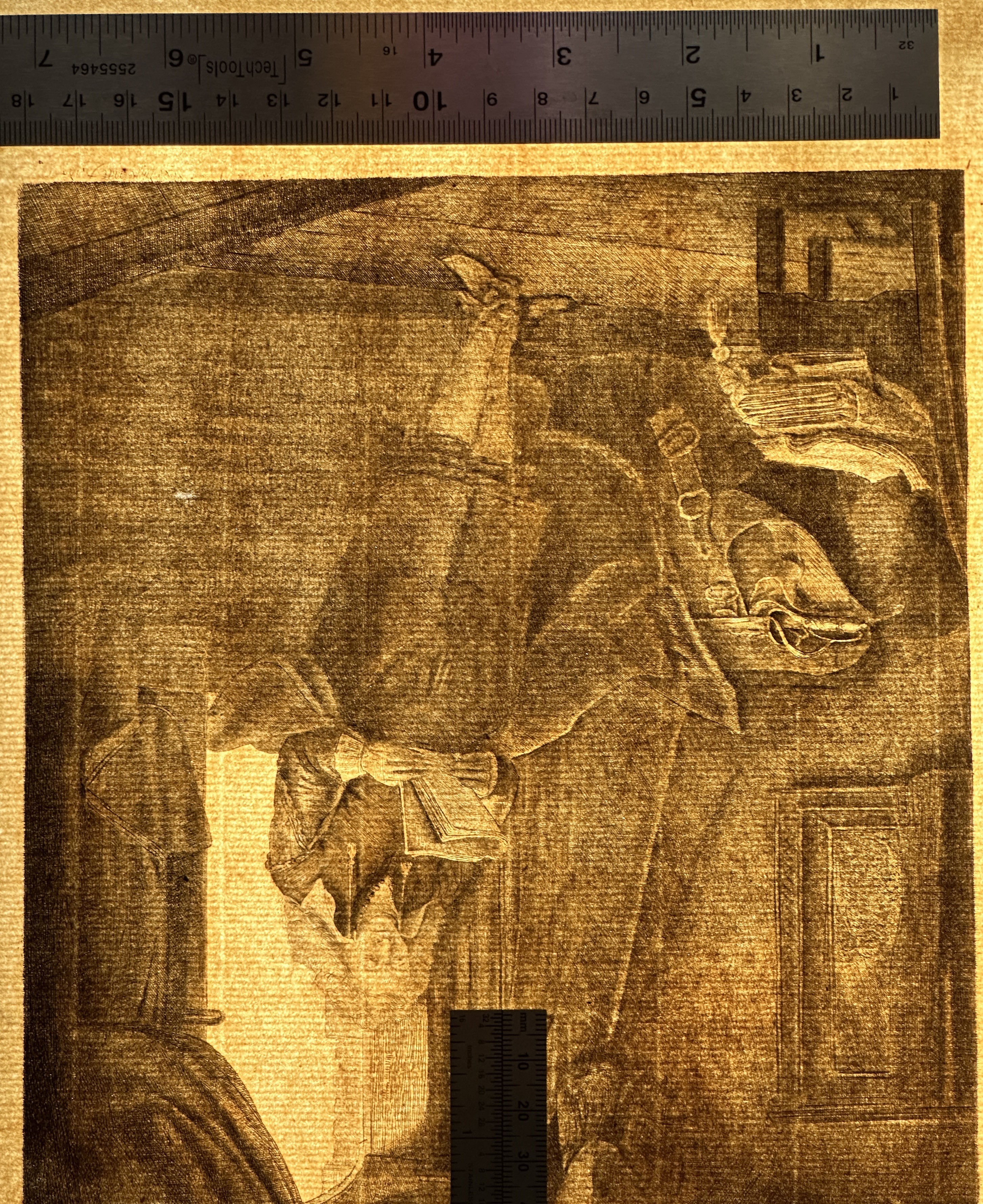
Macro view of the laid pattern and countermark area, showing regular chain-line spacing, strong fibre density and the hand-made character of the sheet with no mechanical screen pattern.
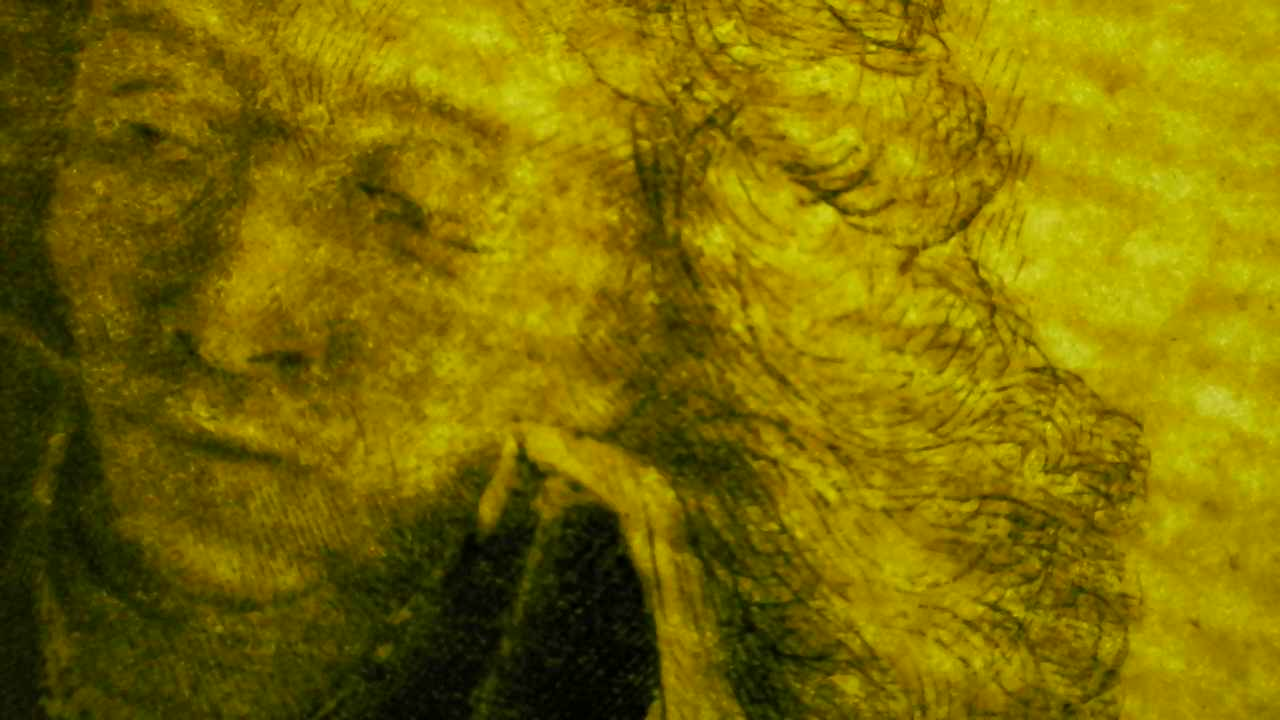
Paper texture seen under transmitted light: the image reveals the depth of the fibre mat, the alternation of pulp density, and the absence of dot-screen or coated-paper behaviour typical of modern photomechanical printing.

The tonal inversion of the macro photograph enhances the visibility of the network of engraved lines and the distribution of the ink that make up the portrait.
Platemark
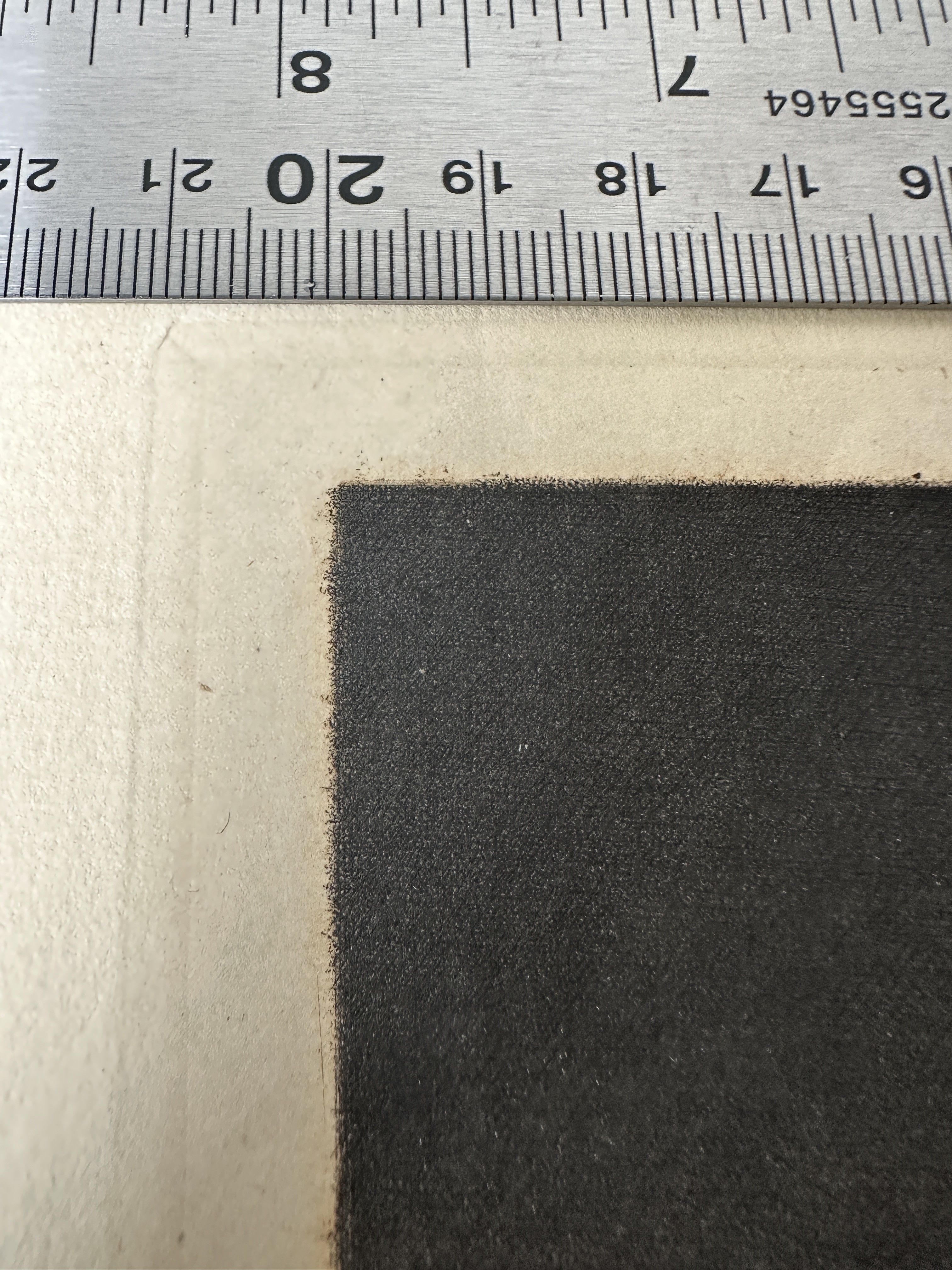
Upper left corner of the platemark, showing the beveled copper edge and a clean, unbroken impression with no retouching or post-print trimming.
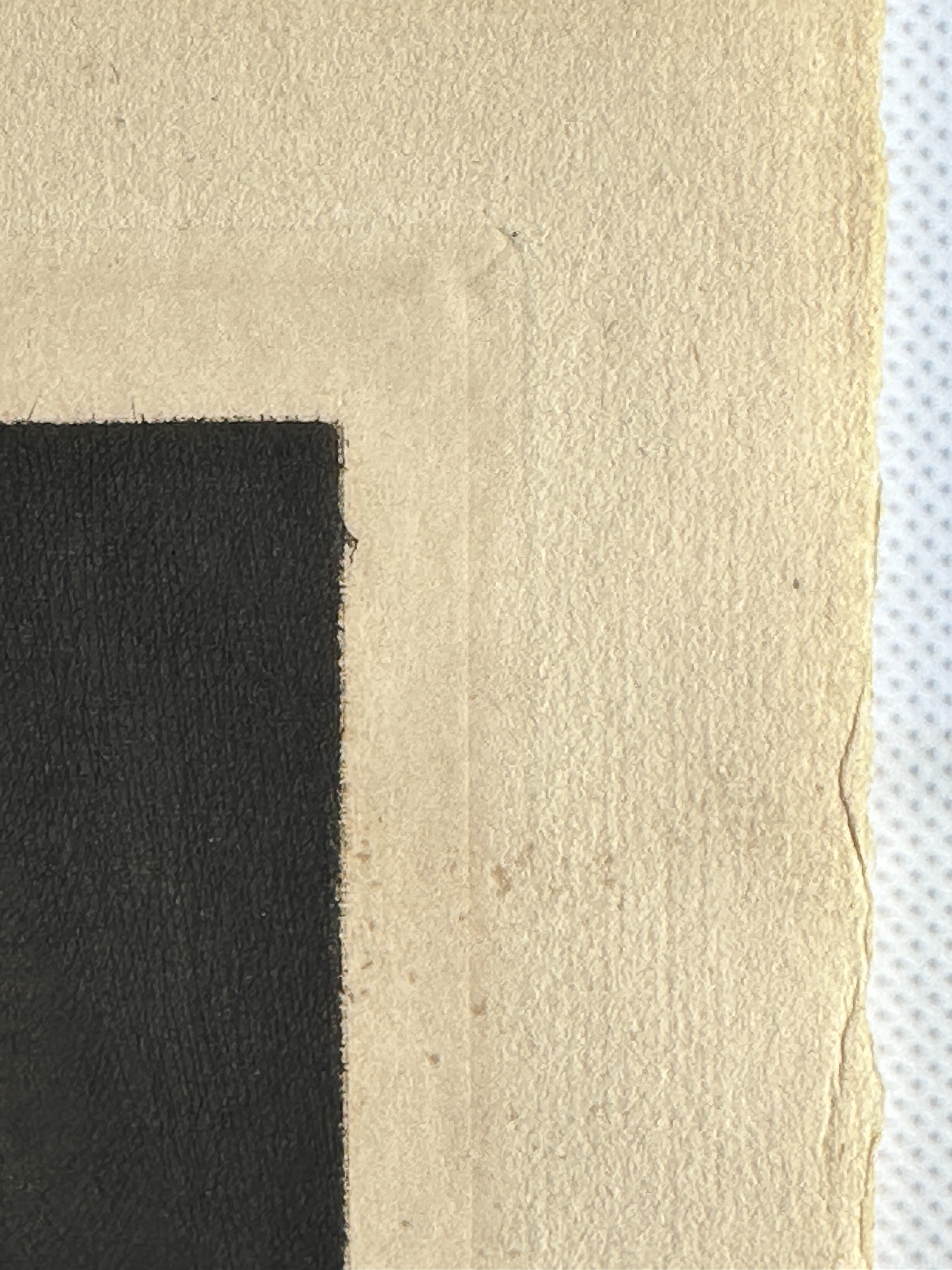
Upper right platemark corner, with intact bevel and slight paper compression, consistent with an early, well-inked pull from a fresh plate.
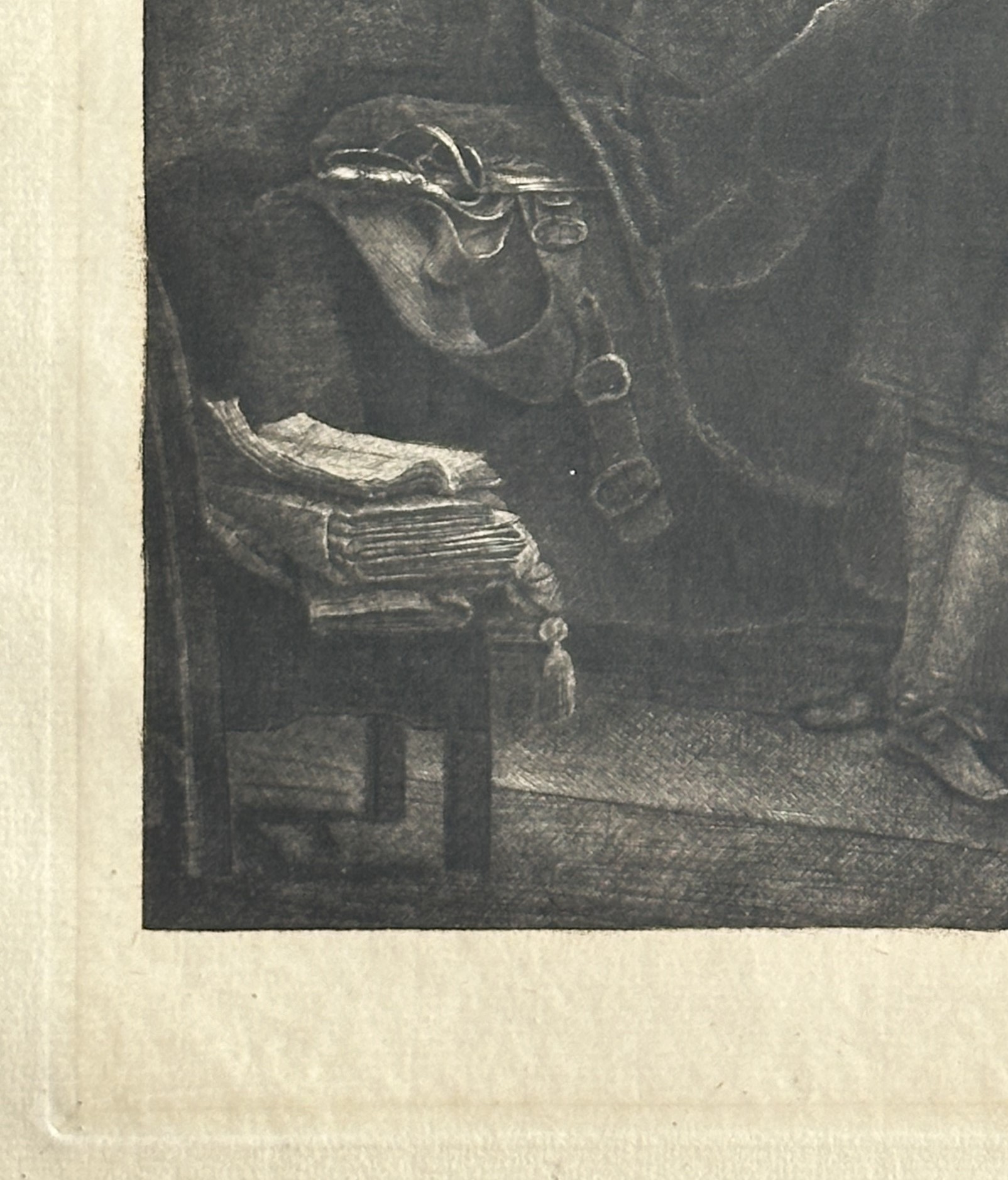
Lower left corner of the platemark, documenting the depth of the bite into the paper and the natural rounding of the edge produced by the press.
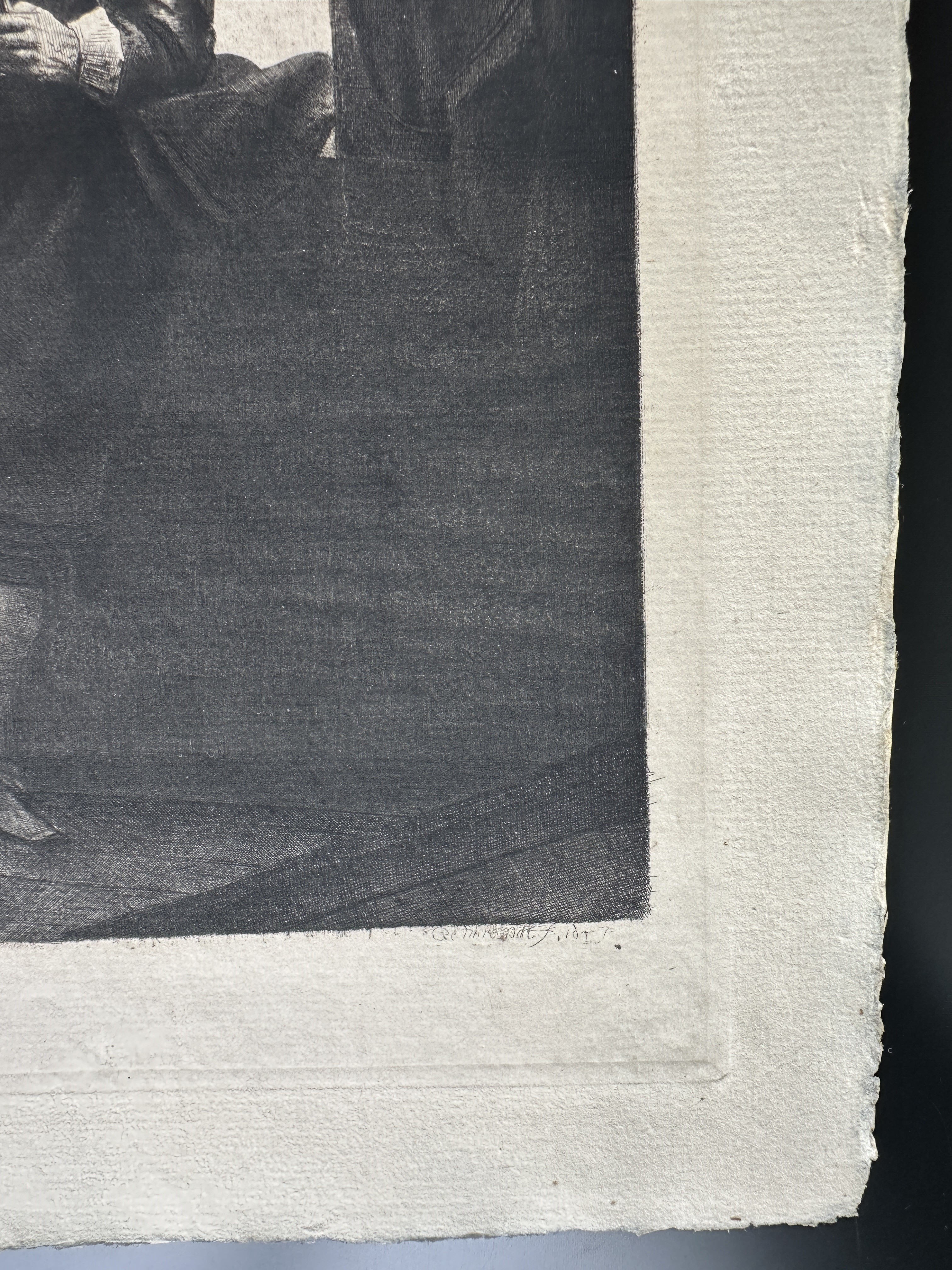
Lower right platemark corner, confirming the uniformity of pressure across the sheet and the absence of any secondary plate or printing frame typical of reproductive processes.
Macro Evidence
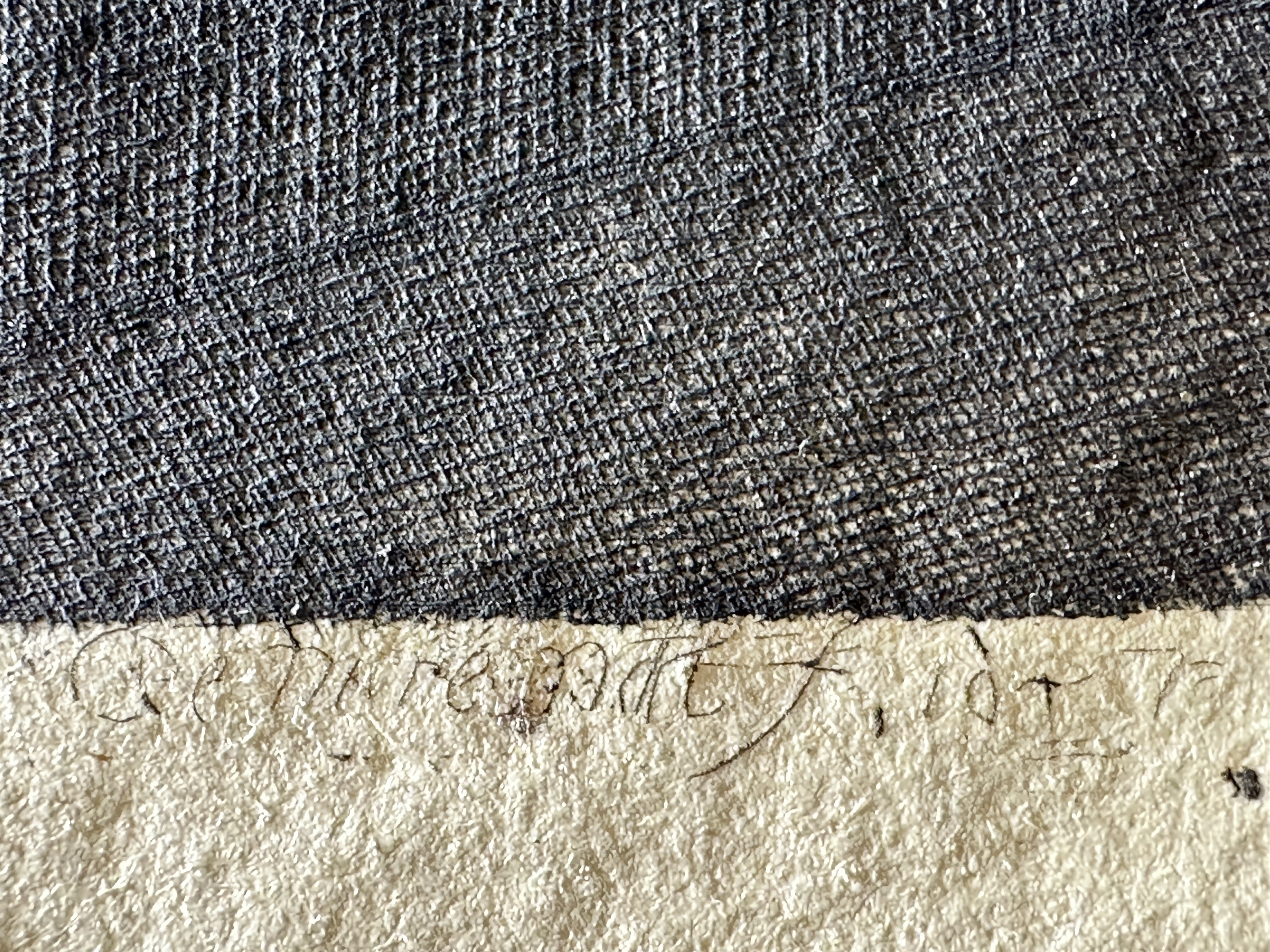
Macro of the Rembrandt signature line, with ultra-fine strokes still in shallow relief. Surviving burr and micro-shadowing along the curves indicate an early impression before significant plate wear.
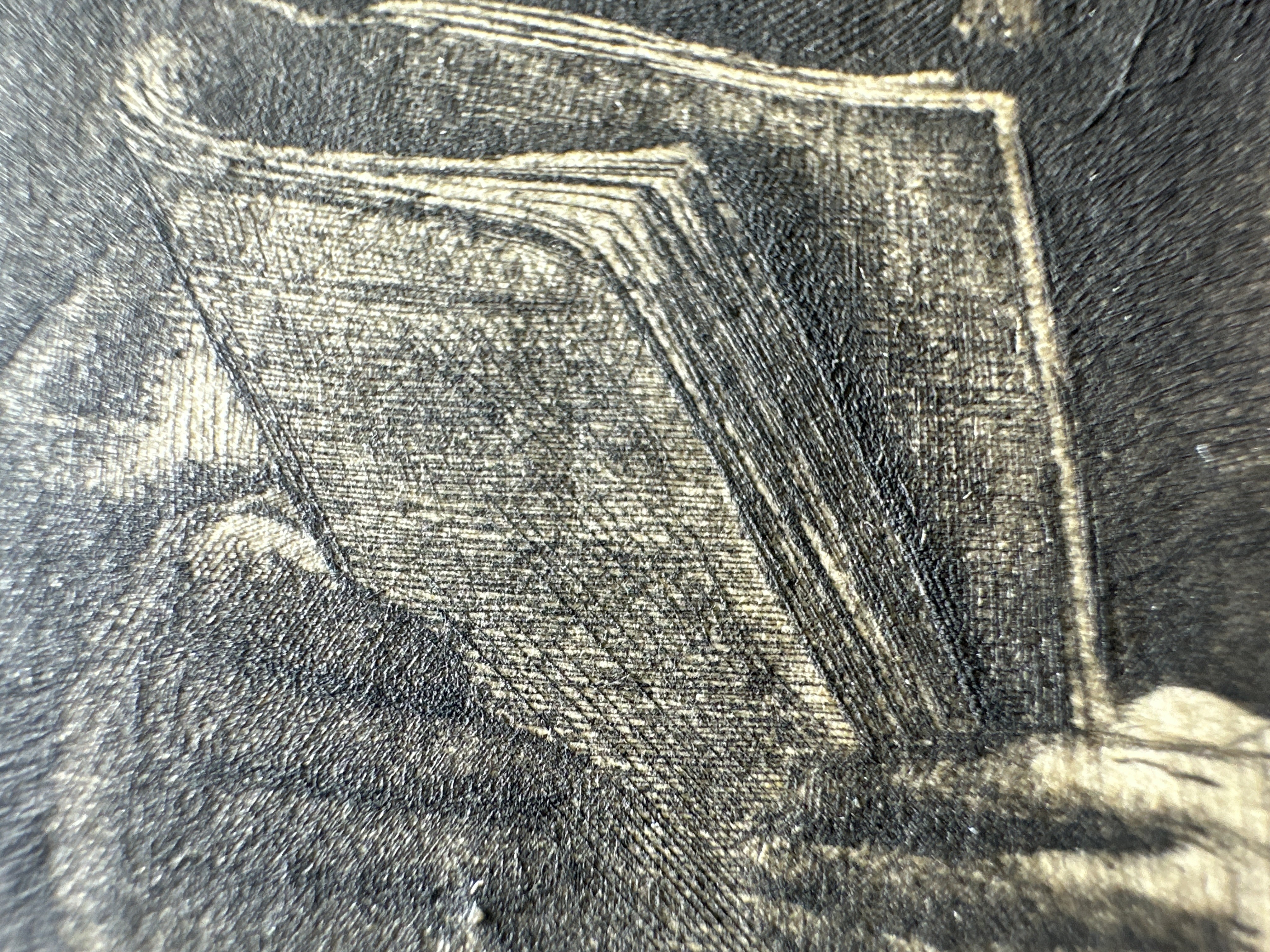
Macro view of the book held by Jan Six, showing layered parallel hatching and cross-hatching, with clean ink deposition in the recesses and no evidence of dot pattern or chemical reticulation.

Fine hair strands around Jan Six’s head, where the thinnest etched lines and local burr are preserved. The survival of these fragile strokes supports an early pull within the first runs from the plate.

Close-up of the face, demonstrating delicate line modulation in the eyes, nose and mouth, with subtle tonal transitions created purely by linear density rather than screened textures.

Transitional zone between face and suit: differences in line weight, burr and tonal buildup show how Rembrandt modulated material surfaces (skin vs. fabric) using only etched and drypoint lines.

Close-up of the left hand gripping the book. Individual etched strokes remain unmerged, and the micro-shadowing produced by intact burr is clearly visible along the darker contour lines.

Interface between coat and book: overlapping hatching systems, with angular strokes in the garment and more rigid, structural lines in the book cover, all printed with consistent seventeenth-century ink behaviour.

Second macro of the suit–book area, emphasising the depth of shadows and the absence of plate polishing: the darkest zones are built by dense line networks rather than any mezzotint or grain.
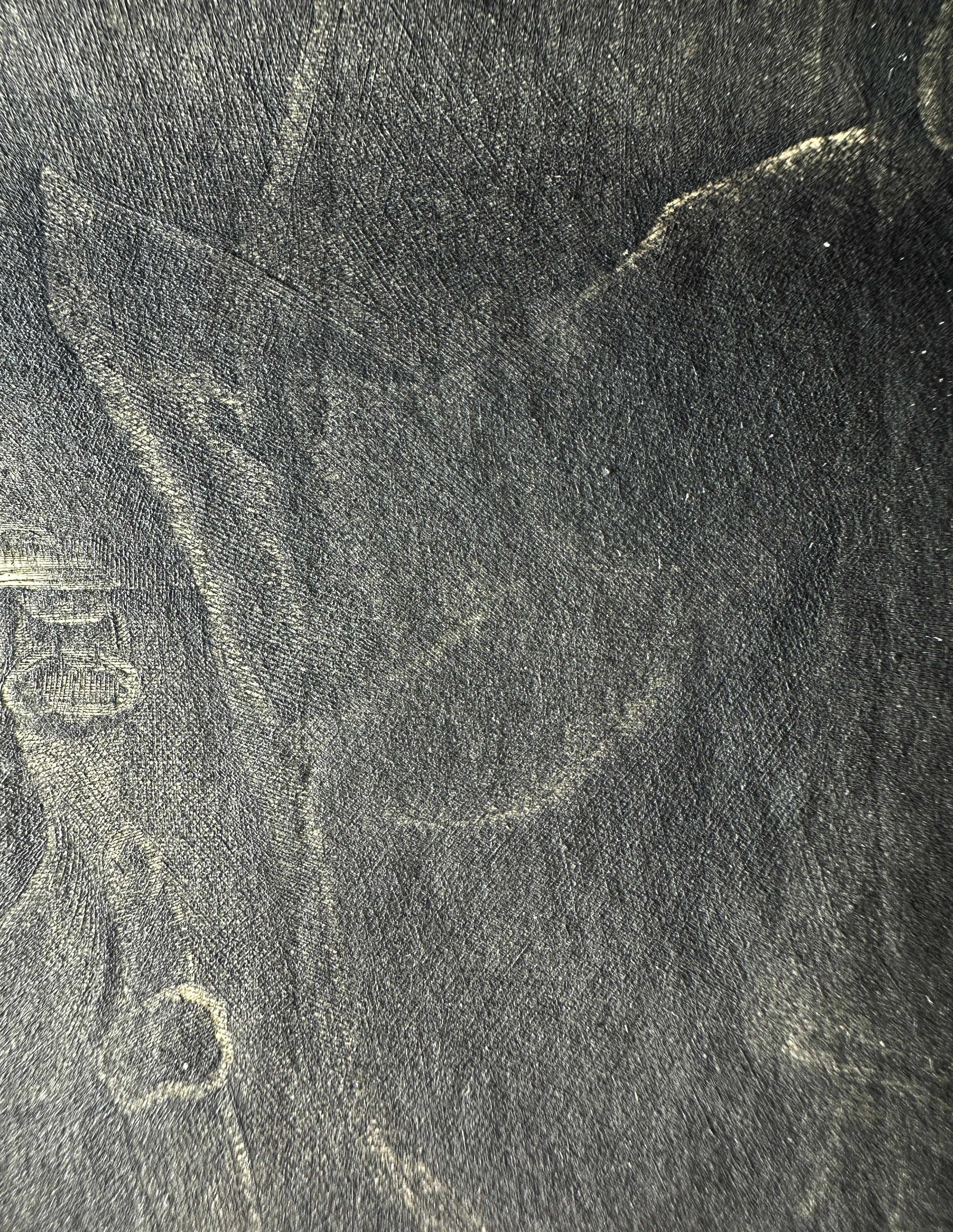
General macro of the suit fabric, showing the vibrational effect of Rembrandt’s linework and surviving burr along certain edges, incompatible with mechanically even photogravure textures.

Macro of the right-hand curtain, where layered hatching and preserved burr create soft tonal gradations. The structure of the lines confirms direct work on copper, not a transferred screen.

First macro of the knife zone, documenting the partially developed outline and shading of the weapon. The absence of the fully finished knife seen in museum impressions indicates an earlier, pre-completion plate stage.

Second macro of the knife and surrounding drapery, highlighting the unfinished or lighter engraved work relative to the Rijksmuseum state, with no evidence of abrasion or ink loss.

Macro of the open book resting on the chair, with crisp linework in the pages’ edges and shadows beneath, again produced exclusively by etched and drypoint strokes, not by tonal screening.

Macro of the chair and stacked books: the structural lines of the furniture and the block of volumes remain sharp, with intact fine strokes that would be among the first to disappear in later impressions.

Upper hair and window zone: the extremely fine lines of the hair and the vertical strokes in the window framing demonstrate high alignment between paper and plate with no enlargement or softness.

Macro of the framed painting on the left wall, showing the internal motif and its contour lines in an earlier, less reinforced state compared with museum impressions.
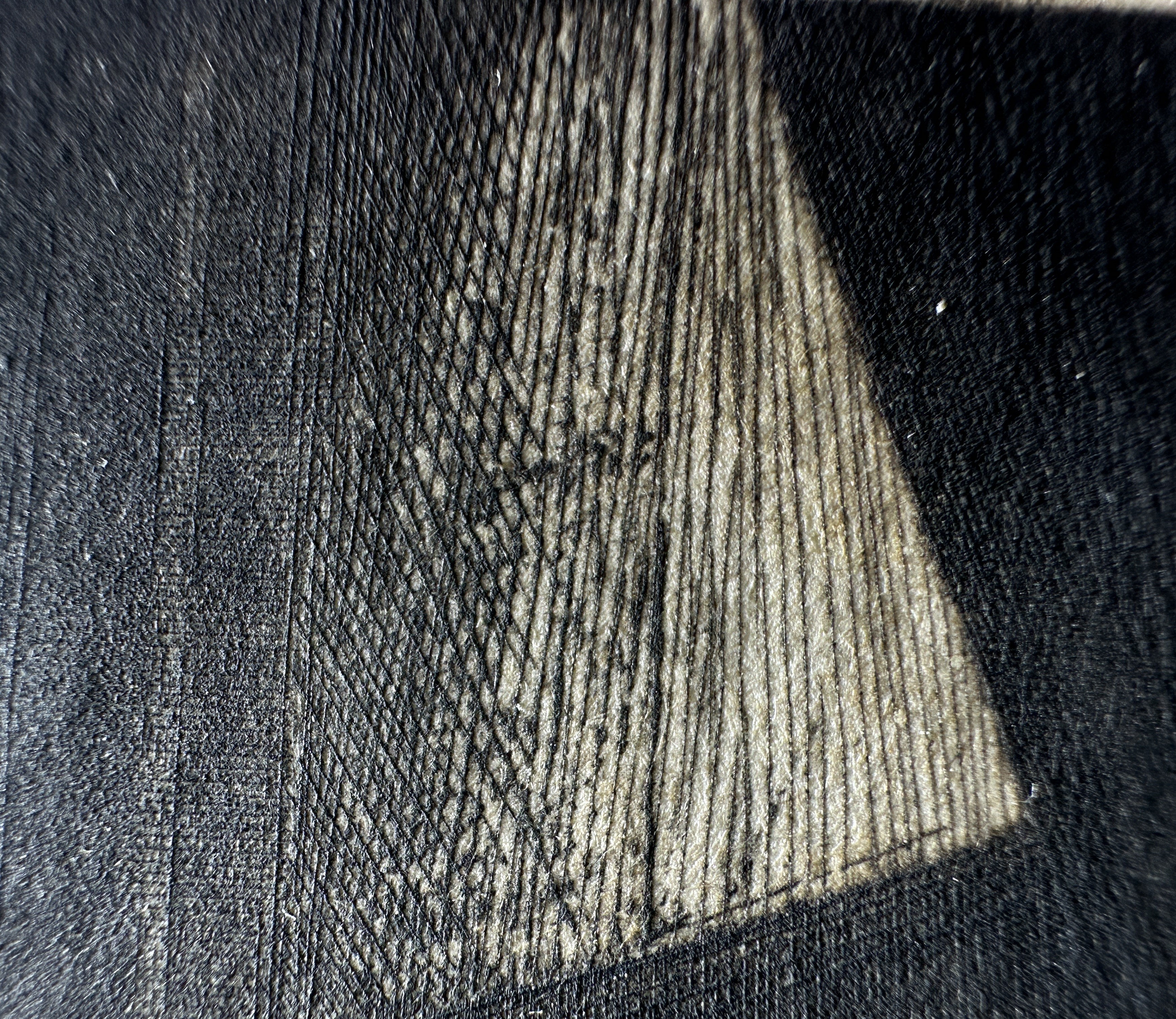
Macro of the top window area, with dense vertical hatching and cross strokes that remain distinct under magnification, indicating that the plate surface has not been flattened by excessive printing.
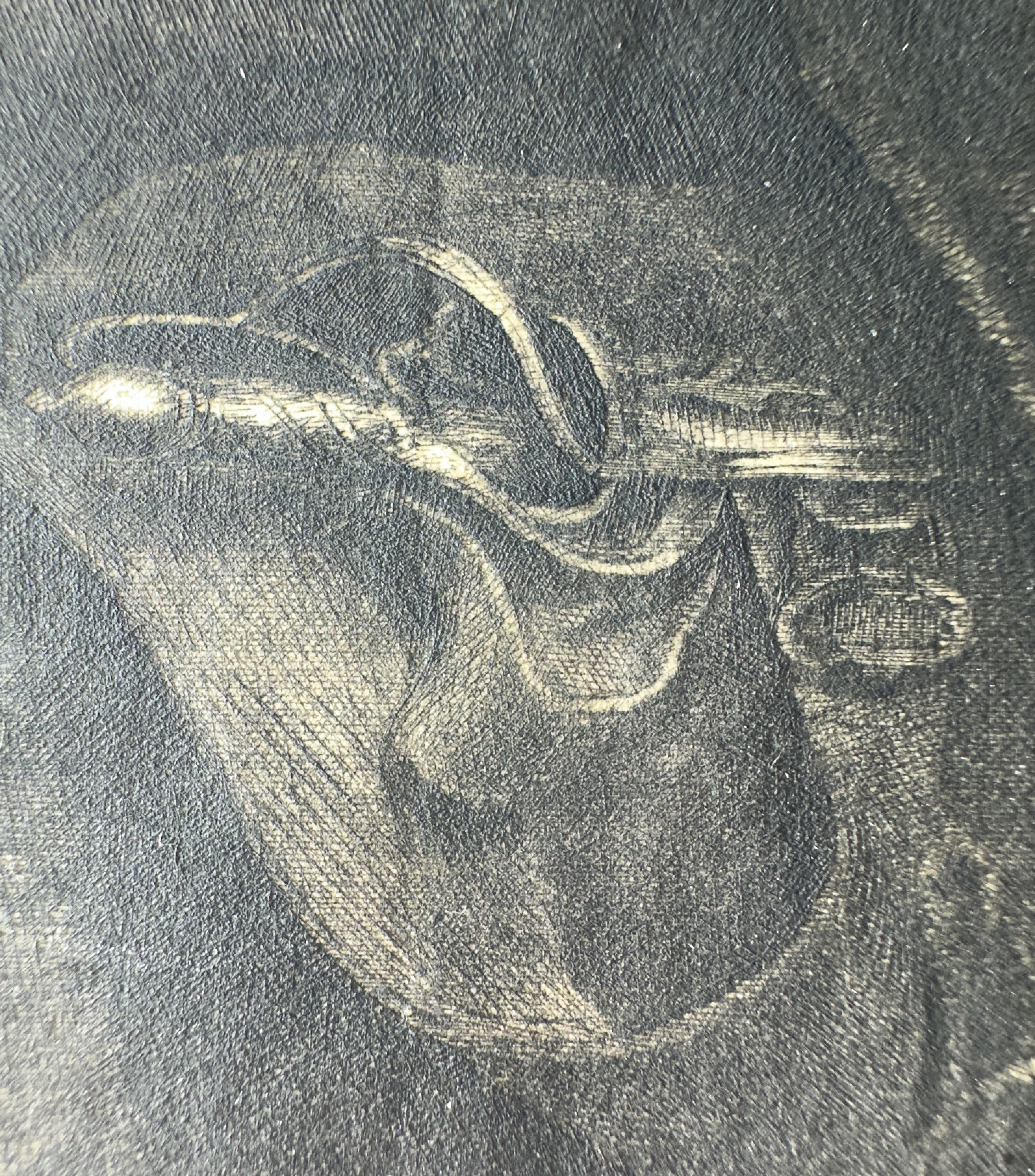
Macro of the sword hilt and sheath, where the ornamental fittings and strap edges show sharp relief and differentiated line weights, incompatible with the homogeneous tone of a heliogravure reproduction.
Overlays & Comparative State Analysis
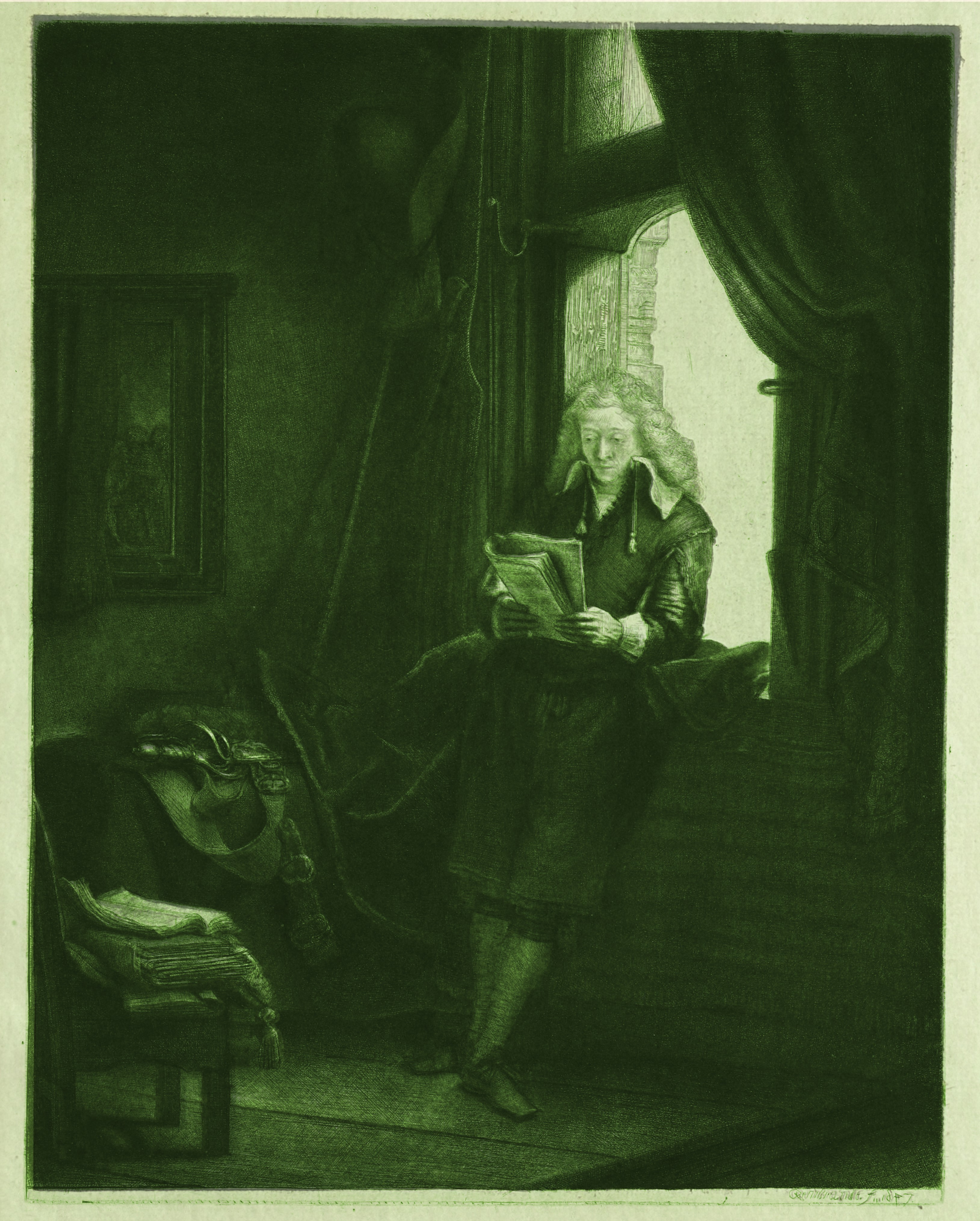
Global overlay of the Álvarez impression (black) with the Rijksmuseum impression RP-P-1962-111 (green), aligned at approximately 98 %. The near-perfect match of contours confirms that both prints derive from the same copper plate.
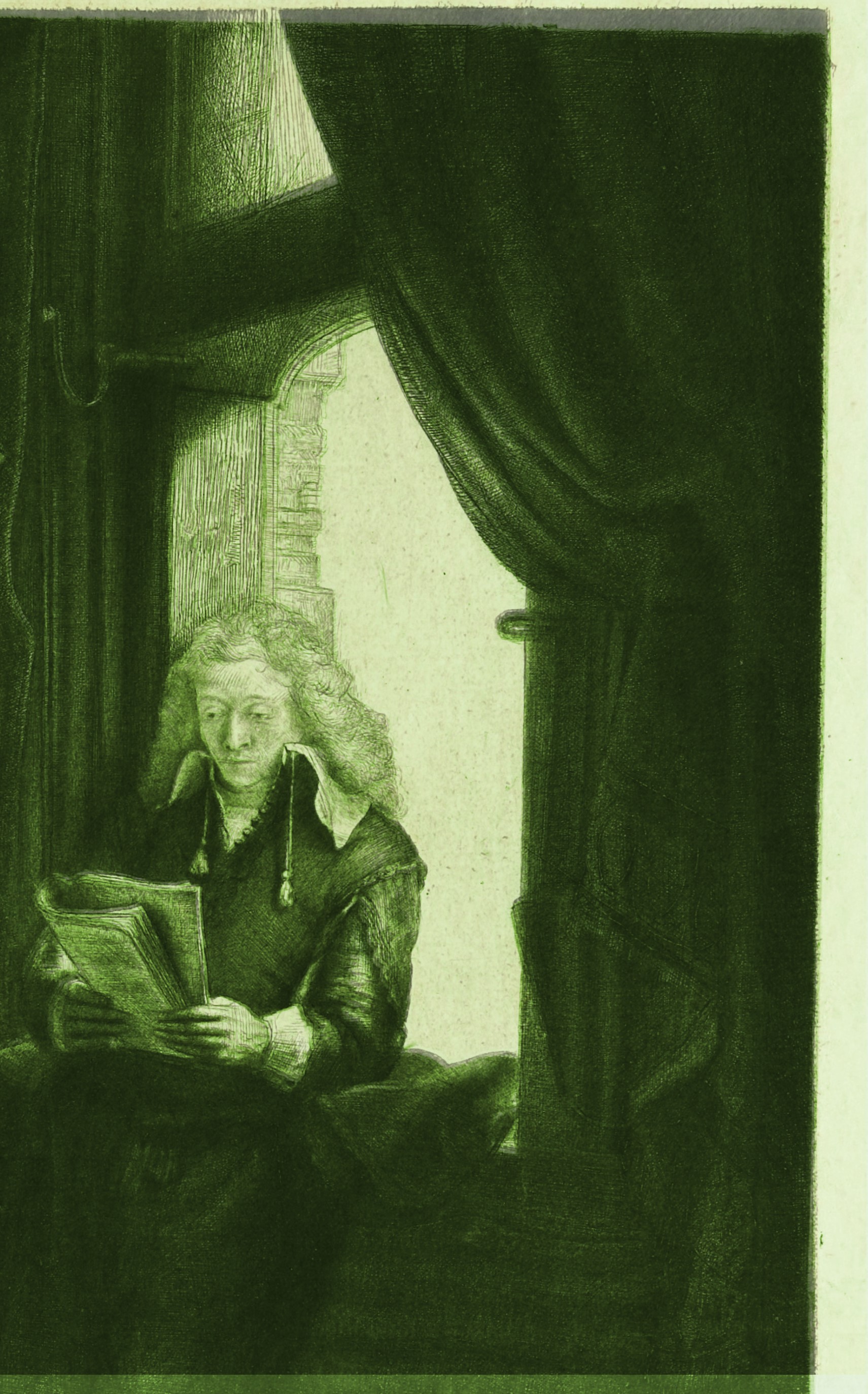
Overlay of the head, window and right curtain: the Rijksmuseum impression (green) shows a fully developed ornamental detail on the curtain, while the Álvarez impression (black) lacks this motif. The difference reflects an earlier plate state, not wear.
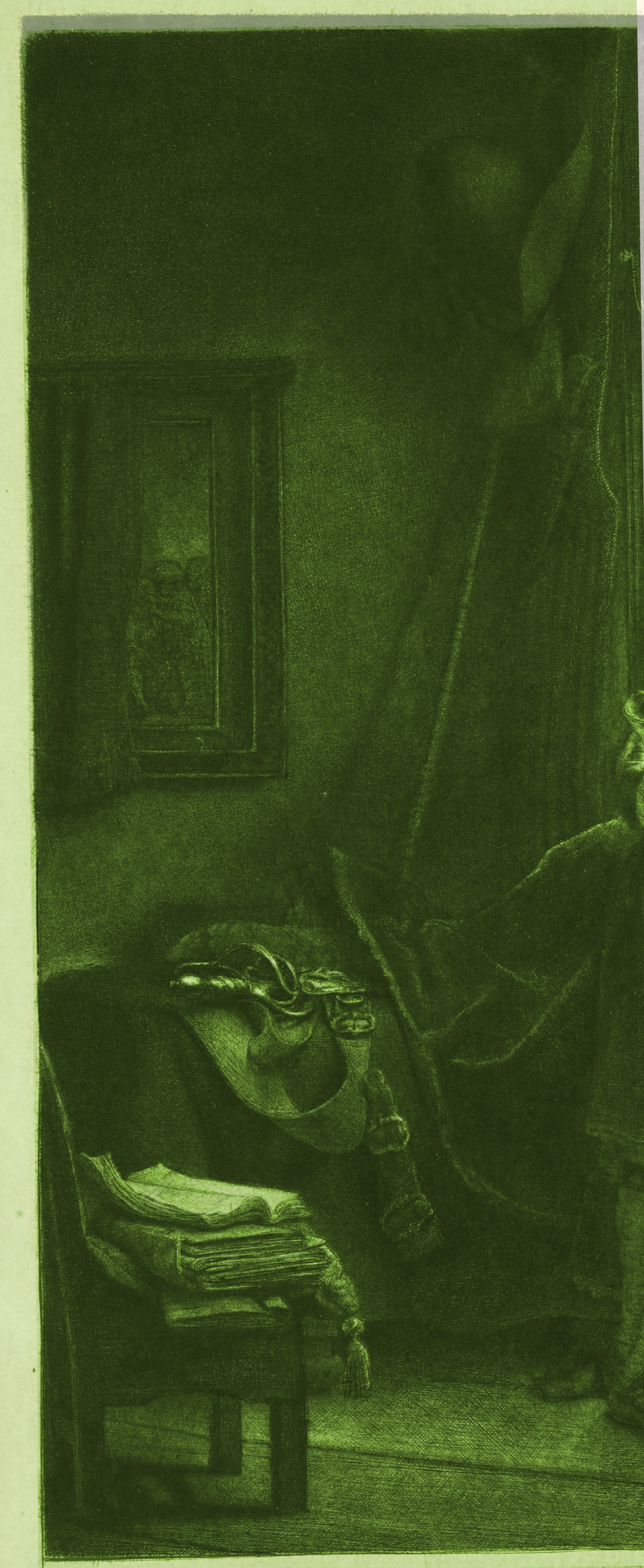
Overlay focusing on the right curtain, knife and the book on the ledge. In green (Rijksmuseum) additional lines refine the weapon, tassel and drapery; in black (Álvarez) these finishing strokes are absent, indicating an unfinished “State 0” configuration.

Zone A – Diagnostic comparison (Álvarez vs. Rijksmuseum RP-P-1962-111): absent knife outline and simplified curtain edge in the Álvarez impression, versus the completed forms in the museum impression. The discrepancy is consistent with subsequent work on the plate, not with printing wear.

Zone B – Diagnostic comparison (Álvarez vs. Rijksmuseum RP-P-1962-111): the Álvarez impression lacks the pocket ornament visible in the museum impression, while all surrounding lines remain strong. This selective absence confirms that the ornament was added later on the copper plate.