The Álvarez Collection
PVR · Technical Research File

Two Shells-Wenceslaus Hollar

Combined plate impression on laid paper, documented through measured structure, institutional comparatives, and structural overlays.

The present impression corresponds to a combined intaglio composition, formed by two independent motifs (Q5449 — Ruddy frog shell (Bursa rubeta) in the upper position and Q5466 — True tulip (Fasciolaria tulipa) in the lower position), integrated within a single physical plate structure. The measured platemark (197 × 150 mm) constitutes the metric basis of the structural analysis developed in this file, including the “9 mm calculation,” which demonstrates the coherence of a pre-cut phase of the plate.

Identification of the work

File ID
AC-RM-237-REV-2025
Artist
Wenceslaus Hollar (1607–1677)
Title
Shells — combined plate impression (Q5449 / Q5466)
Date of Execution
c.1646
Technique
Etching
Format
Combined impression on a single plate structure
Dimensions
Height 197 mm x Width 150 mm
Sheet Dimensions
Height 320 mm x Width 250 mm
Sheet Weight
15 grams
Collection
Álvarez private collection
Provenance
Private family collection, preserved over generations

Key technical points

This impression is documented as a physically coherent combined plate structure. The measured platemark (197 × 150 mm) functions as the metric basis for the structural overlay argument (“9 mm calculation”), supported by direct comparison with British Museum references Q5449 and Q5466.

Note: all numerical values reported here are based on direct measurement and/or calibrated comparison within the overlay workflow.
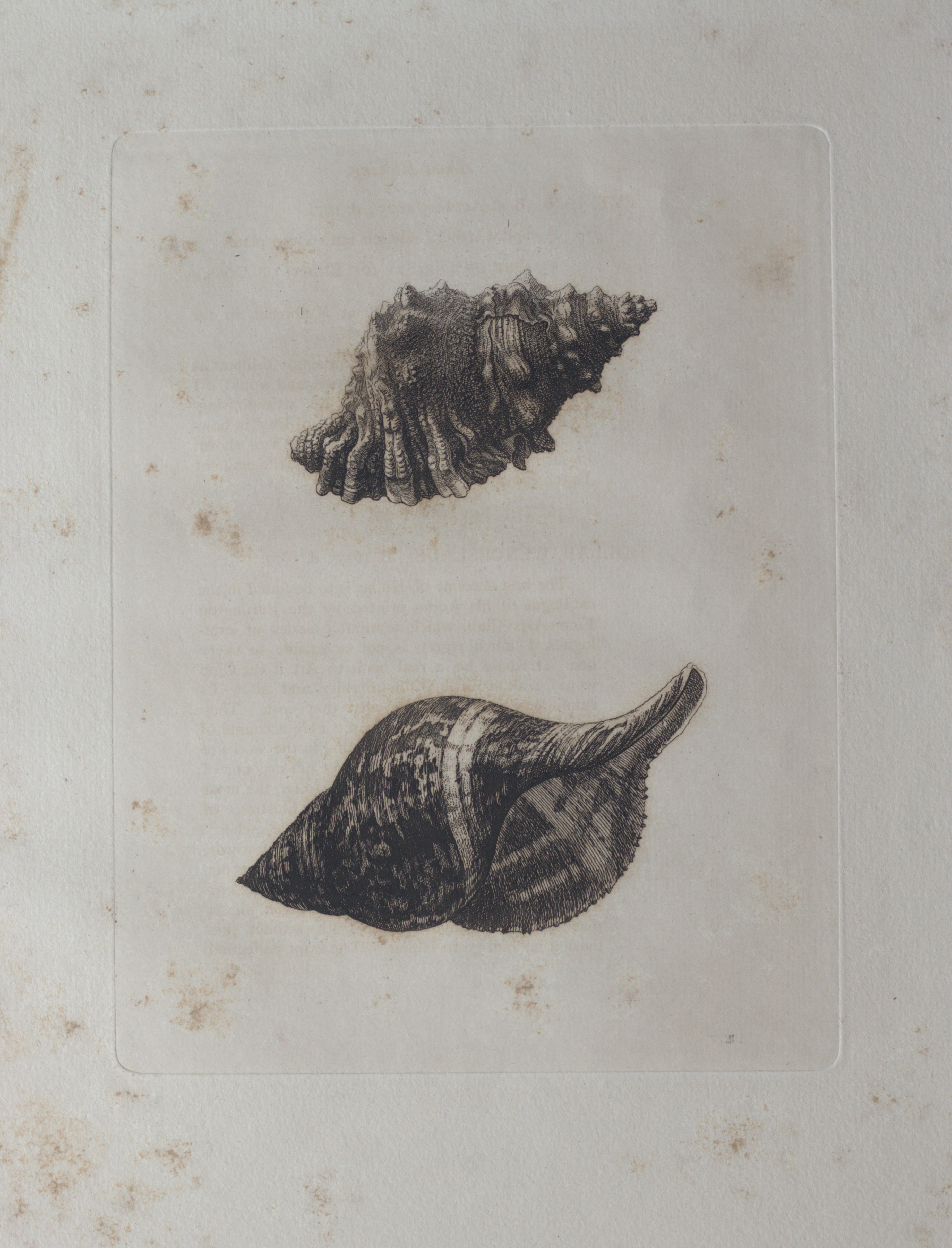
Structural diagnosis of a combined plate impression

This technical file presents a measured and reproducible analysis of a privately held combined plate impression attributed to Wenceslaus Hollar. The review is based on: paper structure (laid lines and fibre behaviour), ink deposition consistent with intaglio, a continuous platemark coherent with a single plate structure, and comparative overlays against British Museum reference impressions preserved separately (Q5449 and Q5466). All conclusions follow directly from observable and measurable evidence.

Core structural claim: the “9 mm calculation”

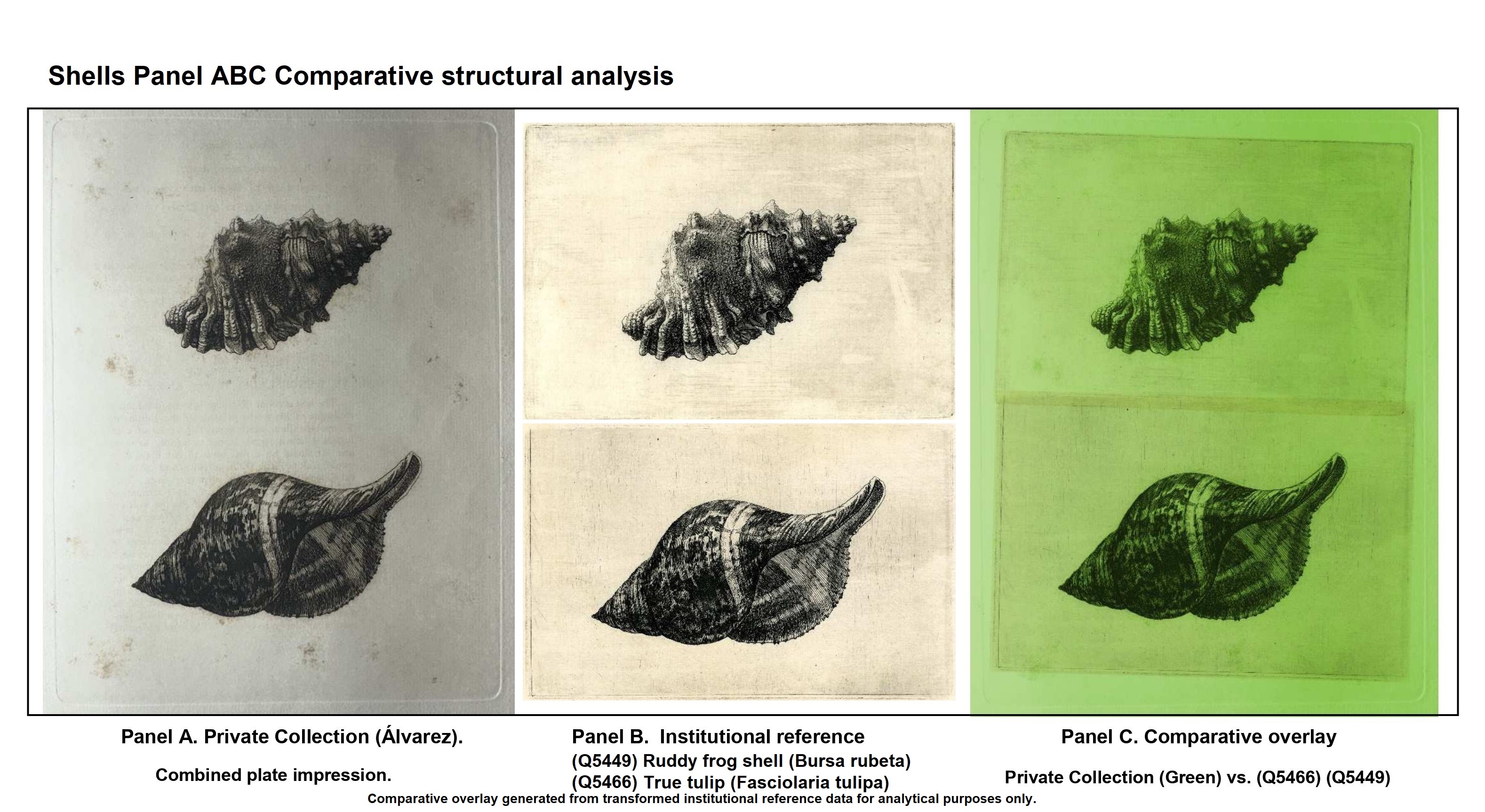
The comparative overlay demonstrates a closed metric relationship between the two motifs and the total platemark height. When the measured heights of both motifs are combined with the technical margins, the sum matches exactly the measured platemark height: 93 mm + 95 mm + 9 mm = 197 mm. This is a physical and measurable structural correspondence, consistent with a combined-plate configuration in a pre-cut chronology.

Laid paper, chain lines and ink–fibre behaviour

The support corresponds to laid paper, with visible fibre structure and material behaviour coherent with early modern European papers.

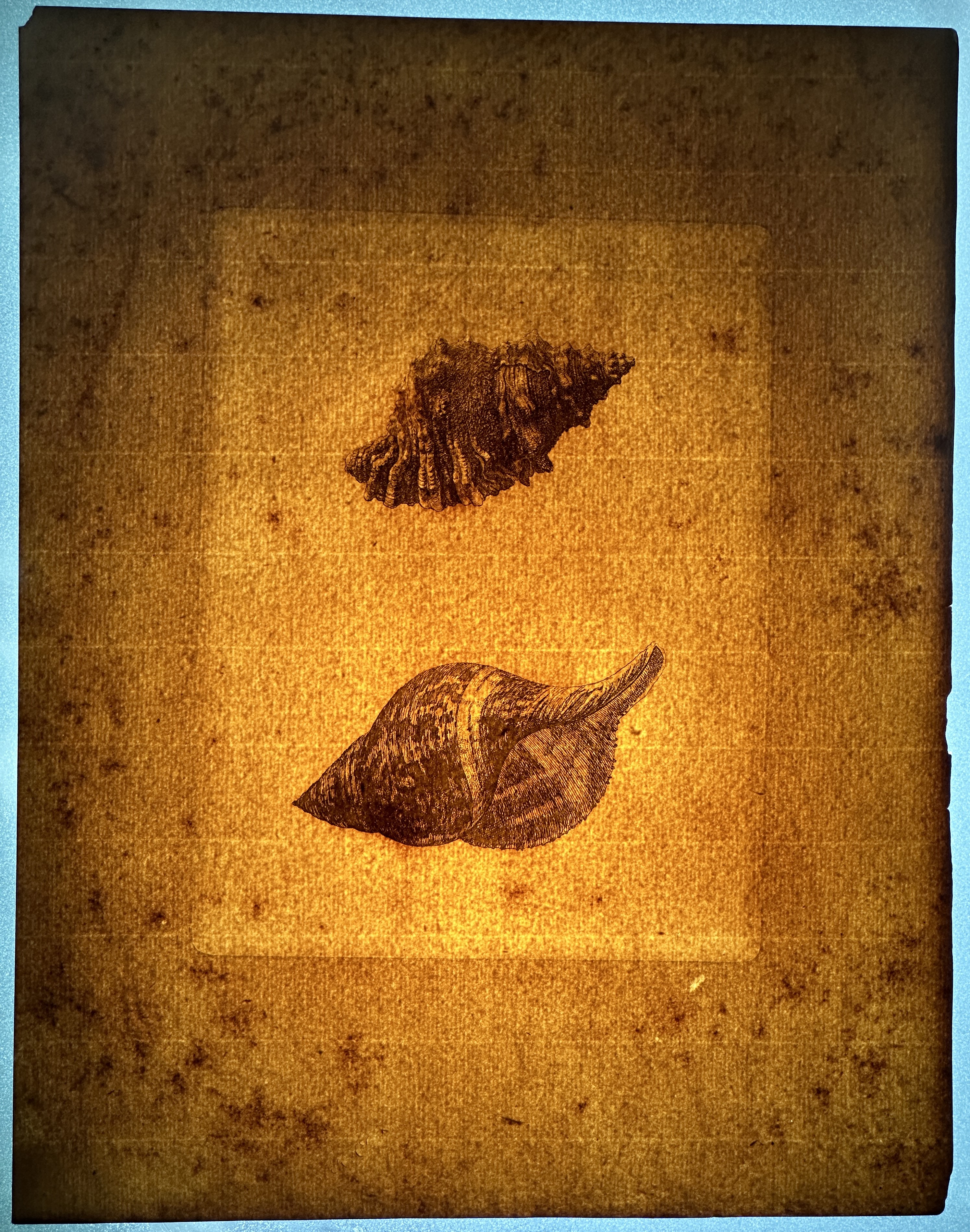
Paper — transmitted light
Paper — transmitted light.
Transmitted-light view of the sheet; watermark not visible.
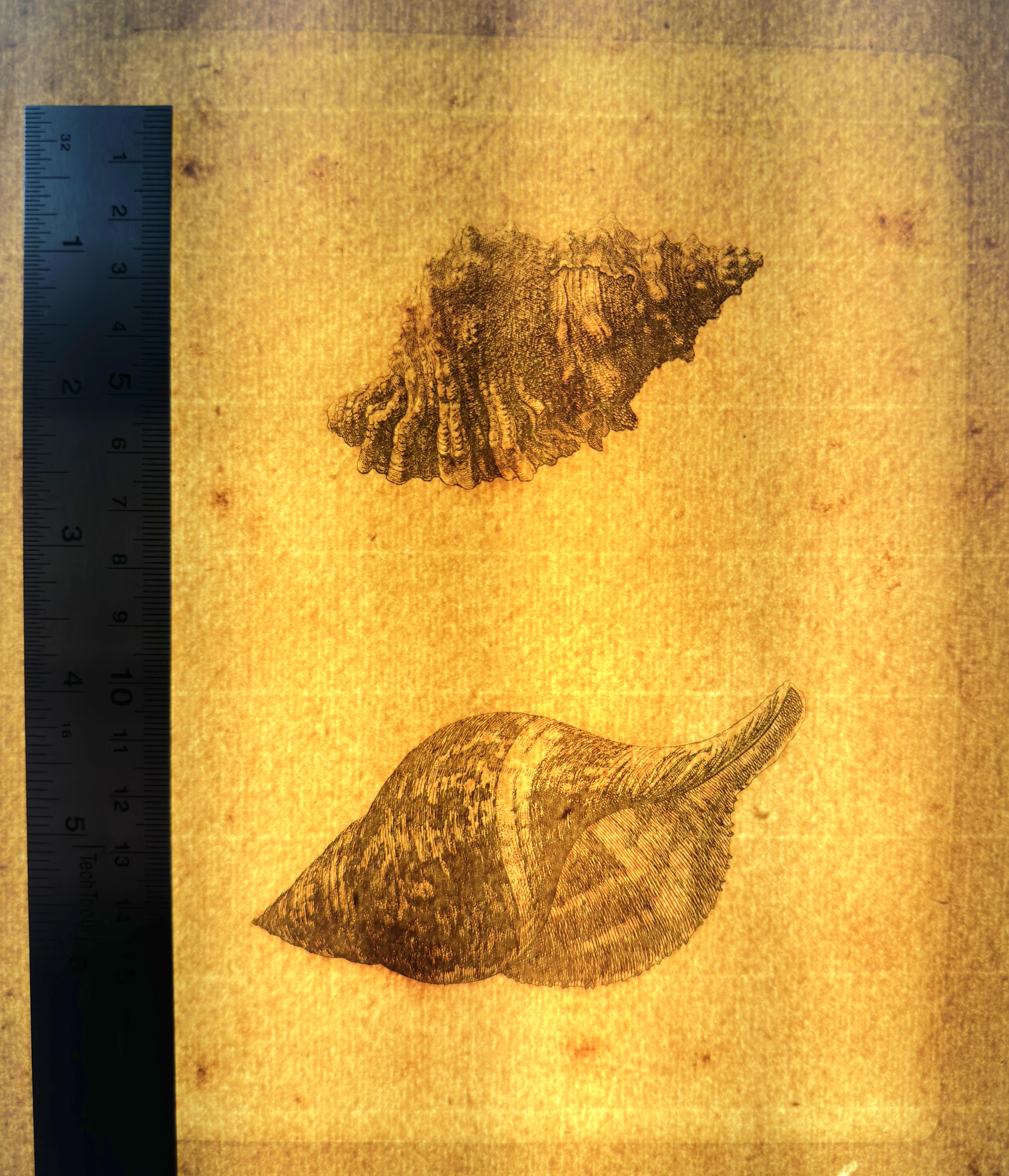
Chain lines — 25 mm spacing (measured)
Chain lines — 25 mm spacing (measured).
Measurement documenting chain-line spacing.
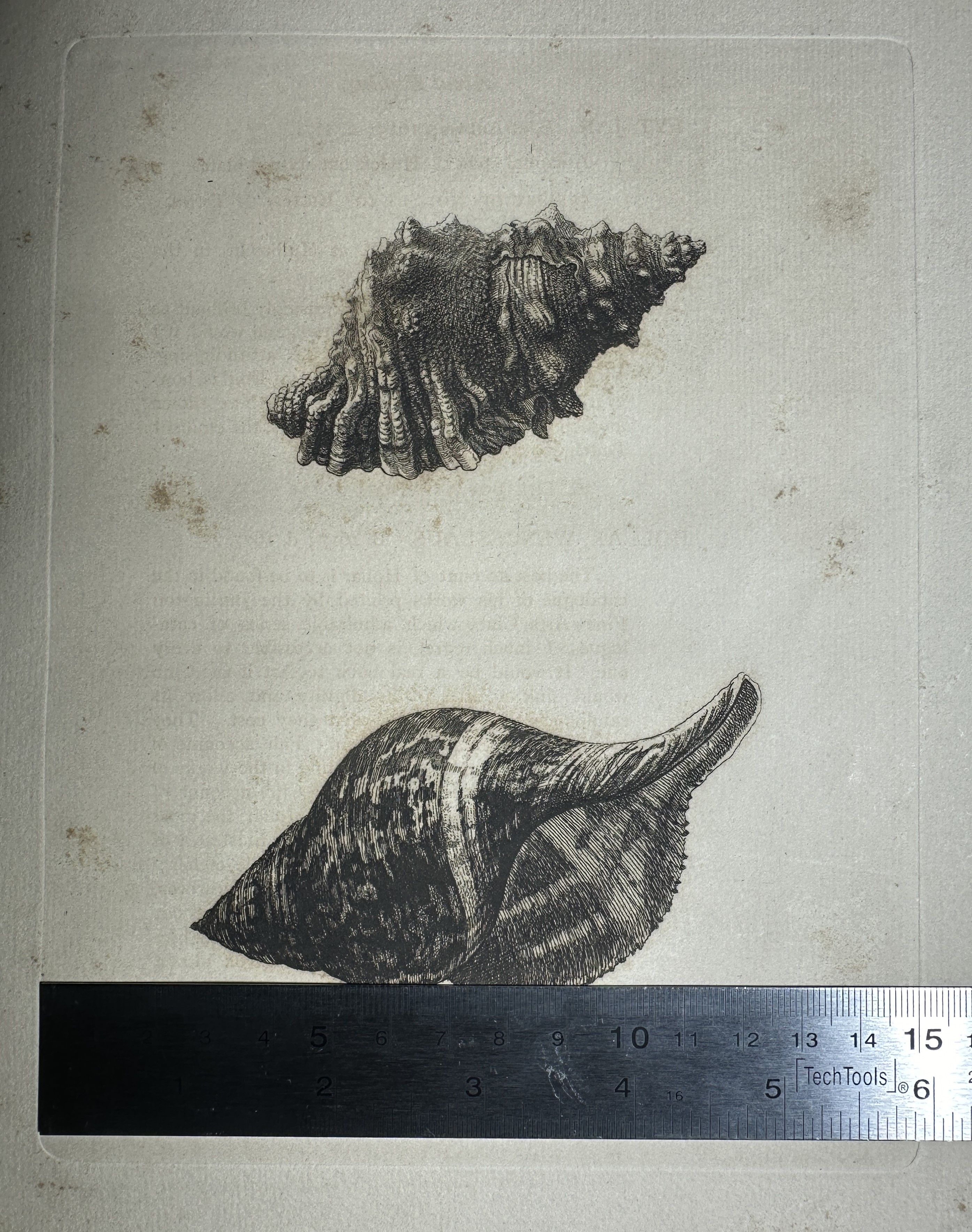
Platemark height measurement with ruler (197 mm)
Platemark height measurement (197 mm).
Direct measurement of the platemark height on the Álvarez impression (197 mm), used as the primary metric anchor for the structural analysis.
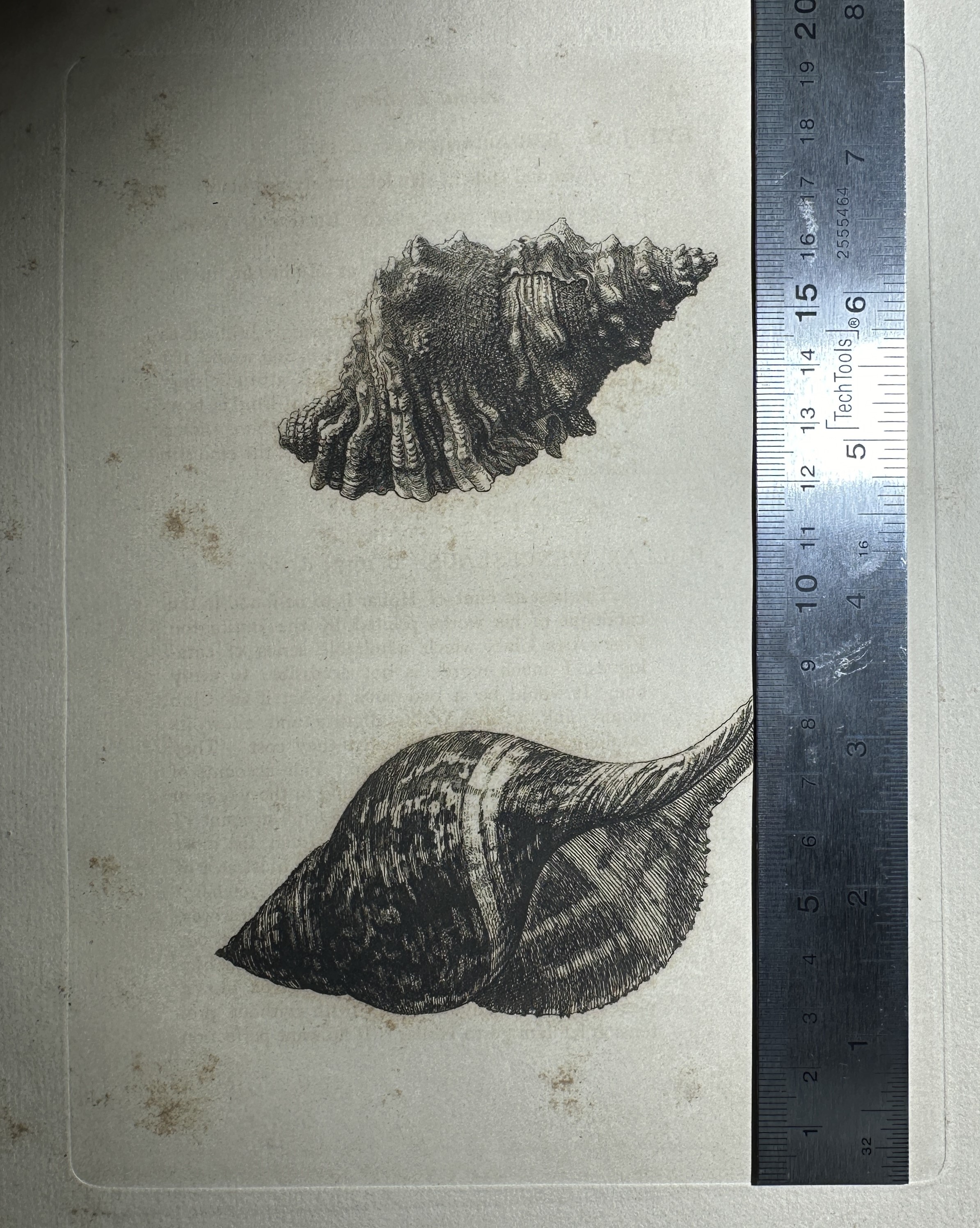
Platemark width measurement with ruler (150 mm)
Platemark width measurement (150 mm).
Direct measurement of the platemark width on the Álvarez impression (150 mm), confirming the full 197 × 150 mm platemark dimensions.
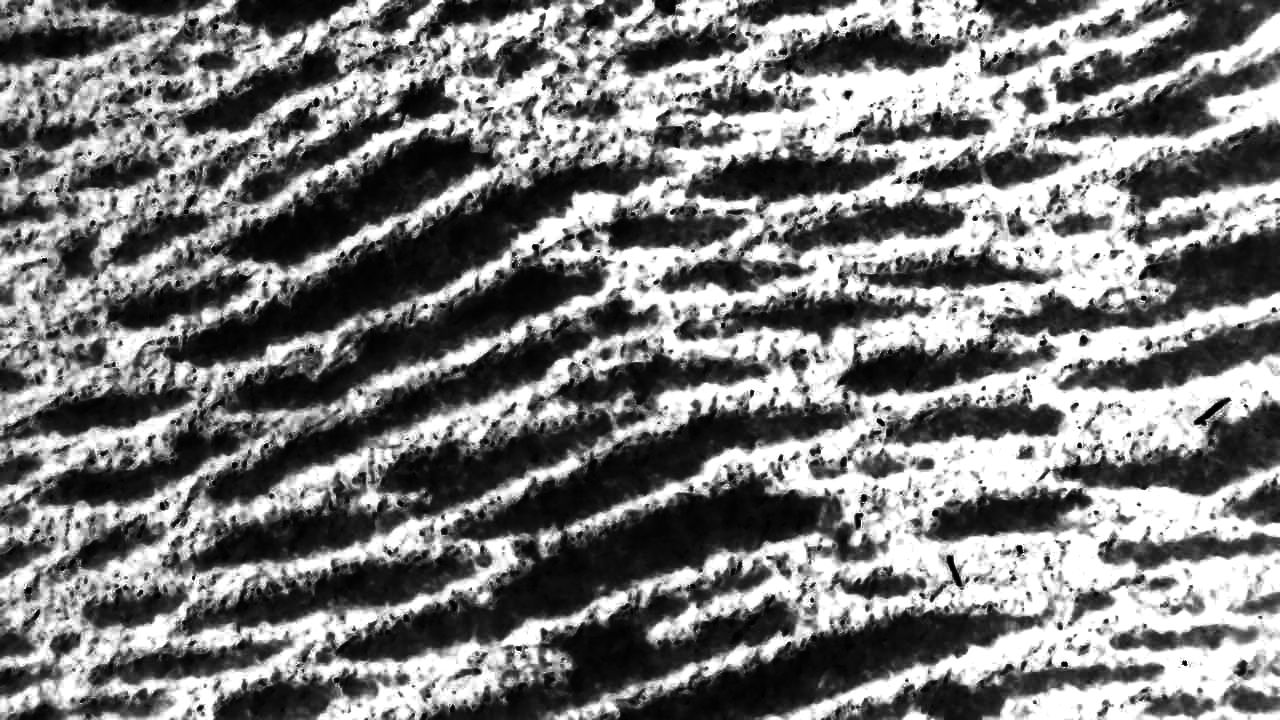
Paper structure — microscopy
Paper structure — microscopy.
Microscopy view of the laid paper structure under transmitted light, showing fibre distribution and density independent of the engraved image.

British Museum references (preserved separately)

The private combined impression has been compared directly with institutional impressions preserved separately in the British Museum:

The comparison focuses on internal proportions of each motif, relative placement within the print field, relationship between engraved image and technical margins, and continuity of the platemark structure. These comparisons are not based on general stylistic similarity, but on geometry, structure, and spatial relation.

Methodological Note — Structural Necessity

This study necessarily adopts a structural approach. The present configuration—two shell motifs preserved separately in institutional collections—cannot be adequately explained through stylistic comparison, iconographic analysis, or conventional connoisseurship alone. The central question is not whether the motifs resemble each other, but whether they originate from a single, coherent copperplate structure.

Without addressing plate configuration, the analysis would remain incomplete and ambiguous: the motifs could hypothetically derive from two independent plates, from later reproductive processes, or from unrelated impressions coincidentally similar in scale. Only a structural and metric examination—based on measurable relationships between motif dimensions, margins, and total platemark—allows these alternatives to be tested and excluded.

For this reason, the following sections focus on physical continuity, proportional coherence, and geometric alignment. The analysis is grounded exclusively in observable, measurable data and does not rely on stylistic interpretation or historiographic assumption. The objective is not to propose a narrative, but to establish whether the evidence supports a unified plate structure prior to any later separation.

Dictamen técnico — Panel A/B/C (comparación estructural)

Structural proof: “9 mm calculation” (pre-cut chronology)

The comparative overlay shows a closed metric relationship between both motifs and the total platemark:

Structural sum: 93 mm + 95 mm + 9 mm = 197 mm — matching exactly the measured platemark height (197 mm).

Technical reading

Panel A/B/C comparative structural analysis
Panel A/B/C.
This comparative panel analyses the combined-shell impression from the Álvarez Collection against the institutional impressions Q5449 and Q5466. Panel A documents the private combined impression. Panel B presents the institutional references, normalized for direct comparison. Panel C overlays both datasets, revealing consistent proportions, shared spatial axes, and a coherent geometric structure compatible with a single copperplate configuration. The evidence is structural and metric in nature and does not rely on stylistic interpretation.
Structural overlay
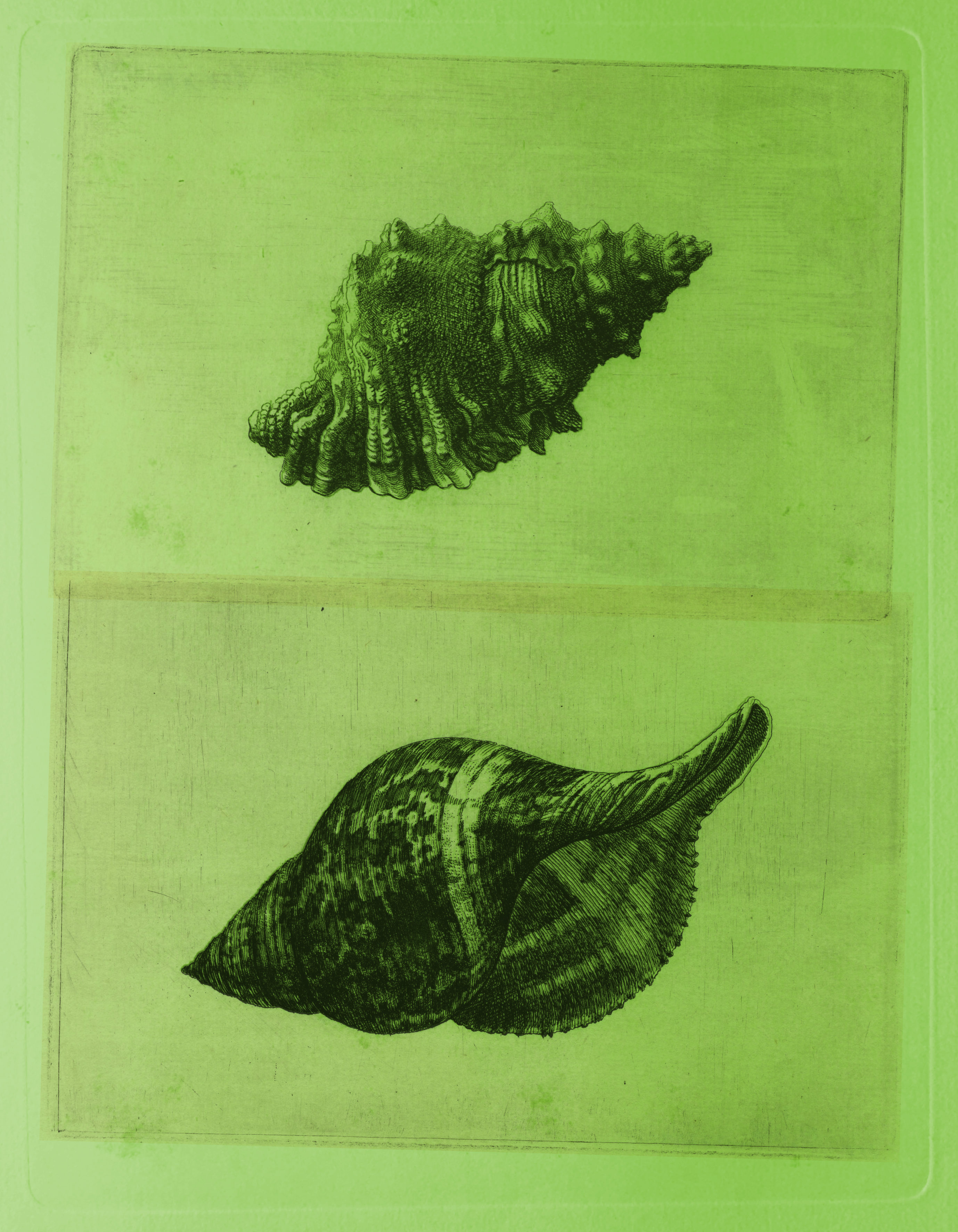
Structural Overlay vs Álvarez Collection vs (Q5449)(Q5466).
Overlay demonstrating the unified geometric configuration of both shell motifs within a single copperplate structure, with the Álvarez impression rendered in green.

Pennington catalogue reference (nos. 2194 / 2208)

The present impression brings together, within a single continuous plate structure, two shell motifs independently catalogued by Richard Pennington in A Descriptive Catalogue of the Etchings of Wenceslaus Hollar (Cambridge University Press, 1982):

In Pennington’s catalogue, these motifs are recorded as separate etched compositions and are preserved today in institutional collections as individual prints. The present impression does not contradict Pennington’s catalogue, but documents a structural configuration not addressed therein: a unified copperplate stage in which both motifs coexist within a single platemark and a coherent geometric framework.

The identification of this combined configuration is based not on stylistic interpretation, but on direct physical and metric evidence, including platemark continuity, proportional correspondence, and comparative overlays against institutional impressions corresponding to Pennington 2208 and 2194.

For independent verification, both catalogue entries can be consulted in the Wenceslaus Hollar Digital Collection, University of Toronto, where the works are indexed directly under their Pennington numbers (P.2194 and P.2208).

Taken together, these observations suggest a pre-separation phase of the copperplate, preceding the later state in which the motifs circulated independently. This note situates the present analysis within the established Pennington numbering system, while clarifying that the combined plate configuration documented here represents an earlier or alternative structural stage not explicitly recorded in the catalogue.

Burr — Macro evidence

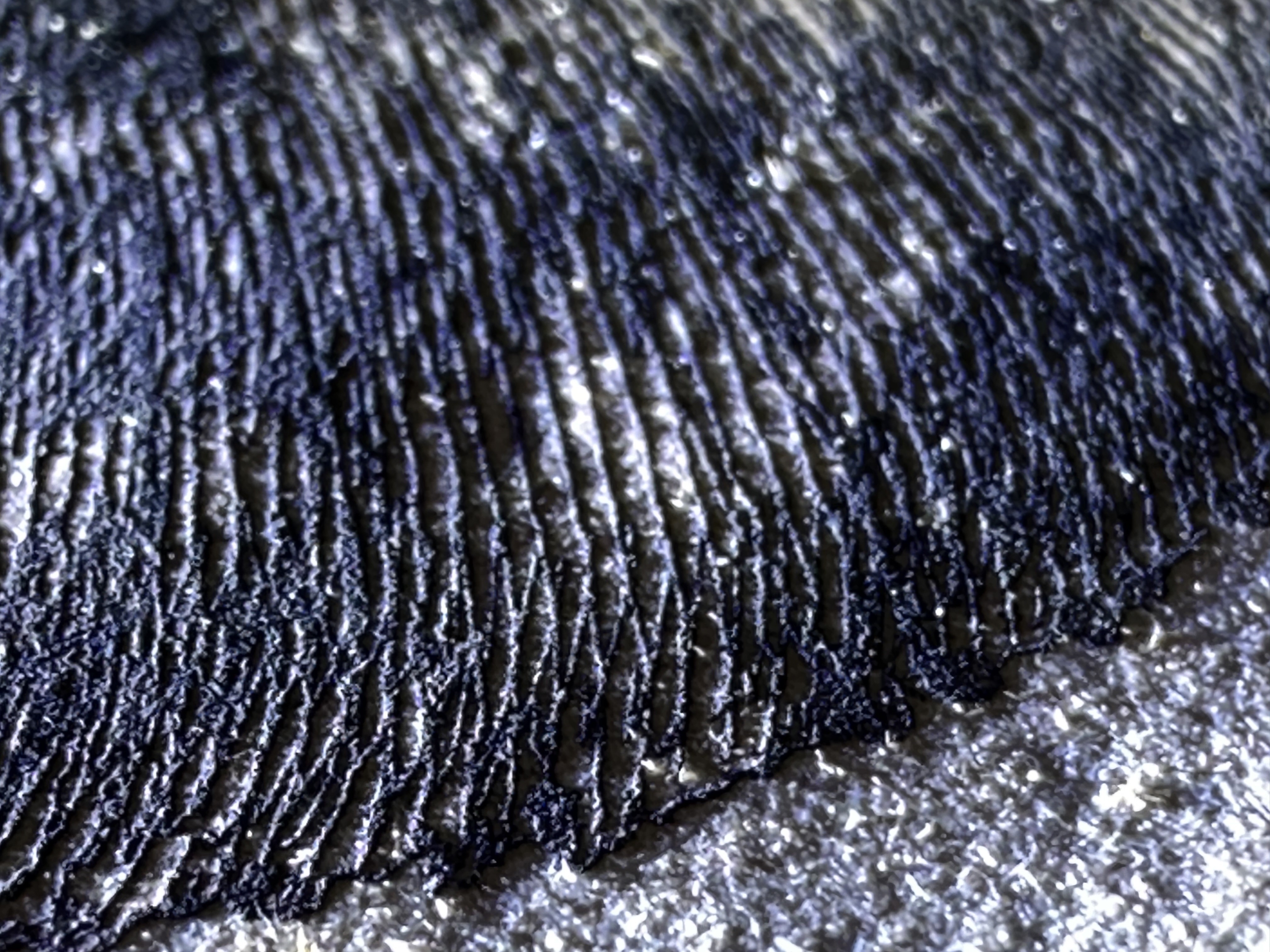
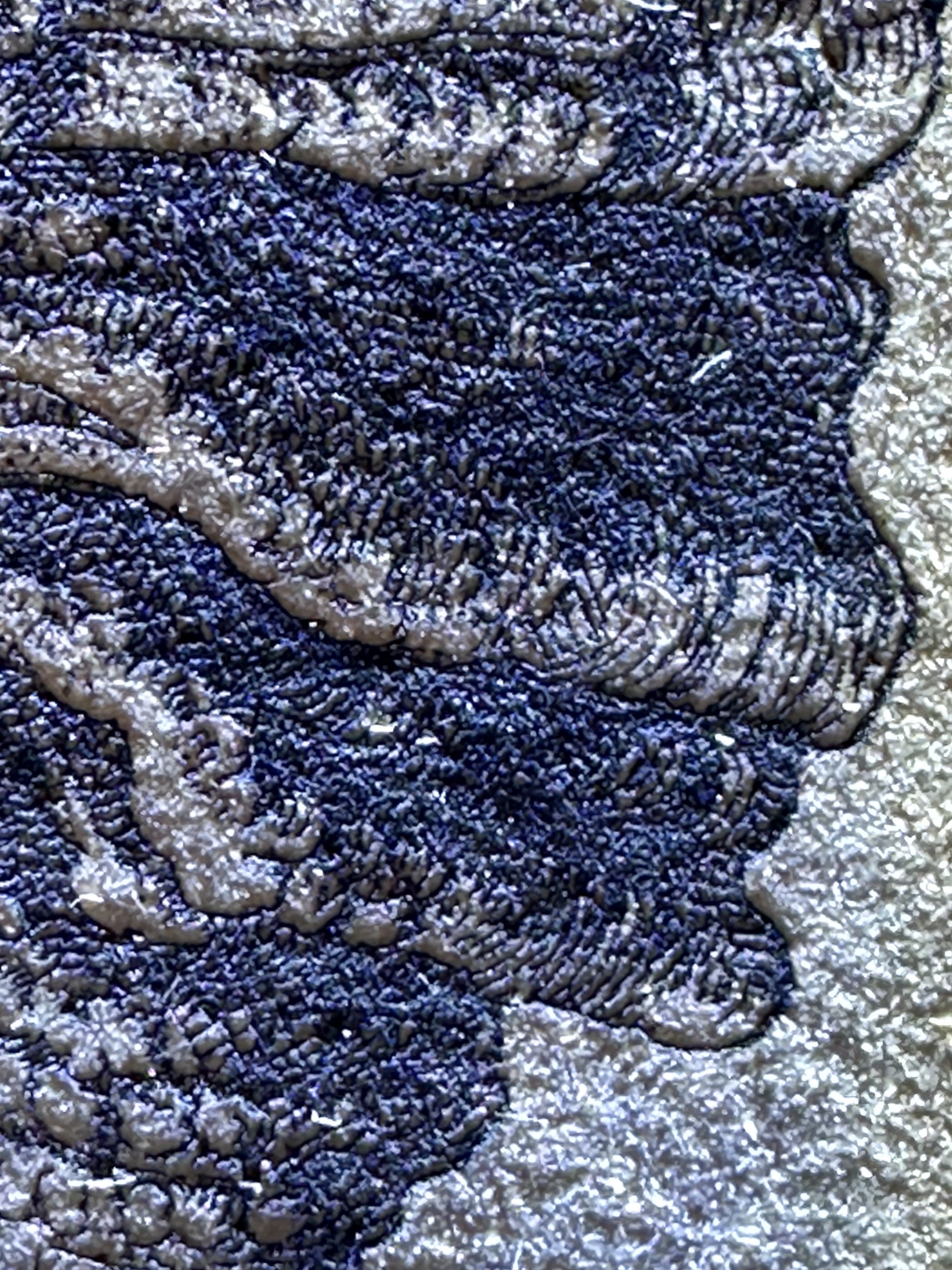
High-magnification macro photography reveals a dominant, continuous, and functional presence of burr across extensive passages of the image. Burr does not appear as a residual effect limited to line endings; it remains active along full segments, including dense hatching and cross-hatching, contributing directly to ink retention and tonal construction.

This section presents four representative burr images; the expanded set is available in the technical gallery.

Burr Continuous Line
Burr Continuous Line.
Dominant and continuous burr along a complete line.
Burr Line Edge Retention
Burr Line Edge Retention.
Lateral ink retention produced by active burr relief.
Burr Hatching Dominant
Burr Hatching Dominant.
Functional burr in dense hatching.
Burr Pressure Evidence
Burr Pressure Evidence.
Irregular burr flattening consistent with press pressure.

Microscopy — Line and burr analysis

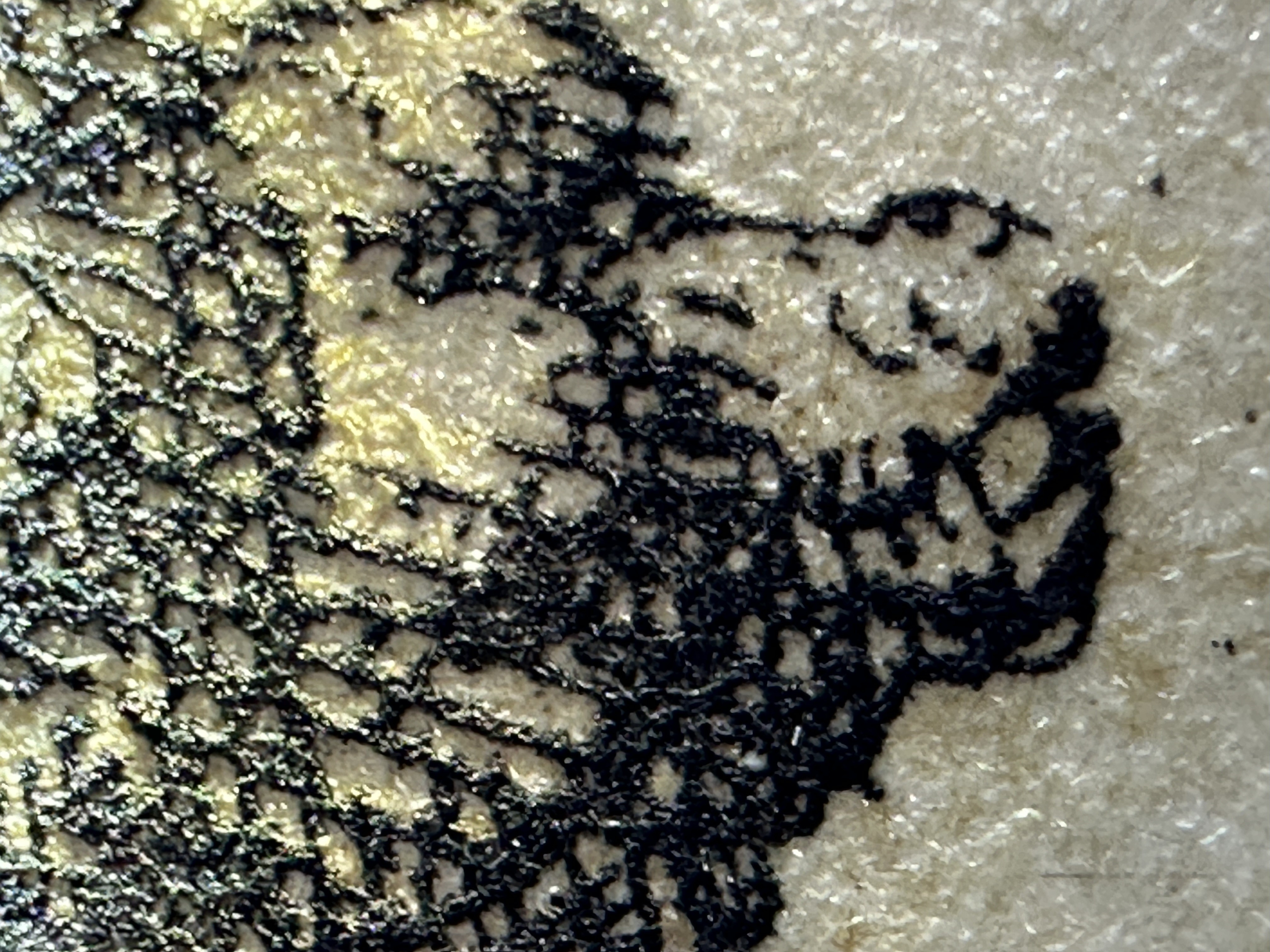
Microscopy documents the intaglio nature of the impression and the physical behaviour of the trace on paper. At microstructural level:

Two principal microscopy images are presented here; the remainder appear in the technical gallery.

Microscopy detail — contour line
Microscopy detail — contour line.
Visible relief and ink deposition consistent with intaglio printing.
Microscopy detail — dense hatching
Microscopy detail — dense hatching.
Organic line variation and ink retention under pressure.

General technical conclusion

The technical evidence presented—intaglio line behaviour, ink deposition, paper structure, continuous platemark, and the closed metric relationship demonstrated by the “9 mm calculation”—shows that this impression corresponds to a coherent, functional plate structure compatible with a combined phase prior to the institutional separation of the motifs.

The analysis does not rely on stylistic attribution or historiographic assumptions, but on physical evidence that is observable, measurable, and reproducible. No unsupported claims are introduced beyond the documented visual record.

Primary references and datasets

• Combined impression — Álvarez Collection (original macro and microscopy).
• Structural A/B/C overlays generated from normalized images.
• Richard Pennington, A Descriptive Catalogue of the Etchings of Wenceslaus Hollar, Cambridge University Press, 1982, nos. 2194 and 2208.
• University of Toronto, Wenceslaus Hollar Digital Collection, entries P.2194 and P.2208.
• British Museum institutional references:
  o Q5449 — Ruddy frog shell (Bursa rubeta)
  o Q5466 — True tulip (Fasciolaria tulipa)
• Direct measurements of the platemark and motif heights.
• British Museum — technical documentation on intaglio printmaking and copper plate practice.
• Christie’s — Old Master Prints: technique, plate wear, and workshop practices.
• General intaglio printmaking literature addressing copper plate use, wear, and reuse in early modern workshops.

Access and research collaboration

High-resolution files, complete macro sets, microscopy sets, and the internal technical report for this Hollar Shells combined impression are available to qualified researchers upon request.

All observations presented on this page are based on direct examination of the private impression and on published images from institutional collections. Attribution, dating and formal cataloguing remain open to scholarly discussion.

For enquiries, image permissions or collaborative projects, please use the contact form on the main site or write to:

susana123.sd@gmail.com
fineartoldmasters9919@gmail.com
susana@alvarezart.info

Phone: +1 786 554 2925 / +1 305 690 2148
Álvarez Collection Verification Record #AC-RM-237-2025