Coat of Arms with a Skull — Albrecht Dürer
Technical documentation of the print through direct material observation, including paper structure (laid pattern and chain lines), ink–fiber interaction, plate mark under raking light, line morphology under macro/microscopy, and tonal mechanism analysis (dense hatching, selective burr). Comparative overlay.
TECHNICAL DATA
- File ID
- AC-AD-245-REV-2026
- Artist
- Albrecht Dürer (c. 1471–1528)
- Title
- Coat of Arms with a Skull
- Date of Execution
- C.1503
- Technique / Materiality
- Engraving.
- Dimensions
- Height 210 mm × Width 158 mm
- Sheet Dimensions
- Height 320 mm x Width 245 mm
- Sheet Weight
- 10 grams
- Collection
- The Álvarez Collection (Miami)
- Provenance
- Private family collection, preserved over generations
Research Objective
Technical documentation of the print through direct material observation, including paper structure (laid pattern and chain lines), ink–fiber interaction, plate mark under raking light, line morphology under macro/microscopy, and tonal mechanism analysis (dense hatching, selective burr). Comparative overlay.


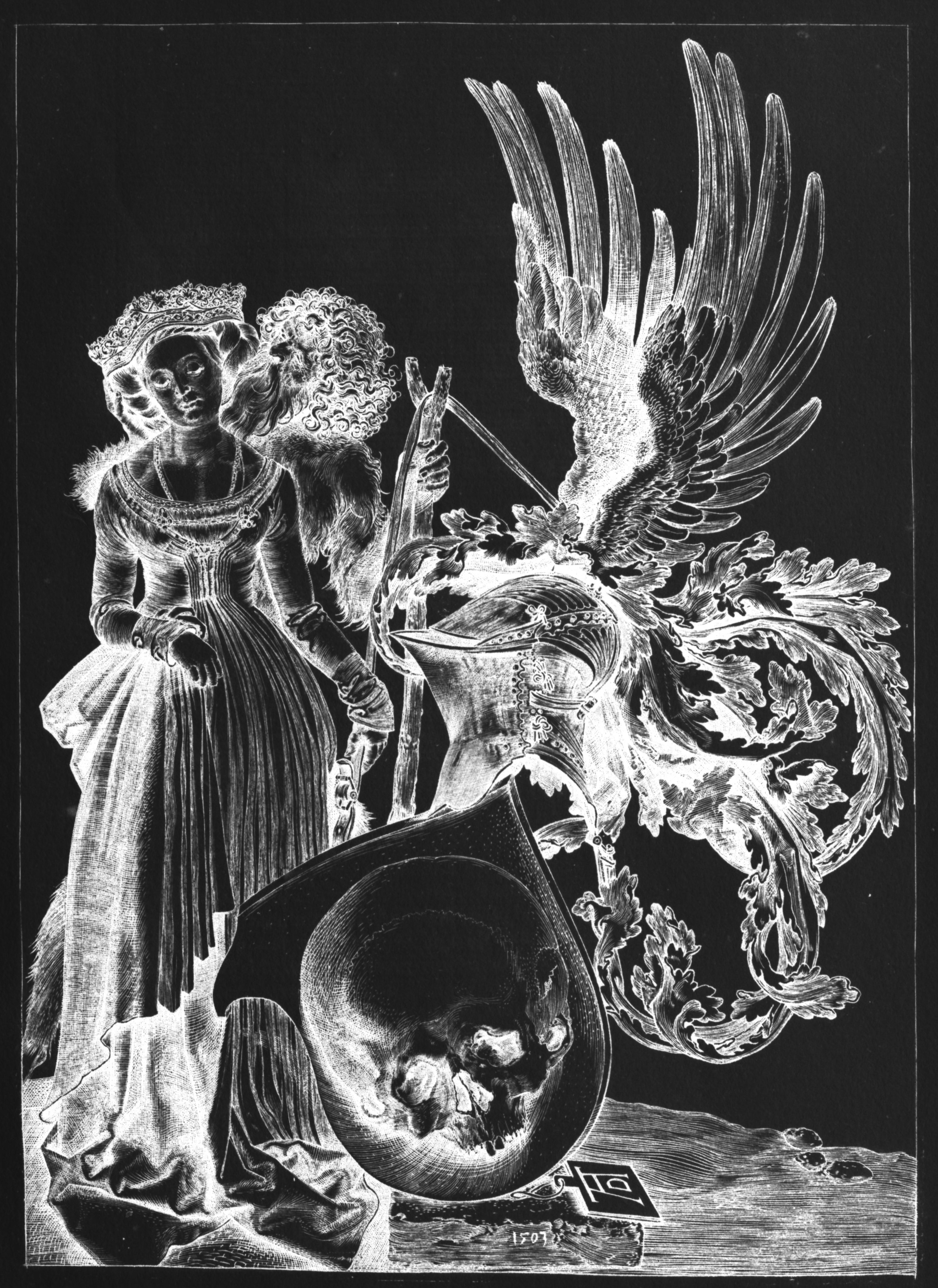
PAPER ANALYSIS

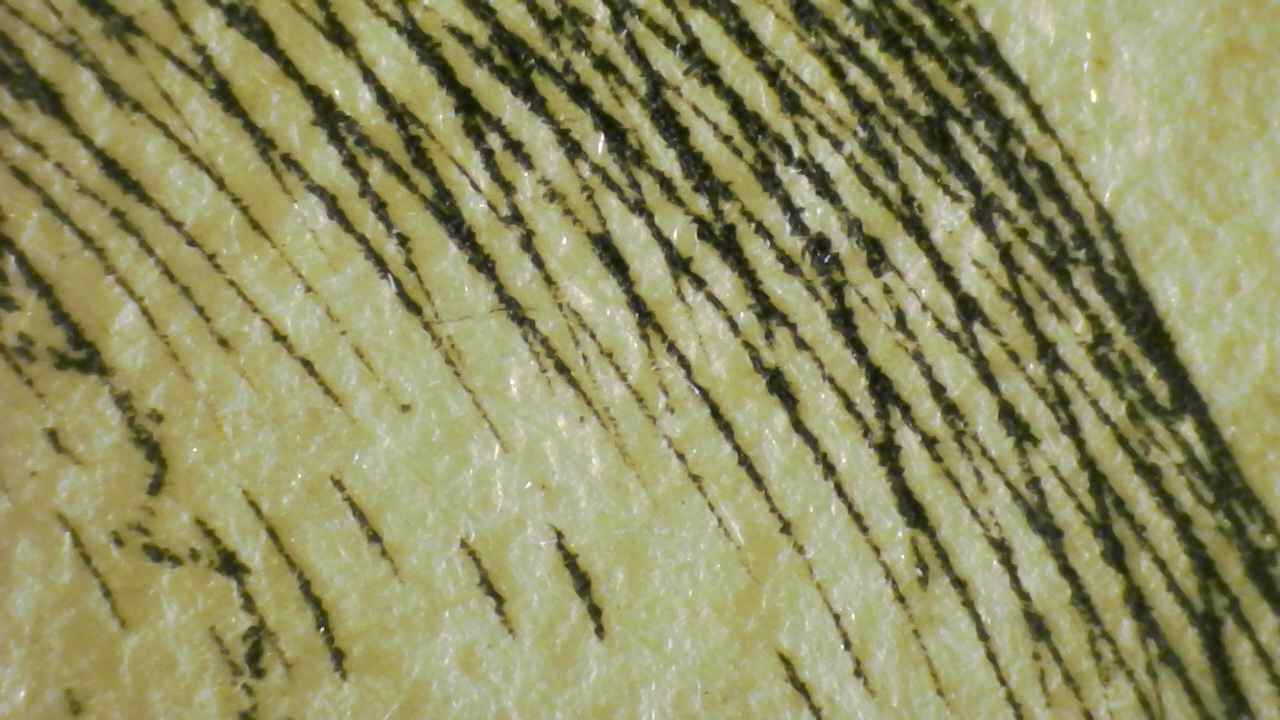
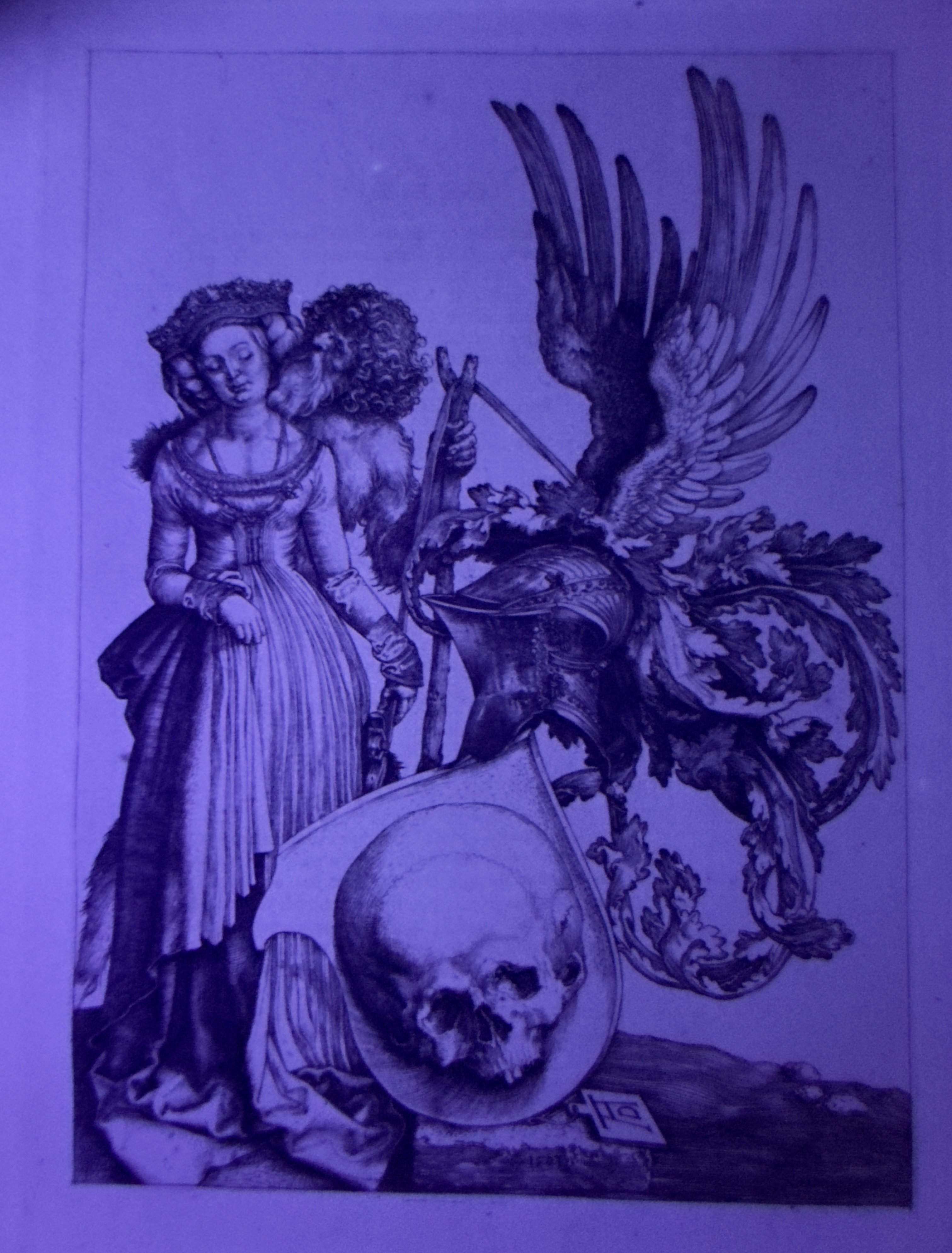
Structural analysis under visible, transmitted, microscopic, and ultraviolet light
The sheet is printed on laid paper, with the characteristic ribbed structure clearly visible. The surface shows a three-dimensional fiber network with natural irregularity, visible both in unprinted areas and beneath printed lines. Individual fibers of varying thickness and orientation are discernible, indicating a non-homogeneous, hand-formed support.
Chain lines
The laid structure includes clearly visible chain lines, measured at alternating distances of:
- 28 mm
- 29 mm
These spacing’s repeat across the sheet and define the underlying mould structure of the paper.
Dimensions and weight
- Sheet dimensions: 32 × 24.5 cm
- Sheet weight: 10 g
Fiber composition and ink interaction
At higher magnification, the paper reveals long fibers integrated into an open network. In printed areas, the ink conforms to the relief of the paper, with fibers remaining visible within and across the printed lines. In several areas, fibers pass over portions of the inked surface, demonstrating that the printed image is embedded within the paper structure rather than resting on a uniform surface.
Ultraviolet response
Under ultraviolet illumination, the paper exhibits a subtle and uneven fluorescence, allowing the fiber structure to remain visible. The response varies slightly across the sheet, following differences in fiber density and paper thickness.
Watermark
No watermark is visible at the present stage of examination. Further observation is ongoing and will be documented if identifiable features emerge.
MACROGRAPHIC ANALYSIS
Line structure, ink–fiber interaction, and burin control
This section presents a set macro photographs taken directly from the impression to document the material construction of the image: how lines are formed, how volume is modeled, and how ink interacts with the paper support. The analysis is based on high-magnification visual evidence—directional hatching, line hierarchy, stroke continuity, and physical ink behavior within the paper fibers—rather than stylistic interpretation.
In the female figure’s face, modeling is achieved through directional hatching and gradual transitions: lines follow the anatomy, spacing is modulated, and the paper functions as an active reserve of light (clean highlights without tonal filling). Shadows are not continuous “black masses,” but structures built through line density and rhythm.
In the Death figure’s face, the language is drier and more structural: anatomically responsive hatching with localized, functional crossings (not a regular mesh), more abrupt yet controlled transitions in diagnostic areas, and micro-variations of pressure that generate depth without surface paste.
The skull adjacent to the monogram demonstrates volume constructed entirely through line: the cranial dome and orbital cavity are articulated by curved hatching and progressive shifts in direction, with minimal crossings used only to reinforce structural transitions. In the orbital cavity (critical zone) the shadow retains “breathing” paper between lines—never becoming a flat mass—while maintaining directional logic consistent with bone anatomy.
The macro set also includes a micro-ornamental band where boundary control (“line against blank paper”) is clearly visible: clean contours, preserved paper reserves, and ornamental elements constructed through engraved outlines and reserved highlights rather than tonal fill. This area allows precise evaluation of lateral bleed, artificial thickening, or superficial alterations.
Finally, a zone with thicker, highly defined structural lines documents stroke hierarchy: deeper cuts for structure, mid-weight lines for modeling, and finer lines for transitions.
Taken together, these macros confirm: (1) volumetric construction through anatomically directed hatching and paper reserves; (2) physical stroke continuity and deliberate line hierarchy; and (3) ink penetration into the fiber network without surface pooling. The images are provided in a zoom able gallery so specialists can independently verify each point.
-1.jpg)
Macro examination of the monogram “AD” and the date “1503” shows burin-engraved lines with sharp V-shaped profiles, variable pressure, and clean terminations. The ink is embedded within the engraved grooves and penetrates the paper fibers without surface pooling. Line modulation and curvature are consistent with hand engraving. The absence of line wear or plate-related abrasions suggests an early impression from a well-preserved plate.

Macro examination of the female figure’s face reveals highly controlled burin engraving used to construct volume through line density, directional modulation, and preserved paper highlights. The facial forms are articulated through anatomically responsive line orientation and gradual tonal transitions without ink buildup or surface pooling. Micro-interruptions and subtle pressure variations confirm hand engraving. The ink penetrates the paper fibers, allowing the paper itself to participate actively in the modeling of light and shadow.
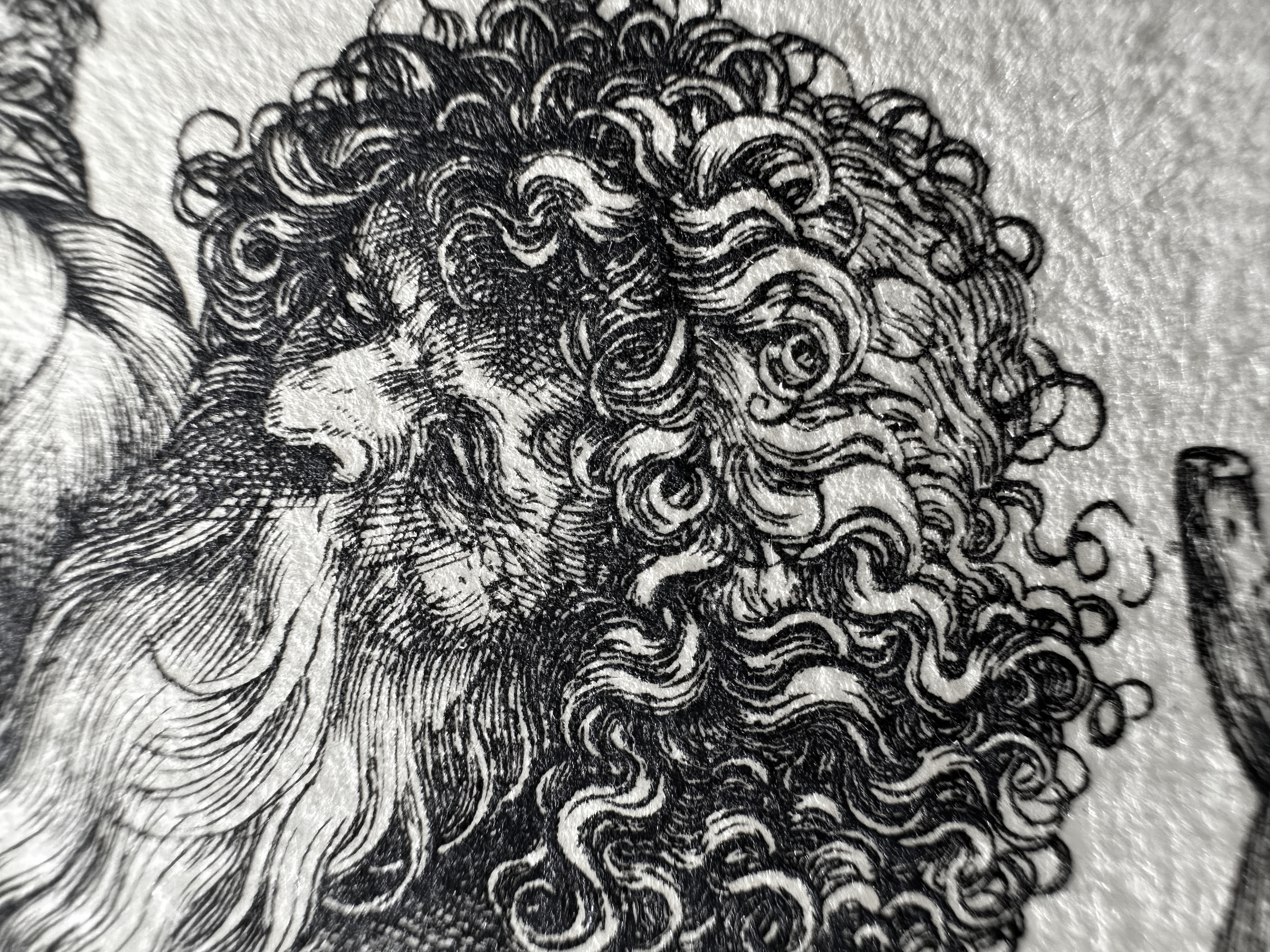
Close examination reveals the use of finely controlled directional hatching to model facial volume. Lines follow the underlying anatomy, with variable spacing and occasional localized crossings used selectively to reinforce structural transitions. The hatching remains open and breathable, allowing the paper to participate in the modulation of light. This approach constructs form through rhythm and pressure rather than tonal filling.

Close macro examination shows the skull constructed entirely through directional hatching engraved with the burin. Line spacing and curvature follow the cranial anatomy, allowing volume to emerge through rhythm and paper reserve rather than tonal filling. Localized crossings are used selectively to reinforce structural transitions without forming a regular mesh. Sharp V-shaped cuts, intact line edges, and organic pressure variation are clearly visible at macro scale. The skull shares identical ink–fiber interaction with the adjacent monogram, indicating a single, coherent printing event.

Extreme macro view shows a clean engraved boundary against unprinted paper, with directional hatching that fades through controlled pressure and spacing. The ornamental elements are constructed through engraved contours and reserved highlights rather than tonal fill. Ink penetrates the paper fibers without surface pooling, and line edges remain sharp, confirming stable engraving and consistent printing.

Extreme macro view shows deeply cut burin lines with sharp, stable edges and no lateral ink bleed. Line thickness results from depth of engraving rather than ink accumulation. Transitions between structural and finer lines demonstrate deliberate hierarchy of the burin stroke. Ink penetrates the paper fibers without surface pooling, confirming a consistent intaglio transfer.
MICROSCOPIC ANALYSIS
The microscopic images presented below document the material and graphic structure of the print at a magnification level that allows direct observation of the relationship between line, ink, and support. This analysis is not based on external interpretations, but rather on a direct reading of the object as it appears under magnification.
At this level, the image ceases to be perceived as a flat surface and reveals a complex system of lines constructed through controlled variations in thickness, direction, density, and pressure. Thick main lines, used to define structure and contour, are clearly distinguishable, along with networks of finer lines used to model volume, tonal transitions, and depth. These lines are neither uniform nor mechanical: they exhibit micro variations, natural interruptions, and slight deviations that are an integral part of the graphic language.
The paper support is shown as an active element. The fibers are clearly visible, intertwined in multiple directions, with natural variations in thickness and tone. In numerous places, the ink appears integrated within the fibrous structure, adapting to the paper's relief and being partially interrupted by fibers that visually pass over the stroke. This interaction generates a layered reading—fiber, ink, fiber—that lends material depth to the image.
The shadow areas are not constructed with compact masses, but rather through the accumulation and overlapping of lines, allowing the paper to actively participate in the tonal modulation. The transitions between shadow, midtone, and light are gradual, achieved through the density and orientation of the stroke, not through continuous filling.
Likewise, local imperfections and micro-irregularities are documented, fully integrated into the graphic system: occasional interruptions, variations in pressure, and small deformations of the stroke that do not break the coherence of the whole, but rather reinforce its material and physical character.
The following micro-images should be read as structural fragments of the same graphic language: each one isolates a specific aspect—thick line, thin line, tonal transition, volumetric modeling, ink-fiber interaction—which, together, allow us to understand how the image is constructed from within, at a microscopic level.
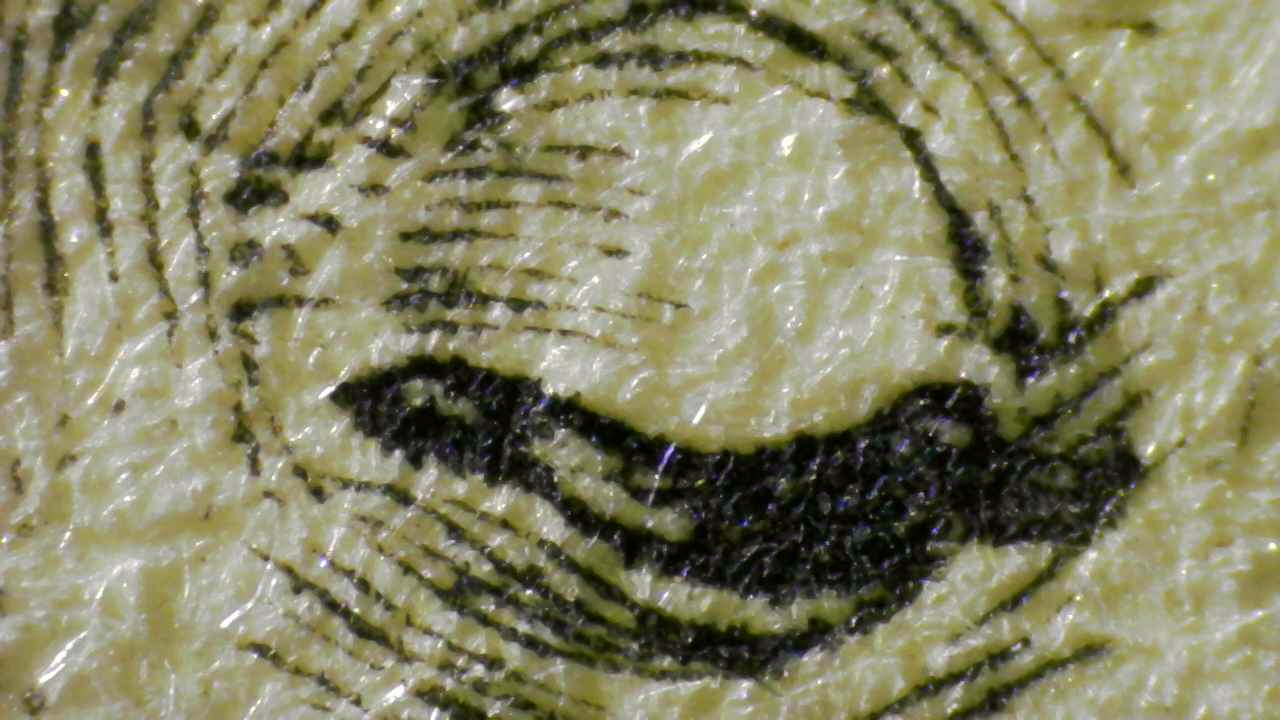
Microscopic view showing intaglio ink embedded within the paper fiber network. The printed line exhibits variable thickness, micro-interruptions, and deformation caused by the physical resistance of individual fibers during printing, demonstrating direct ink–fiber interaction under high press pressure.
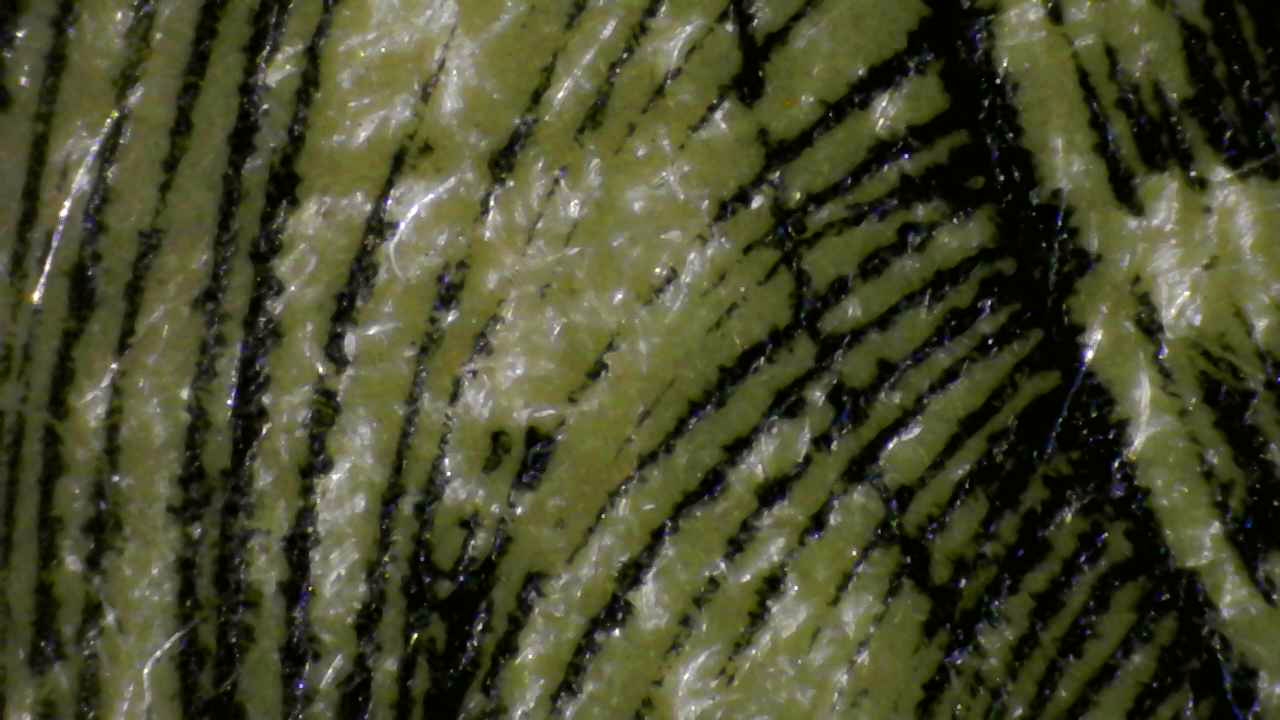
Microscopic view revealing localized disruption of the paper fiber network within and around an intaglio printed line. The irregular fiber orientation, micro-gaps, and uneven ink absorption reflect natural fiber resistance and compression during printing, producing authentic, non-reproducible surface irregularities.
.jpg)
Microscopic view of the skull’s eye sockets constructed entirely through layered curved hatching. The two orbital cavities are defined by dense, parallel engraved lines that vary subtly in spacing and pressure, creating depth through accumulation rather than outline. Within the darker zones, individual lines remain optically separable, while lighter areas reveal the underlying paper fibers between strokes, producing a natural tonal modulation.
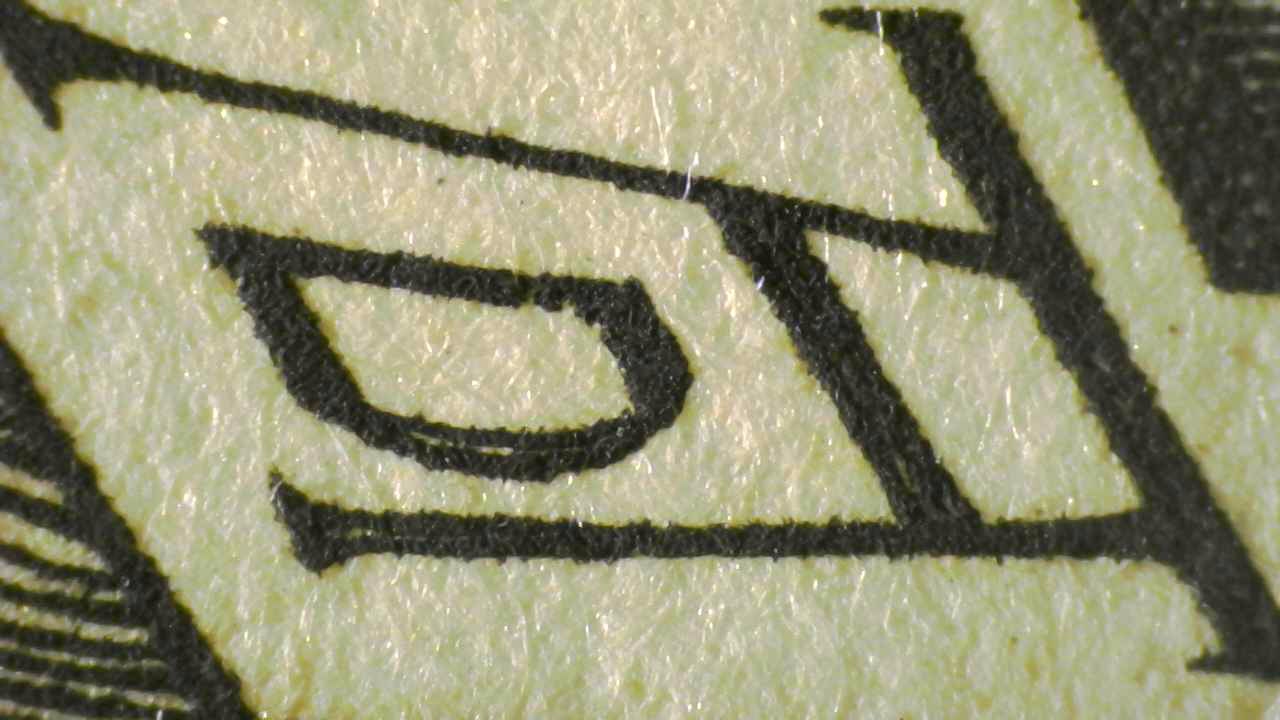
Microscopic view of the “AD” monogram formed by sharply incised, continuous engraved lines. The strokes display consistent width with slight internal variation caused by pressure changes and ink distribution. Edges are crisp but not mechanically uniform, revealing subtle wavering and localized thickening where ink accumulates along the paper fibers. The interior of the letter “D” remains open and clearly defined, allowing the paper texture to remain visible between strokes.
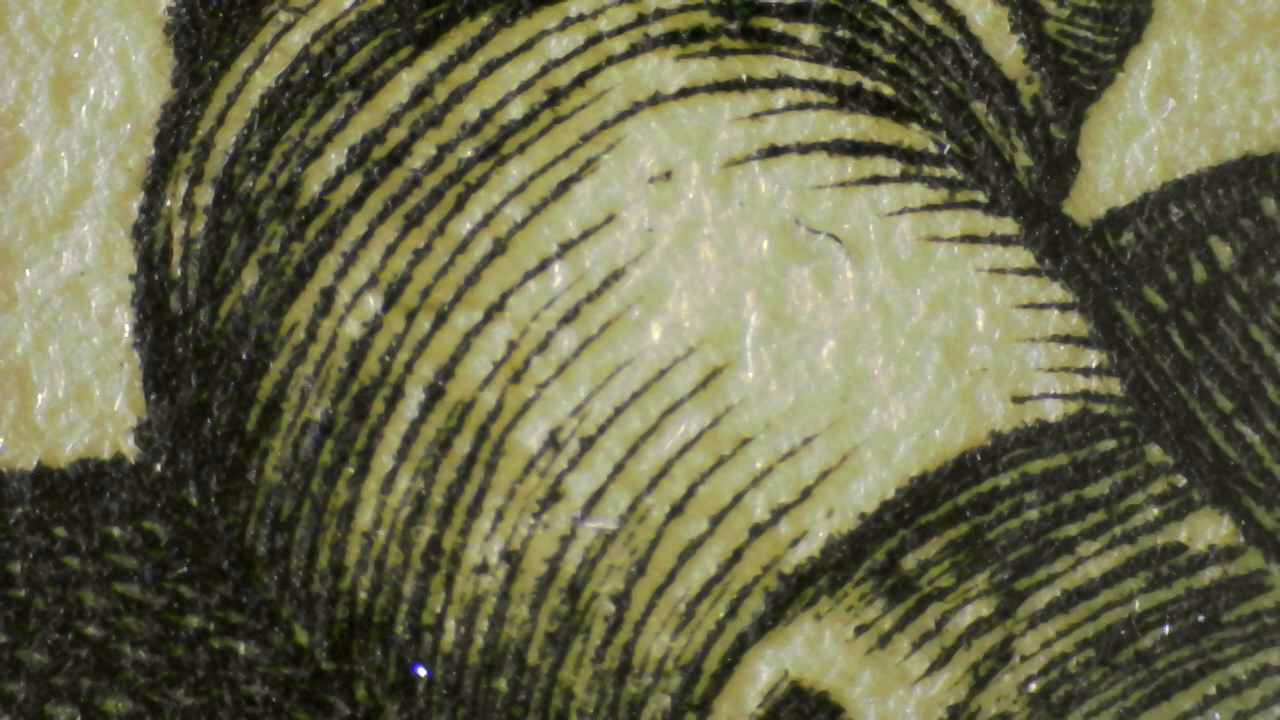
Parallel curves with thick, bold strokes build the volume in bands. The edges of the strokes remain sharp on a paper surface with visible relief, with slight, localized interruptions where the fiber affects the continuity of the ink.
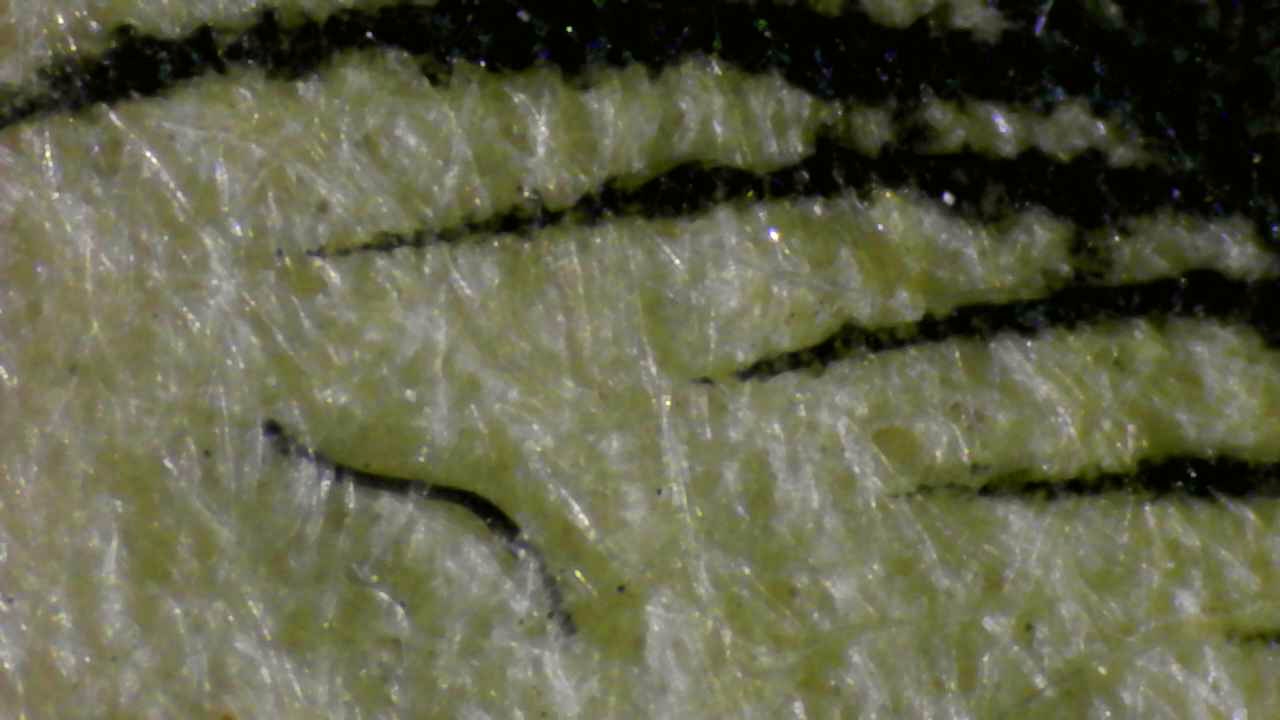
Fibers of different shades integrated into the paper's structure cross the printed line; the ink is visible beneath lighter fibers, demonstrating penetration into the paper's substrate and three-dimensional structure.
DIGITAL OVERLAY AND COMPARISON WITH INSTITUTIONAL REFERENCE
Comparative reference
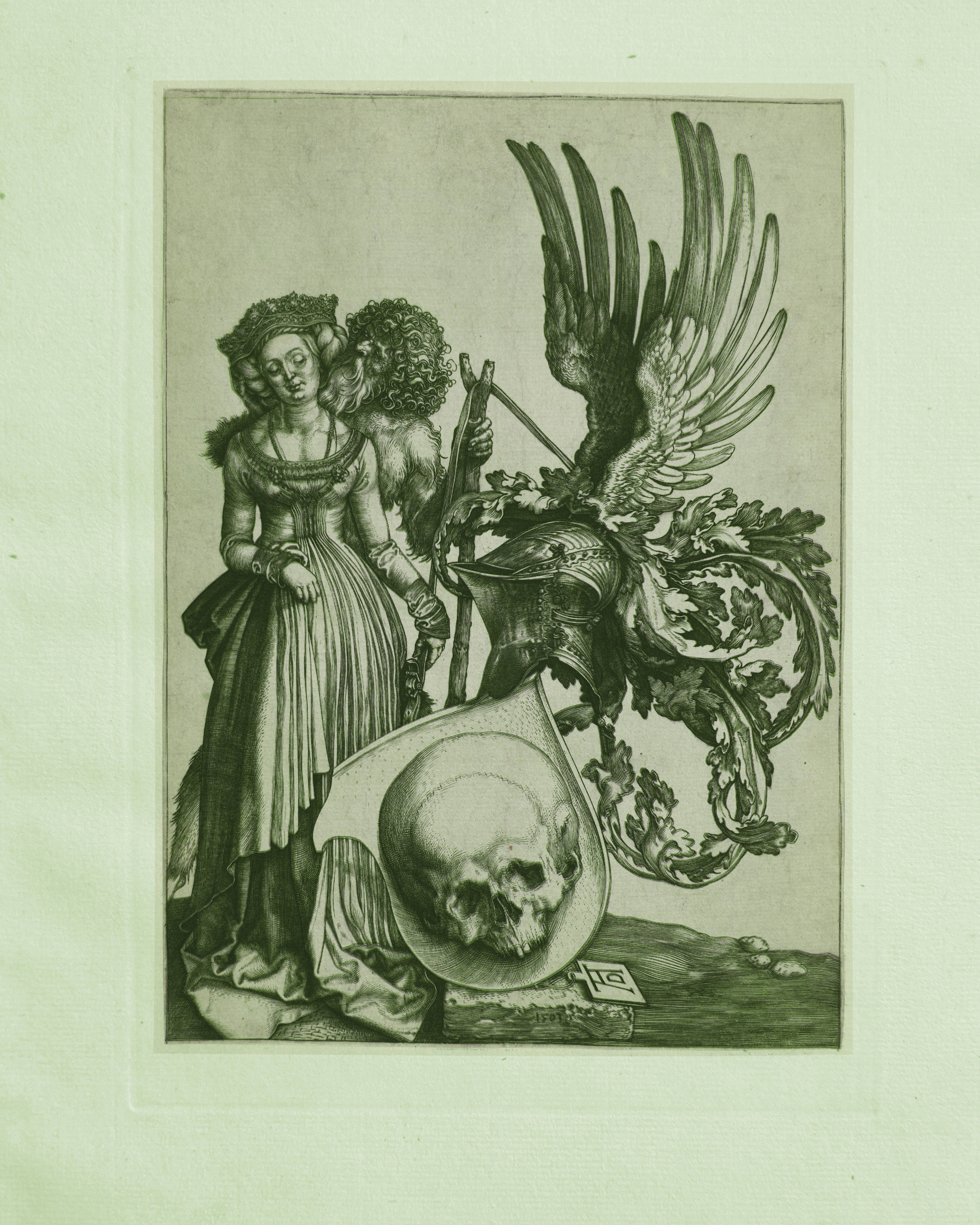
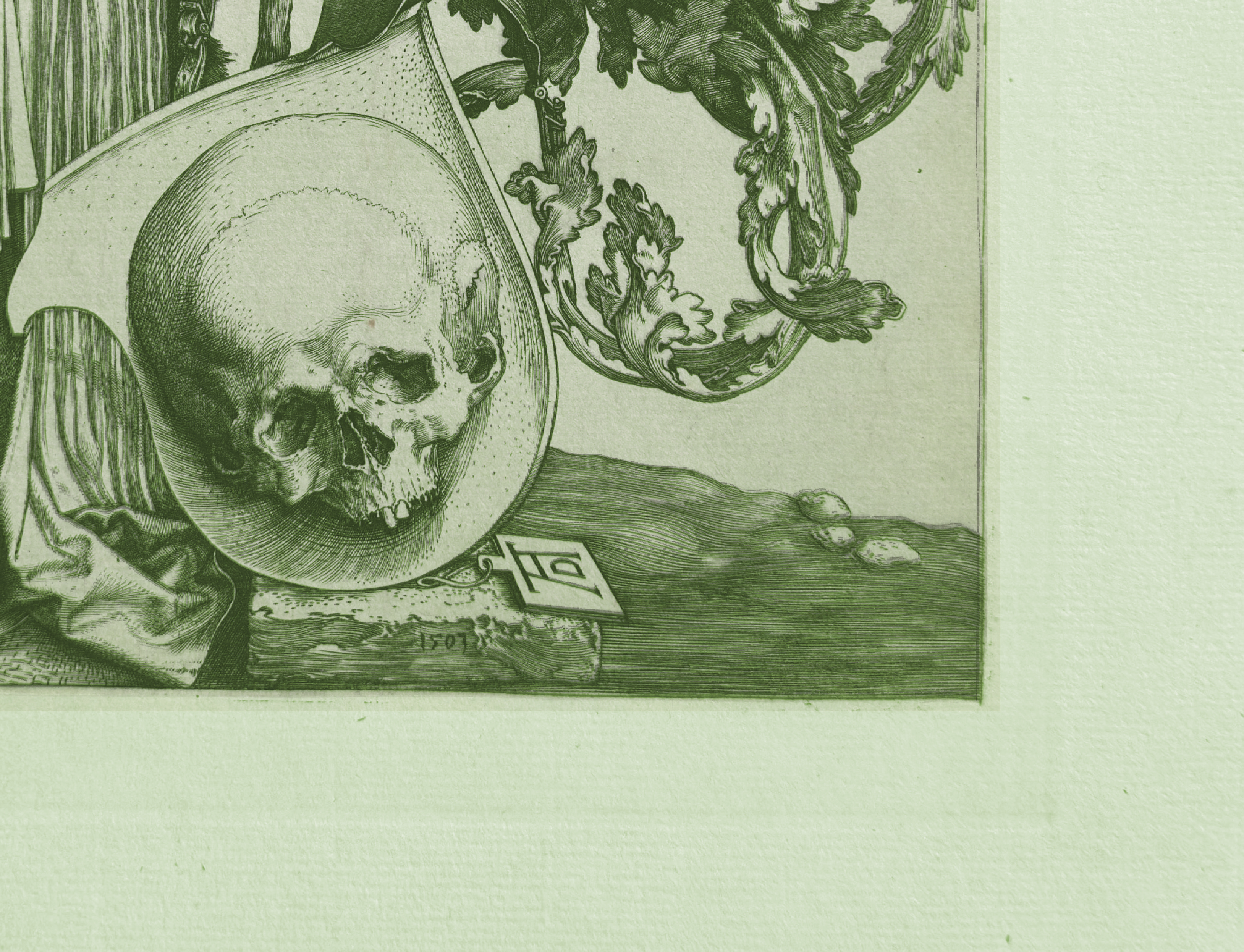
For comparative purposes, a digital overlay was conducted using an institutional reference held by the Rijksmuseum, catalogued as RP-P-OB-1273.
Overlay procedure
The overlay focuses on structural and morphological correspondences rather than tonal appearance. Alignment was performed using fixed graphic anchors within the composition, allowing for direct comparison of line placement, spacing, and proportional relationships across the image.
The comparison does not rely on stylistic interpretation, but on the physical configuration of engraved elements as visible in both impressions.
Observed correspondences
The digital overlay reveals a consistent correspondence in:
- Overall compositional structure
- Relative positioning of principal figures and motifs
- Alignment of key engraved contours
- Internal spacing relationships within densely hatched areas
These correspondences remain stable across the image and are not limited to isolated zones.
Variations observed
Minor differences are observable at a micro level, including:
- Localized variation in line density
- Differences in ink saturation
- Slight deviations in the visual weight of certain strokes
These variations are consistent with differences in inking, wiping, pressure, and paper response between impressions and do not affect the underlying structural alignment revealed by the overlay.
Scope and limitations
This overlay is presented as a comparative structural tool. It does not attempt to establish hierarchy or qualitative judgment between impressions, nor does it substitute for direct physical examination. Its purpose is to document morphological coherence through visual alignment with a well-documented institutional reference.
The correspondence is immediately apparent upon overlay, requiring virtually no adjustment. The result is not operator-dependent and can be independently reproduced.
Provenance and History
The print was transmitted from generation to generation, remaining within the same family. Its state of preservation suggests minimal historical handling: it was stored for decades in a protected environment, away from direct light and damaging humidity fluctuations. It is likely that the print has been handled far less during the past one hundred years than during the recent technical examination conducted under microscopy, raking light, and transmitted-light watermark analysis.
This continuity of private custody—without recorded sales, auction appearances, or dealer interventions—helps explain the exceptional condition of the sheet and the survival of fragile physical features often lost in circulating impressions, including residual micro-relief, intact margins, and a fully preserved plate impression.
Provenance therefore supports attribution not only through lineage, but through material coherence: every aspect of the sheet’s condition aligns with an impression that has remained intact and undisturbed over time.
Access and Research Collaboration
The Álvarez Collection provides researchers, institutions, and specialists with access to the comprehensive technical dossier of the engraving. This archive includes high-resolution microphotography, original 3D metrology datasets, and incision morphology profiles processed using MATLAB® computational vision algorithms.
All topographical metrics, relief-density mapping, and frequency spectrum analyses are conducted using MATLAB® to ensure numerical consistency and reproducibility. By transitioning from subjective visual assessment to automated data extraction, we establish an empirical, physical framework that complements traditional art-historical evaluation and curatorial review.
The observations and metrics presented in this dossier are derived from the direct physical examination of the print and calibrated against institutional reference standards. Given the technical nature of these findings, we invite the scholarly community to engage in collaborative review and independent verification of the reported parameters.
For inquiries regarding database access, technical reproduction permissions, or collaborative research projects, please contact:
fineartoldmasters9919@gmail.com
susana123.sd@gmail.com
susana@alvarezart.info
Phone: +1 786 554 2925 / +1 305 690 2148
Álvarez Collection Verification Record #AC-AD-245-REV-2026